










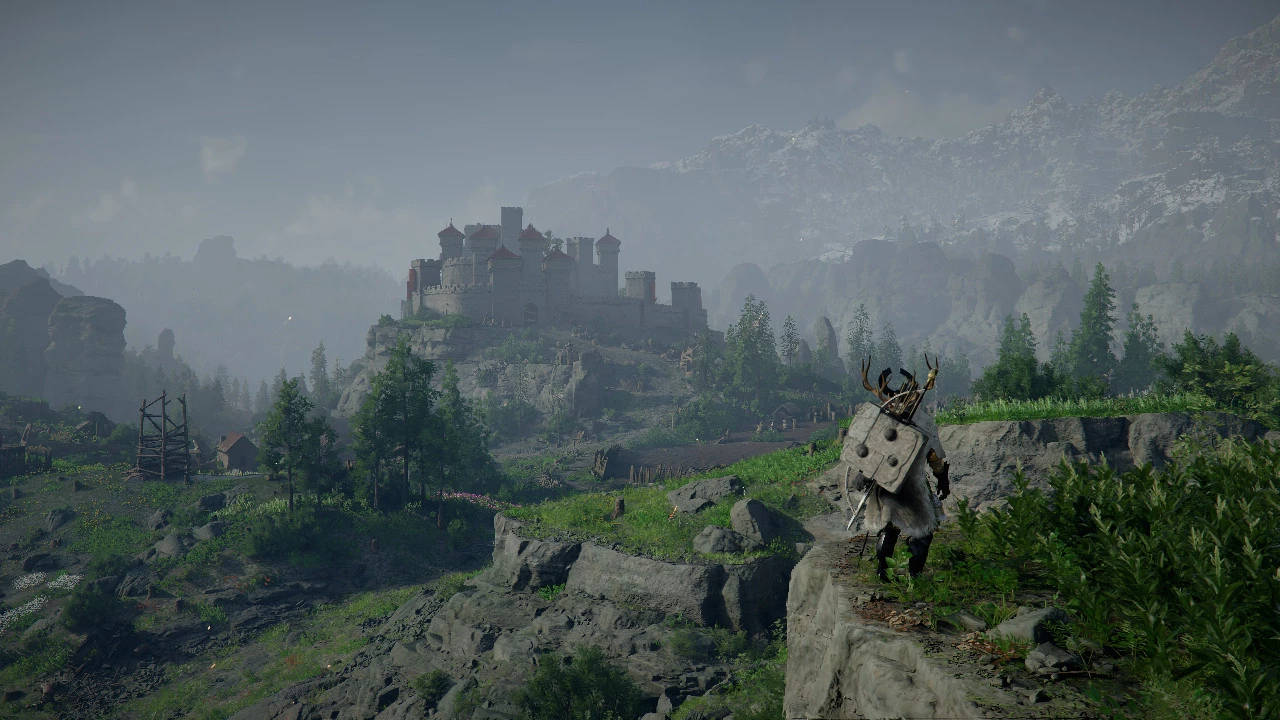
In the highly competitive landscape of open-world gaming, Korean developer Pearl Abyss is making bold claims about their upcoming action title Crimson Desert. The studio has revealed the core philosophy that guided their ambitious world-building efforts: if a player can see something on the horizon, they must be able to reach it. This seemingly simple principle has driven the creation of what the developers describe as one of the most expansive and detailed open worlds ever conceived in video game history, promising an experience that could redefine player expectations for the genre.
The commitment to complete explorability represents a significant technical and design challenge that few studios have successfully overcome. While many open-world games create the illusion of vastness through painted backdrops and inaccessible terrain, Pearl Abyss has apparently invested heavily in ensuring that every mountain peak, distant castle, and remote valley is not merely decorative but fully explorable. This approach echoes the groundbreaking design philosophy that made titles like The Elder Scrolls V: Skyrim and The Legend of Zelda: Breath of the Wild revolutionary in their time, though Crimson Desert appears to be pushing these boundaries even further.
The Technical Marvel Behind Seamless Exploration
Pearl Abyss brings considerable expertise to this ambitious project, having previously developed Black Desert Online, a massively multiplayer online role-playing game renowned for its stunning graphics and seamless open world. The studio’s proprietary game engine has been refined over nearly a decade, allowing for the creation of environments that combine visual fidelity with unprecedented scale. Industry analysts suggest that the technology powering Crimson Desert represents a generational leap forward, enabling draw distances and environmental detail that would have been impossible just a few years ago.
The development team has reportedly employed advanced procedural generation techniques alongside meticulous hand-crafted design to achieve this balance of scope and quality. Unlike purely procedural worlds that can feel repetitive or artificial, Crimson Desert’s approach ensures that each region maintains distinct characteristics while still feeling organically connected to the broader landscape. This hybrid methodology allows artists and designers to focus their attention on creating memorable landmarks and points of interest, while algorithms handle the seamless transitions between regions.
Lessons from Open-World Gaming History
The open-world genre has evolved dramatically since its early days with titles like the original Grand Theft Auto and the first Elder Scrolls games. Each generation has brought new technological capabilities and player expectations, from the revolutionary freedom of Grand Theft Auto III in 2001 to the breathtaking scope of Elden Ring in 2022. Pearl Abyss appears to have studied these milestones carefully, incorporating lessons learned from both successes and failures across the genre. The emphasis on meaningful exploration addresses one of the most common criticisms of modern open-world games: that their vast spaces often feel empty or filled with repetitive content.
Crimson Desert’s design philosophy also reflects growing player fatigue with map markers and waypoint-driven exploration that has dominated the genre in recent years. By ensuring that visually striking locations are actually reachable and worth visiting, the game encourages organic discovery and rewards player curiosity. This approach harkens back to the exploration-driven design of classic titles while leveraging modern technology to create something genuinely new. The game is expected to feature a narrative-driven single-player experience set in a harsh medieval fantasy world, combining the exploration freedom of open-world games with more focused storytelling.
Industry Impact and Future Expectations
As Crimson Desert approaches its anticipated release, the gaming industry is watching closely to see whether Pearl Abyss can deliver on its ambitious promises. If successful, the title could establish new standards for open-world design and potentially influence how other major studios approach their own projects. The game represents a significant investment for the Korean developer, signaling their intention to compete directly with Western AAA studios on the global stage. With the open-world genre showing no signs of declining popularity, innovations in world design and exploration mechanics could prove crucial for capturing player attention in an increasingly crowded marketplace.
Expert Opinion: Pearl Abyss’s commitment to complete horizon-to-horizon exploration represents a significant shift in open-world design philosophy that prioritizes player agency over artificial boundaries. If Crimson Desert successfully delivers on this promise while maintaining meaningful content density, it could trigger a broader industry reassessment of how virtual worlds are constructed, potentially moving away from the icon-cluttered maps that have dominated the genre toward more organic discovery-based exploration systems.