








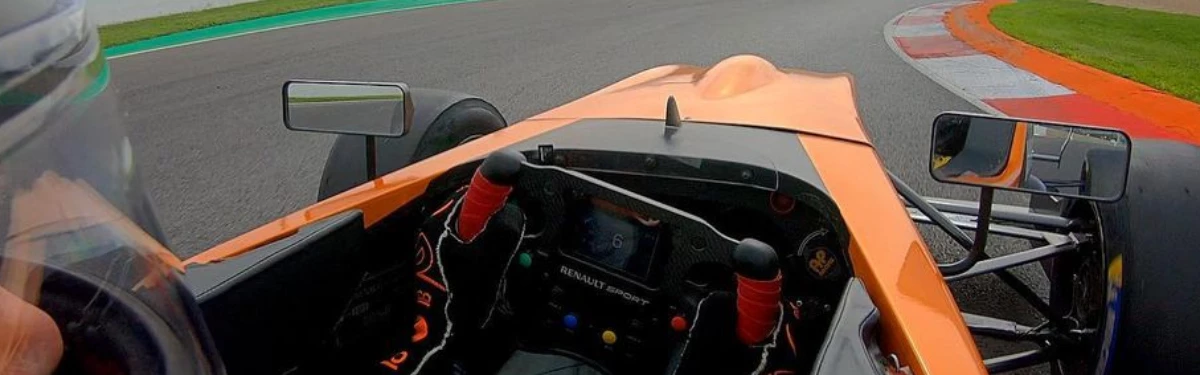
In a remarkable story that bridges the gap between virtual and real-world motorsport, Ukrainian sim racing champion Artem Khorolskyi has successfully completed his first test session behind the wheel of an actual Formula Renault racing car. The young talent, who earned his championship title competing in virtual racing competitions, recently traveled to France where he had the opportunity to experience the raw power and precision of professional open-wheel racing firsthand. The Vermin Formula Experience racing team has now released video footage capturing Khorolskyi’s genuine reactions and impressions from this landmark moment in his racing career.
The Growing Bridge Between Virtual and Real Motorsport
The transition from sim racing to actual motorsport has become an increasingly recognized pathway in recent years. What was once dismissed as merely a video game hobby has evolved into a legitimate training ground for aspiring professional drivers. Modern racing simulators offer incredibly realistic physics engines, accurate track reproductions, and vehicle dynamics that closely mirror their real-world counterparts. This technological advancement has opened doors for talented individuals who might not have had traditional access to expensive karting programs or racing academies. Major motorsport organizations, including Formula 1 teams, now actively scout talent from the sim racing community, recognizing the transferable skills these competitors possess.
Khorolskyi’s journey exemplifies this modern pathway to professional racing. Having honed his skills through countless hours of virtual competition, he developed an intimate understanding of racing lines, tire management, braking points, and racecraft. These fundamental skills, while learned in a digital environment, translate remarkably well to real machinery. The mental aspects of racing—concentration, consistency, and the ability to perform under pressure—are identical whether competing virtually or on an actual circuit.
Testing with Vermin Formula Experience
The Vermin Formula Experience team, based in France, specializes in providing aspiring drivers with professional-level testing opportunities in genuine formula racing cars. Their program has helped numerous young talents take their first steps into real motorsport, offering a structured environment where drivers can safely explore the limits of single-seater racing. The Formula Renault platform serves as an ideal stepping stone for newcomers, providing enough performance to challenge drivers while remaining manageable for those making the transition from other disciplines.
During his test session, Khorolskyi was able to experience firsthand the physical demands that separate sim racing from the real thing. The G-forces experienced during cornering, braking, and acceleration are impossible to fully replicate in any simulator. Additionally, the sensory feedback from the car—the vibrations, the engine noise, the wind buffeting the helmet—creates an entirely different mental and physical challenge. Despite these new elements, the Ukrainian champion reportedly adapted quickly, demonstrating that his virtual training had provided an excellent foundation for real-world performance.
Implications for Ukrainian Motorsport
Khorolskyi’s achievement carries significant meaning for the Ukrainian motorsport community, which has faced considerable challenges in recent years. His success story demonstrates that talent can emerge and develop regardless of circumstances, and that modern technology has democratized access to racing development. For young Ukrainian enthusiasts watching his journey, this represents hope and a potential roadmap for their own aspirations. The sim racing community in Ukraine has grown substantially, and Khorolskyi’s transition to real racing could inspire a new generation of competitors to pursue their dreams both virtually and eventually on actual race tracks.
As sim racing continues to gain legitimacy within the broader motorsport ecosystem, stories like Khorolskyi’s will likely become more common. The infrastructure supporting these transitions—from sim racing leagues to professional testing programs—continues to expand globally. For talented drivers with limited resources, this pathway offers opportunities that simply did not exist a decade ago, potentially reshaping how the motorsport industry discovers and develops its future stars.
Expert Opinion: The successful transition of sim racing champions to real-world motorsport validates the educational potential of high-fidelity racing simulations. Industry analysts predict that within the next five years, up to 30% of professional racing drivers will have significant sim racing backgrounds. Khorolskyi’s performance in France suggests that Ukraine could emerge as an unexpected talent pool for European racing teams seeking cost-effectively developed drivers.