







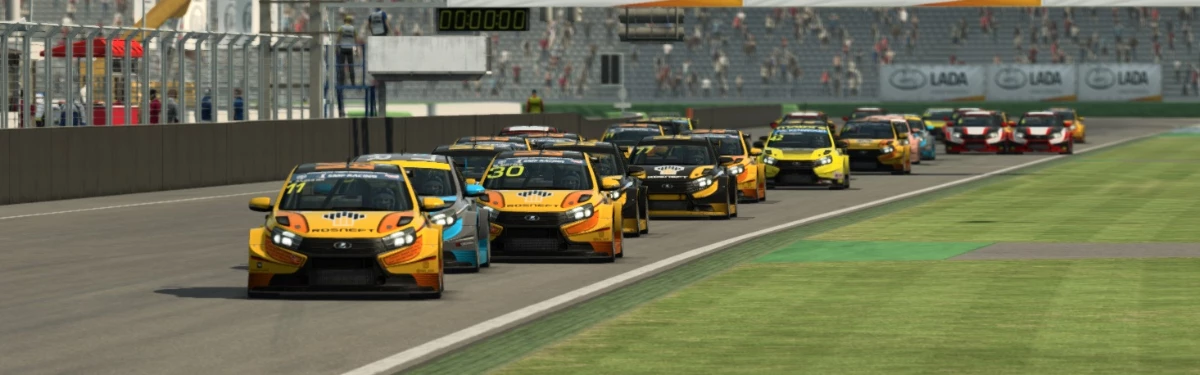
Kirill Antonov has officially claimed the championship title following the conclusion of the sixth and final stage of the LADA Sport ROSNEFT eChampionship 2021. The prestigious esports racing competition, which has been running throughout the year, culminated in an exciting finale that solidified Antonov’s position as the dominant force in Russian virtual motorsport. The championship, conducted on the renowned RaceRoom Racing Experience simulator platform, brought together the nation’s most talented sim racers in a series of intense competitions that tested both their technical skills and racing intelligence.
The LADA Sport ROSNEFT eChampionship represents a significant collaboration between Russia’s premier automotive brand and one of the world’s largest oil companies, demonstrating the growing interest of major corporations in the rapidly expanding esports sector. This partnership has helped elevate virtual racing to new heights in the region, providing aspiring racers with a legitimate pathway to recognition and potentially professional racing careers. The championship series has attracted thousands of participants since its inception, with only the most skilled competitors advancing to the final stages.
The Rise of Sim Racing and Virtual Motorsport
The RaceRoom Racing Experience platform, developed by Swedish studio Sector3 Studios, has become one of the most respected racing simulators in the competitive esports scene. Known for its realistic physics engine and accurate recreations of real-world racing circuits, the platform provides an authentic motorsport experience that closely mirrors actual racing conditions. Professional racing teams and manufacturers worldwide have increasingly turned to such simulators for driver development, making championships like the LADA Sport ROSNEFT eChampionship valuable proving grounds for emerging talent.
The 2021 season saw unprecedented levels of competition, with participants from across Russia and neighboring countries battling for supremacy across multiple virtual circuits. Each of the six stages presented unique challenges, from technical tracks requiring precise car control to high-speed circuits where drafting and strategic overtaking proved crucial. Antonov’s consistent performance throughout the season demonstrated not only his raw speed but also his ability to manage race weekends strategically, accumulating points steadily while avoiding the costly mistakes that plagued his rivals.
Corporate Investment in Esports Racing
The involvement of LADA Sport and ROSNEFT in organizing such championships reflects a broader trend of traditional automotive and energy companies embracing digital motorsport. As the esports industry continues its explosive growth trajectory, with global revenues projected to exceed billions of dollars annually, corporations are recognizing the value of connecting with younger, digitally-native audiences through competitive gaming. These partnerships also serve as valuable marketing platforms, allowing brands to engage with potential customers in innovative ways while supporting the development of grassroots motorsport talent.
For Kirill Antonov, this championship victory represents the culmination of countless hours of practice and dedication to mastering the intricacies of virtual racing. Modern sim racing demands the same levels of concentration, reflexes, and race craft as traditional motorsport, with top competitors often training for several hours daily to maintain their competitive edge. The skills developed in simulators increasingly transfer to real-world racing, with several professional drivers having made the transition from virtual to actual cockpits in recent years.
Looking Ahead to Future Seasons
The success of the 2021 LADA Sport ROSNEFT eChampionship has set high expectations for future editions of the competition. Organizers have indicated plans to expand the championship’s reach, potentially incorporating more stages and increasing prize pools to attract even greater talent. As virtual racing technology continues to advance, with improvements in graphics, physics simulation, and online competition infrastructure, championships like this one will likely play an increasingly important role in the motorsport ecosystem, serving as both entertainment spectacles and genuine talent development programs for the racing industry.
Expert Opinion: The convergence of traditional motorsport brands with esports represents a fundamental shift in how the automotive industry engages with younger demographics. Antonov’s championship victory not only validates his exceptional skills but also demonstrates that sim racing has matured into a legitimate competitive discipline. We anticipate seeing more manufacturers establish similar programs, potentially creating direct pathways from virtual championships to real-world racing seats within the next five years.