









Twelve years after its infamous launch, former Ubisoft developer Jean Guesdon has finally broken his silence about the catastrophic release of Assassin’s Creed Unity. The game, which was meant to showcase the power of next-generation consoles and revolutionize the beloved franchise, instead became one of the most notorious examples of a botched video game launch in industry history. Guesdon’s revelations shed new light on the internal pressures, unrealistic timelines, and corporate ambitions that ultimately led to the game shipping in a broken state that alienated millions of fans worldwide.
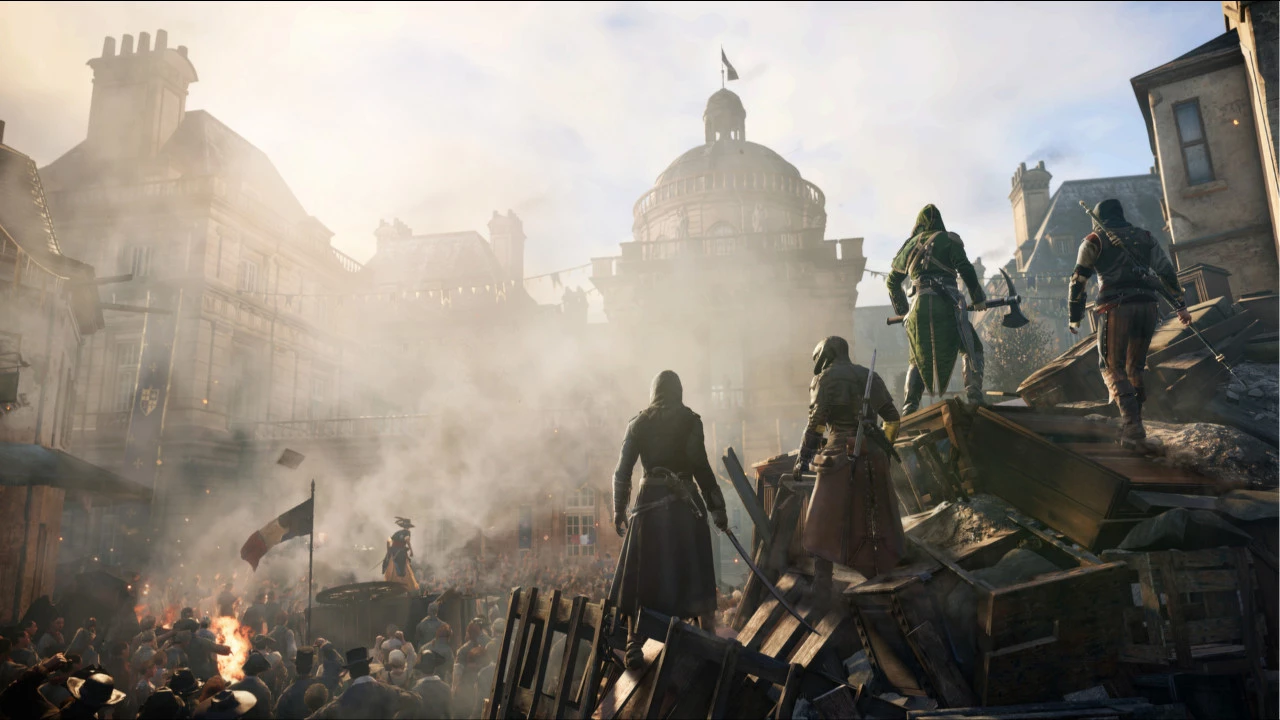
Assassin’s Creed Unity launched on November 11, 2014, for PlayStation 4, Xbox One, and PC. Set during the French Revolution in late 18th century Paris, the game promised an unprecedented level of detail and scale. Ubisoft marketed it as a true next-gen experience, featuring massive crowds of up to 5,000 NPCs on screen simultaneously, a fully explorable recreation of revolutionary Paris, and a new cooperative multiplayer mode. However, what players received was a technical disaster filled with game-breaking bugs, severe performance issues, and visual glitches that quickly became internet memes — most notably the infamous “faceless” character bug where NPCs appeared with missing facial features, leaving only floating eyeballs and teeth.
The Weight of Unrealistic Expectations
According to Guesdon, who served as a key member of the development team, the root cause of Unity’s problems was a perfect storm of corporate ambition and inadequate development time. Ubisoft was eager to demonstrate the capabilities of the new console generation and simultaneously maintain the franchise’s annual release schedule. This meant that the development team was forced to build an entirely new game engine, create the most ambitious Assassin’s Creed world to date, and implement revolutionary new features — all within the same timeframe they had previously used for less complex projects. The pressure to innovate while adhering to strict deadlines created an impossible situation for the developers.
The technical challenges were immense. Creating a historically accurate recreation of 18th century Paris required modeling thousands of unique buildings, designing intricate interior spaces that players could seamlessly enter and exit, and populating the streets with unprecedented numbers of AI-controlled citizens. The new Anvil Next 2.0 engine was still being developed alongside the game itself, meaning that fundamental tools and systems were constantly changing. Developers found themselves fixing bugs in features that would be completely rewritten weeks later, creating a cycle of wasted effort and mounting technical debt that would prove impossible to resolve before launch.
The Human Cost of Crunch Culture
Guesdon’s confession also highlights the brutal working conditions that the development team endured. Extended crunch periods became the norm as the launch date approached, with team members working 80-hour weeks for months on end. Despite these heroic efforts, it became increasingly clear to those on the ground that the game would not be ready for its scheduled release. However, the annual release schedule was considered sacrosanct by Ubisoft’s management, and delaying the game was apparently never seriously considered. Marketing campaigns had already been launched, retail partnerships established, and the corporate machinery was in motion. The developers were expected to somehow make the impossible possible.
The consequences of Unity’s disastrous launch were severe and long-lasting. Ubisoft was forced to offer free DLC to purchasers and eventually provided free games as compensation. The company’s stock price dropped significantly, and the brand damage to the Assassin’s Creed franchise took years to repair. More importantly, the incident forced Ubisoft to reconsider its approach to game development. The following title, Assassin’s Creed Syndicate, received an additional year of development time, and the franchise eventually took a two-year hiatus before returning with Origins in 2017, which was widely praised for its quality and polish.
Lessons for the Industry
Guesdon’s revelations serve as a cautionary tale for the entire video game industry. The pressure to meet arbitrary deadlines, maintain annual release schedules, and constantly push technological boundaries can result in products that damage both consumer trust and developer well-being. In the years since Unity’s release, the industry has seen numerous high-profile launches suffer similar fates, including Cyberpunk 2077, Battlefield 2042, and others. The pattern remains consistent: ambitious promises, inadequate development time, and corporate pressure combine to produce unfinished products that harm everyone involved.
Today, Assassin’s Creed Unity has been largely rehabilitated through years of patches and updates. Many players now consider it one of the better entries in the franchise, praising its atmospheric recreation of Paris, refined parkour mechanics, and engaging story. However, this redemption came too late to prevent the initial damage, and the game remains a symbol of what can go wrong when corporate ambition overrides practical development realities. Guesdon’s willingness to speak openly about these issues after more than a decade provides valuable insight into the challenges facing modern game development and the importance of realistic expectations and adequate resources.
Expert Opinion: The Assassin’s Creed Unity case study demonstrates that the games industry still struggles to balance commercial pressures with sustainable development practices. As games become increasingly complex and expensive to produce, we can expect more studios to adopt longer development cycles and move away from annual release models. The real question is whether publishers will learn from these costly failures or continue repeating the same mistakes until market forces compel change.