Sega Genesis / Mega Drive: History, Hardware and Defining Games
The Sega Mega Drive and Genesis: its 1988–1990 launches, 68000-based hardware, arcade ports, sports games, and why it thrived in the West and Brazil.
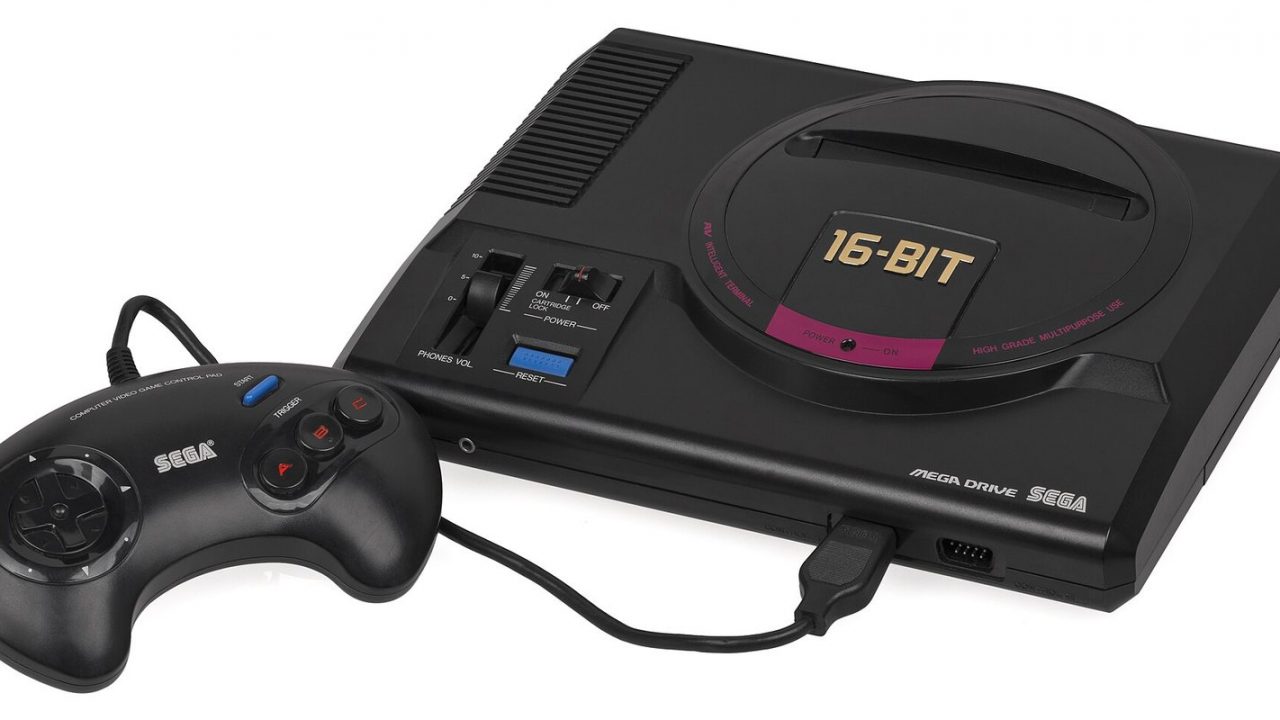
Sega’s 16-bit console had two names and, in a sense, two very different histories. In Japan, the Mega Drive was a respectable but distant third-place machine. In North America, where it was sold as the Genesis, and in Europe and Brazil, it became one of the most successful consoles of its era, briefly outselling Nintendo and defining an attitude for a generation of players.
This article focuses on the hardware, the regional launches and the library that made the console matter. The marketing rivalry with Nintendo is a story of its own, covered in our article on Sega vs. Nintendo and the 16-bit console war; here we keep it brief.
Three Launches, Two Names
Sega launched the Mega Drive in Japan on October 29, 1988, at ¥21,000. The name was chosen after Sega reviewed more than 300 proposals. The console arrived in North America in 1989, with a few units appearing in New York and Los Angeles in late August ahead of a wider September launch, at an introductory price of $189. Europe followed in September 1990 at £189.99.
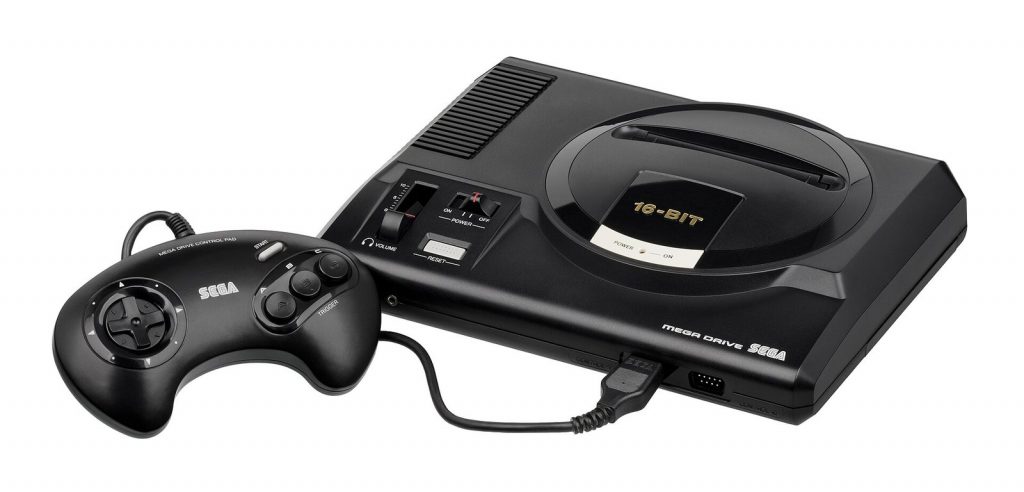
In North America, the console was renamed Genesis because Sega could not secure the rights to the Mega Drive name there. Everywhere else, including Europe, Asia, Australia and Brazil, it kept the Mega Drive name.
Brazil deserves special mention. Sega’s local partner Tectoy, a toy company founded in 1987, launched the Mega Drive there in December 1990, after earlier success with the Master System. Tectoy continued producing Master System and Mega Drive variants, including plug-and-play versions with built-in games, for many years after the consoles had disappeared elsewhere. The company has reported selling about 3 million Mega Drive units in Brazil over its lifetime. South Korea saw yet another branding, with Samsung selling the console as the Super Gam*Boy and later the Super Aladdin Boy.
Inside the Hardware
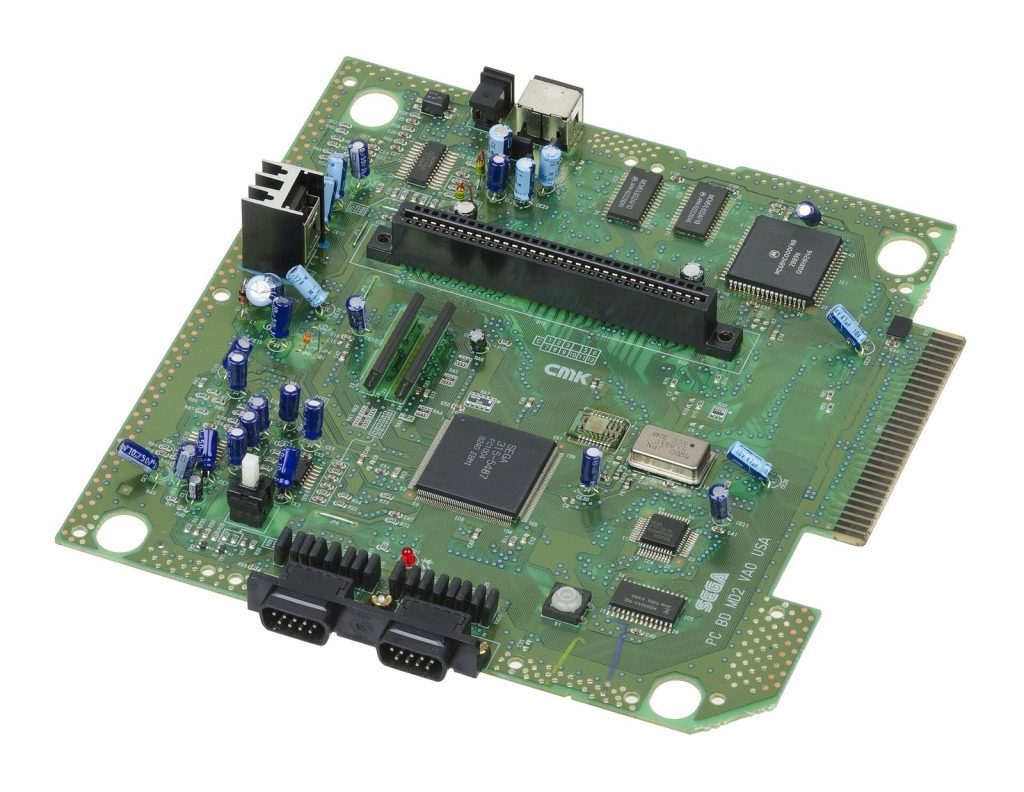
The Mega Drive was built around components familiar from Sega’s arcade business, and its design was based on the company’s System 16 arcade board. Its key specifications were:
| Component | Details |
|---|---|
| Main CPU | Motorola 68000 at about 7.6 MHz |
| Sound / co-processor | Zilog Z80 at about 3.58 MHz |
| Sound chips | Yamaha YM2612 (FM synthesis) and Texas Instruments SN76489 (PSG) |
| Memory | 64 KB RAM, 64 KB video RAM, 8 KB audio RAM |
| Colors | Up to 61 on screen from a palette of 512 |
The Motorola 68000 was a significant choice. It was a powerful 16/32-bit processor already used in arcade hardware and in personal computers of the era, and it gave the Mega Drive a strong foundation for fast action games. The Z80, the same processor family used in Sega’s 8-bit Master System, mainly handled sound but also enabled backward compatibility: with the Power Base Converter accessory, the Mega Drive could play Master System games.
The Yamaha FM sound chip gave the console a distinctive sound: punchy bass, metallic leads and crisp percussion. Composers who learned to work with it produced some of the most memorable soundtracks of the 16-bit era. The console’s color palette, by contrast, was more limited than Nintendo’s later Super NES, which is why Mega Drive games often favored bold, high-contrast art.
Many collectors also appreciate the console’s video output. The console can output RGB as well as composite video, which is one reason the Mega Drive is a favorite for modern setups. Our guide to connecting retro consoles to modern TVs explains why that matters.
The Arcade-at-Home Reputation
Sega was one of the biggest arcade companies in the world, and it used that catalog to sell its console. Early games for the Mega Drive included versions of arcade hits such as Space Harrier II, Ghouls ‘n Ghosts (a Capcom game) and Golden Axe. In North America, Altered Beast, another Sega arcade title, was the original pack-in game.
These ports were not perfect copies, but they were close enough to make a strong impression in an era when home versions of arcade games were often dramatically simplified. The message was simple: the Genesis brought the arcade experience home. That reputation shaped the console’s identity and its audience, which skewed toward older children and teenagers who frequented arcades.
The six-button controller, released later in the console’s life, reinforced the connection. It suited fighting game ports, which were becoming a dominant force in arcades in the early 1990s.
Sonic and the Turning Point
In 1991, Sega replaced Altered Beast as the North American pack-in with a new game designed as a mascot: Sonic the Hedgehog. It was fast, colorful and showcased the hardware’s speed. The game went on to sell about 15 million copies, and its sequel, Sonic the Hedgehog 2, sold about 6 million.
The effect on the market was dramatic. Sega claimed a 65 percent share of the US 16-bit market after Sonic became the pack-in, and reference sources report that the Genesis outsold the Super NES during four consecutive Christmas seasons. That is the core of the console war story, which we cover in more depth elsewhere.
Sports Games and the EA Connection
The Genesis’s success in North America was not just about Sonic. Sports games were central to its library, and here a business decision proved crucial.
Electronic Arts, then primarily a computer game publisher, wanted to publish on the Genesis without accepting Sega’s standard licensing terms. EA reverse engineered the console using a clean-room method, which allowed it to make games without Sega’s official development materials, and then negotiated a more favorable licensing agreement with Sega in June 1990. EA’s John Madden Football became a major franchise on the console, and EA’s sports line grew alongside it.
Sega also invested in its own sports titles, including Joe Montana Football and Tommy Lasorda Baseball, which used celebrity endorsements. The result was a console with a reputation for sports games that Nintendo’s console could not match in the early 1990s. For a North American audience of teenagers and young adults, that mattered a great deal.
Defining Games Beyond Sonic
The Mega Drive library is large and varied. Some of the games most often cited as highlights include:
- Streets of Rage series: side-scrolling brawlers with soundtracks that showcased the FM sound chip.
- Gunstar Heroes: a frantic run-and-gun action game from Treasure, praised for its technical ambition.
- Ecco the Dolphin: an unusual, atmospheric underwater exploration game.
- Castlevania: Bloodlines: Konami’s Mega Drive entry in its gothic action series.
- Golden Axe and other Sega arcade conversions that defined the console’s early identity.
- Mortal Kombat: the Genesis version became famous because its blood and uncensored finishing moves could be unlocked with a code, while Nintendo’s version was censored.
The console also has an active modern homebrew and independent publishing scene. New cartridges have continued to appear long after the official end of the platform, including titles such as Xeno Crisis and Tanglewood.
Regional Performance: Strong in the West, Weaker in Japan
Reference sources put Sega’s worldwide Mega Drive sales at 30.75 million units, with Japan accounting for only about 3.58 million of them. The console’s strength lay in North America and Europe, where some reports suggested it often outsold the Super NES by around two to one, and in Brazil, where Tectoy’s long production run added several million more.
In Japan, the Mega Drive arrived after the Famicom and NEC’s PC Engine were well established, and it never generated the same enthusiasm. Nintendo’s own 16-bit Super Famicom followed in 1990, adding further competition.
The console also received several add-ons and variants. The Sega CD (Mega-CD outside North America) added CD-ROM games and sold about 2.24 million units; the 32X, an upgrade intended to extend the platform, sold around 800,000. Both were discontinued in 1996. Sega also released the Genesis Nomad, a handheld that played cartridges on a 3.25-inch screen using six AA batteries, and a smaller Model 2 console. Sega discontinued the Mega Drive worldwide in 1997, while licensee Majesco continued to sell a version in North America until 1999.
Tips for Collectors
Because the console sold so widely and in so many versions, a few practical points help when buying:
- Know the model. The original Model 1 and the smaller Model 2 use different audio and video connections, so cables are not interchangeable. The Model 2 uses a mini-DIN port for its composite and RGB output.
- Check accessory compatibility. Add-ons were designed around specific models, and the Nomad handheld cannot use the Power Base Converter for Master System games.
- Mind the region. Japanese, North American and European consoles differ in branding and video standards, so confirm that a console and its games suit your TV and setup before buying imports.
- Look for the six-button pad. Fighting game fans in particular will want one.
Legacy and Ways to Play Today
The Mega Drive’s legacy goes beyond sales. It helped make Sega a first-rank console maker, proved that a challenger could take on Nintendo, and broadened the audience for home consoles with sports games and an arcade-flavored image. In retrospective rankings, outlets have frequently placed it among the best consoles ever made.
Today, collectors can choose original hardware, which remains plentiful, or official options such as the Sega Genesis Mini, released in September 2019 with 40 Genesis games plus bonus titles, and its 2022 follow-up. Nintendo Switch Online’s Expansion Pack also includes a Sega Genesis library. Our guide to legal ways to play classic games covers these options. However you play, the Mega Drive remains one of the easiest consoles to recommend to a newcomer: pick up a controller, and within seconds you understand what made it exciting.