TurboGrafx-16 and PC Engine: The Console That Won Japan but Not America
NEC and Hudson Soft's PC Engine was a hit in Japan and pioneered CD-ROM games. Here is why its American twin, the TurboGrafx-16, struggled.
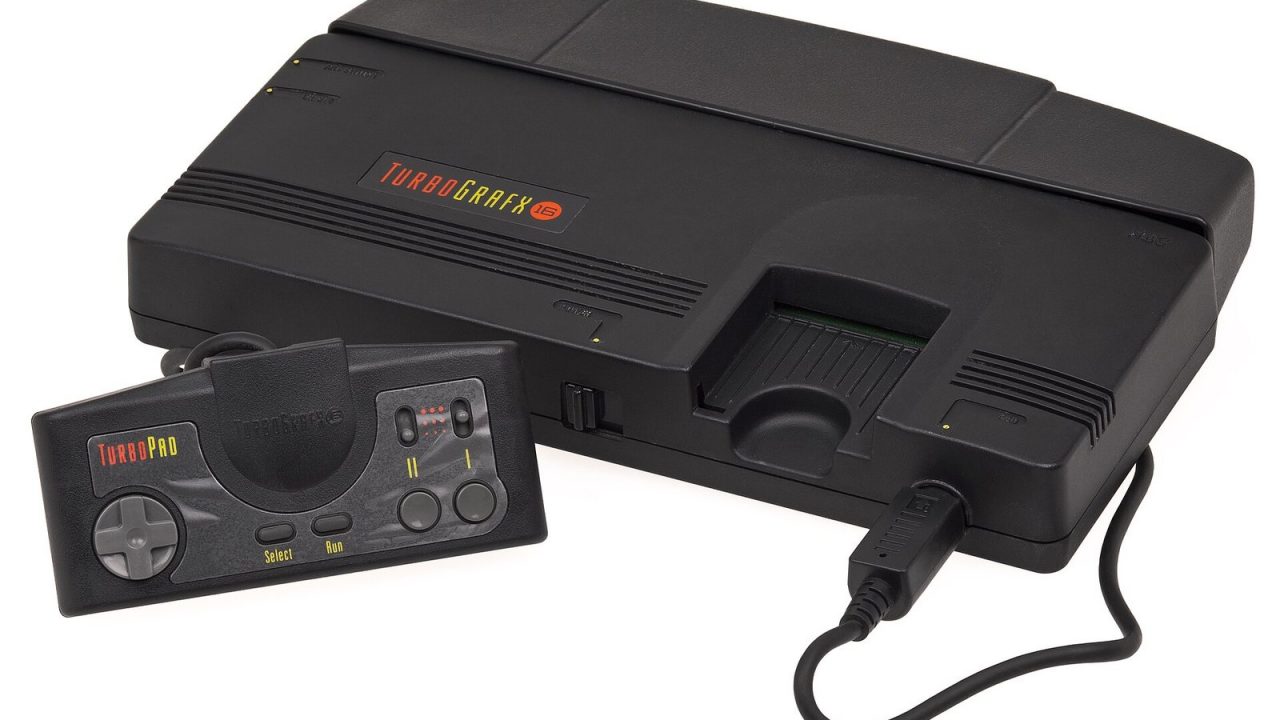
Few consoles have had as split a reputation as NEC’s PC Engine. In Japan it was a serious competitor to Nintendo’s Famicom and, for a time, one of the best-selling consoles in the country. It was tiny, it used games on cards the size of a credit card, and it became the first console to use CD-ROM for games. In North America, rebranded as the TurboGrafx-16, it arrived late, was outmarketed and struggled to find an audience. The story of how one machine had two such different lives says a lot about how much success depends on timing, marketing and software, not just hardware.
A Partnership: NEC and Hudson Soft
The PC Engine was a collaboration between two very different companies. Hudson Soft was a Japanese game developer and publisher with deep experience making games, including for Nintendo’s Famicom. NEC was an electronics giant that dominated the Japanese personal computer market but had limited experience in the games business. The console’s main chips carry Hudson’s HuC part names, and Hudson provided software expertise, while NEC manufactured the hardware and brought its corporate muscle.
The PC Engine launched in Japan on October 30, 1987, aimed squarely at the Famicom’s audience. It arrived about a year before Sega’s Mega Drive launched in Japan (1988) and well ahead of Nintendo’s Super Famicom (1990), which gave it a window as the most advanced home console available in its home market. For where it fits among other machines of the era, see our guide to console generations.
The Hardware: Small Machine, Big Graphics
The original PC Engine is remarkably compact, often described as the smallest major home console ever released. Inside, it paired an 8-bit CPU, the HuC6280 running at 7.16 MHz, with two 16-bit graphics chips. The graphics hardware could display hundreds of colors on screen at once from a palette of 512, and handle many sprites, which made its games look far more colorful than typical Famicom titles.
That mix of an 8-bit processor and 16-bit graphics would later cause controversy. When the console came to America as the “TurboGrafx-16,” critics called the “16” branding misleading, because the main CPU was 8-bit. In practice, the graphics hardware did most of the visible work, and many games held up well against true 16-bit competitors, but the label became an easy target for rival marketing.
HuCards
Games came on HuCards, credit-card-sized cartridges with a connector edge. They were cheap to make, easy to carry and robust, and they helped keep the console small. The North American TurboGrafx-16 versions (called TurboChips) altered the pin arrangement so that cards from one region would not work in the other’s console, an early form of physical region lockout.
The First CD-ROM Console
The PC Engine’s most important contribution to gaming history came on December 4, 1988, when NEC released the CD-ROM² (pronounced “CD-ROM-ROM”) add-on in Japan. It made the PC Engine the first video game console to use CD-ROM as a storage medium for games.
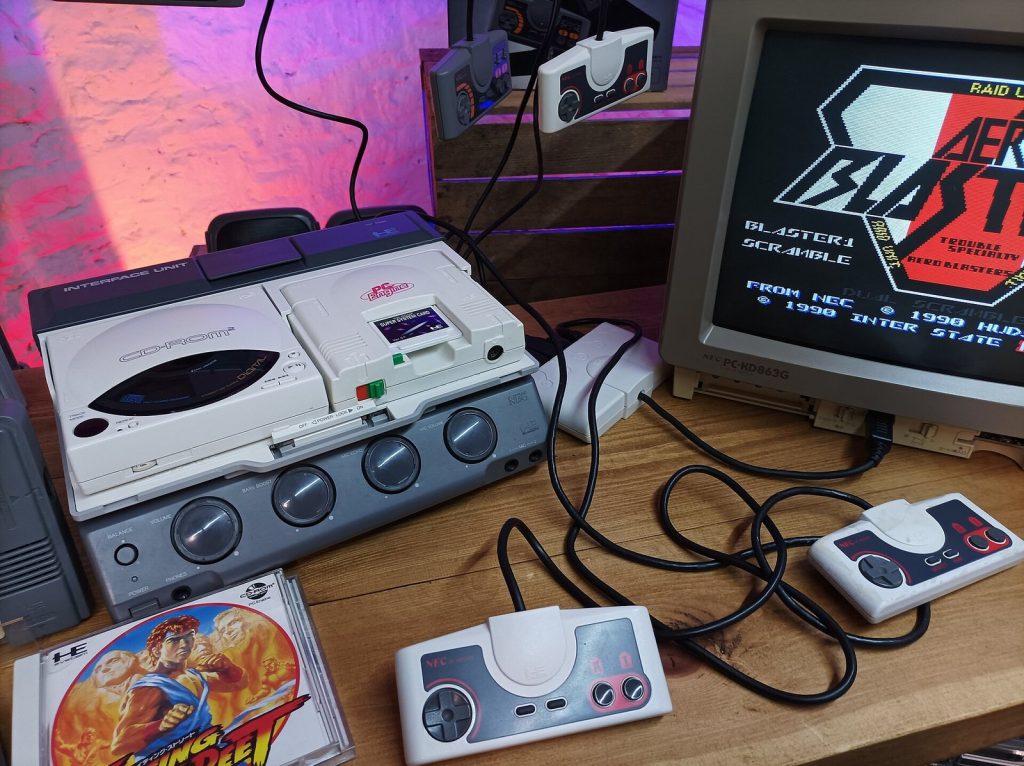
CD-ROM changed what games could contain. A disc held vastly more data than a cartridge, which allowed:
- Recorded music played directly from the disc rather than generated by sound chips.
- Voice acting and longer animated story scenes.
- Bigger games, especially role-playing and adventure titles that benefited from storage space.
One of the most celebrated early CD games was Ys Book I & II, which combined two action role-playing games with CD audio and animated scenes, and became a showcase for the format in both Japan and America.
NEC and Hudson kept upgrading the CD platform. The Super CD-ROM² standard arrived in 1991, raising the buffer memory from 64 KB to 256 KB through an updated system card, and the Arcade Card in 1994 increased memory further to 2 MB to support more ambitious ports, particularly of fighting games. The Arcade Card was never released in North America.
Success in Japan
In Japan, the PC Engine found a large and loyal audience. At one point it was reported as the top-selling console in the country. Its library leaned heavily toward genres that suited its strengths:
- Shooters. A large share of the library consists of horizontal and vertical scrolling shooters, including a well-regarded version of Irem’s R-Type, giving the console a lasting reputation among fans of the genre.
- Hudson franchises. Hudson brought its own series, including Bomberman, whose multiplayer modes became a staple, and created Bonk’s Adventure, the system’s best-selling game.
- CD-based role-playing and adventure games, which took advantage of the storage and audio of the CD-ROM² hardware.
Reported sales figures give a sense of scale: around 10 million HuCard-based units in Japan as of 1995, plus about 1.92 million CD-ROM² and Duo units as of March 1996. Support in Japan lasted long after the console ceased to be competitive; the final licensed release, Dead of the Brain Parts 1 & 2, came out in June 1999.
Struggles in North America
The TurboGrafx-16 launched in North America in late August 1989 in test markets before a wider rollout. It was redesigned as a larger black console, and it came bundled with Keith Courage in Alpha Zones, a Hudson game that was unknown to Western players and did little to show off the hardware.
Several problems combined against it:
- Timing. It launched in the same period as Sega’s Genesis, which was presented as the more advanced machine and quickly built momentum. (See our Genesis history for Sega’s side of that period.)
- Marketing. NEC’s American promotion was limited compared with Sega’s aggressive campaigns and Nintendo’s established presence.
- Library. Many of the Japanese library’s most popular games, especially text-heavy role-playing and CD titles, were never localized, so the American library was smaller and less distinctive.
- Price of the CD add-on. The TurboGrafx-CD launched at $399.99, a very high price for an accessory at the time.
NEC reported 750,000 consoles sold in the United States by March 1991. That was a meaningful number, but it left the TurboGrafx-16 a distant third behind Nintendo and Sega. In 1992, management of the North American business moved to Turbo Technologies, Inc., a joint venture between NEC and Hudson, which launched the TurboDuo in October 1992. The TurboGrafx line was discontinued in North America in May 1994.
The Many Variants
NEC released a surprising number of versions of the hardware, mostly in Japan. The main ones are:
| Model | Region and date | Notes |
|---|---|---|
| PC Engine | Japan, Oct. 1987 | Original white console |
| PC Engine Shuttle | Japan, Nov. 1989 | Budget model whose missing expansion port made it incompatible with the CD-ROM² add-on |
| PC Engine CoreGrafx | Japan, Dec. 1989 | Black-and-blue revision with a composite AV output in place of RF |
| PC Engine SuperGrafx | Japan, 1989 | Enhanced hardware with only a handful of exclusive games |
| TurboGrafx-16 | North America, Aug. 1989 | Larger redesigned case, TurboChip cards |
| PC Engine GT / TurboExpress | Japan and North America, 1990 | Handheld that plays HuCards |
| PC Engine Duo | Japan, Sept. 1991 | Console and CD drive combined in one unit |
| PC Engine LT | Japan, Dec. 1991 | Laptop-style unit with built-in screen |
| TurboDuo | North America, Oct. 1992 | American version of the Duo |
The TurboExpress
The TurboExpress, released in December 1990 and known in Japan as the PC Engine GT, deserves special mention. It was a portable that played the same HuCards as the home console, effectively a full home console in handheld form. That was an impressive technical achievement for its time, though, like other color handhelds of the period, it competed with the Game Boy’s long battery life and huge library.
The SuperGrafx
The SuperGrafx was an enhanced version of the hardware intended to keep the platform ahead of new competition. Only a handful of games were made specifically for it, and it is now mainly of interest to collectors.
Discontinuation and Legacy
The PC Engine family was discontinued in Japan in December 1994, after the arrival of the next generation of 32-bit consoles. In France, support ended even earlier, in December 1993.
Its legacy is larger than its Western sales suggest:
- CD-ROM gaming started here. The PC Engine showed that discs could deliver music, voice and larger games, ideas that became standard with the PlayStation and Sega Saturn generation.
- Compact design. Its size and card-based games remain striking even today.
- A beloved library. Its shooters, Hudson titles and CD games keep it popular with collectors, especially those who import Japanese games.
The console also returned officially. Konami, working with developer M2, released the PC Engine mini in Japan on March 19, 2020, followed by the TurboGrafx-16 Mini in North America on May 22, 2020, and the PC Engine CoreGrafx Mini in Europe on June 5, 2020; the Western releases were delayed by the COVID-19 pandemic. The Japanese model includes 58 built-in games and the international models 57, with an HDMI cable in the box. Like other plug-and-play mini consoles, it offers a legal way to play a selection of the library on modern TVs; for more options, see our guide to legal ways to play classic games.
Collector Notes
For collectors, the region split is the main thing to understand. Japanese HuCards and North American TurboChips are physically altered to prevent cross-region use, so a card from one region will not work in a standard console from the other. Because the Japanese library is much larger, many collectors focus on Japanese hardware. CD games were released for successive standards (CD-ROM², Super CD-ROM² and Arcade Card), so it is worth checking which standard a disc targets before assuming it will run on a given setup.