Sonic the Hedgehog (1991): How Sega Created a Mascot to Rival Mario
How a small Sega team built a blue hedgehog around speed, and how a bold pack-in decision turned Sonic into the face of the Genesis.
By the start of the 1990s, Nintendo had something Sega badly lacked: a character everyone recognized. Mario was on lunchboxes, cartoons and cereal boxes, and he was synonymous with home video games for a generation of children. Sega had capable hardware in the Mega Drive, sold in North America as the Genesis, and a reputation for strong arcade conversions, but no mascot with the same pull. Sonic the Hedgehog, released in 1991, was Sega’s deliberate answer to that problem, and it became one of the rare cases where a company set out to create an icon and actually succeeded.
Sega’s Search for a Mascot
According to standard accounts of the game’s development, Sega of Japan began an internal effort in 1988 to create a character who could compete with Nintendo’s plumber, and in 1990 Sega directed its development teams to work on a mascot game. Sega president Hayao Nakayama reportedly wanted a character as iconic as Mickey Mouse.
Designers pitched a range of ideas. Artist Naoto Ohshima’s hedgehog won the internal contest. A hedgehog had a useful built-in mechanic: it could curl into a spiky ball, giving the character a natural way to attack enemies by rolling into them.
The Team: Naka, Ohshima and Yasuhara
The game was built by a small group that would become known as Sonic Team. The core trio was:
- Yuji Naka, the lead programmer.
- Naoto Ohshima, who designed the character and much of the visual style.
- Hirokazu Yasuhara, who joined to supervise and design the levels and became the game’s lead designer.
The project began with just Naka and Ohshima and grew to a team that included additional programmers, sound engineers and designers. “Sonic Team” was at first an informal name for the group; it became official branding with the game’s 1991 release, and the studio later went on to work on titles such as Nights into Dreams.
The music came from outside the games industry. Masato Nakamura, bassist and songwriter of the Japanese pop group Dreams Come True, composed the soundtrack, giving the game catchy, pop-structured themes that stood apart from typical game music of the period. He was brought in after the team decided that music originally considered for the project, by Yūzō Kayama, would not suit the game’s style. The partnership between a programmer-led team and a working pop musician was itself a signal that Sega wanted Sonic to feel contemporary rather than childish.
Designing a Character With Attitude
Sonic was designed to be the opposite of Mario in personality. Where Mario was a friendly everyman, Sonic was meant to be impatient, confident and cool, a character defined by forward motion.
Several design decisions shaped his look:
- Color. Sonic’s blue was chosen to match Sega’s logo and to stand out clearly against the game’s backgrounds. His shade was adjusted several times during development, with Sega of America lightening it shortly before release.
- Shape. Ohshima has said the design combined a Felix the Cat-style head with a Mickey Mouse-style body, aiming for a simple, readable silhouette.
- Shoes. The red-and-white sneakers with buckles drew on the boots from Michael Jackson’s Bad era and on Santa Claus’s red-and-white color scheme.
The result was a character who looked fast even standing still, which was precisely the message Sega wanted to send.
Speed as a Design Statement
The central idea of Sonic the Hedgehog was speed. Most platform games of the era, including Nintendo’s own, asked players to move carefully through levels. Sonic’s levels were built to let players build momentum and race through slopes, loops and tunnels.
The technology behind the loops
Naka developed an algorithm that let a character sprite move smoothly along curved surfaces. That made the game’s signature loop-de-loops possible: Sonic could run up a slope, around a full vertical loop and back down without breaking stride. Naka has described Sonic as having the fastest character movement seen in a video game at the time. The Genesis’s Motorola 68000 processor, discussed in our Genesis history, gave the team the horsepower to move large, detailed backgrounds quickly.
One button, many uses
Naka wanted the controls to be as simple as possible. Sonic uses a single action: jump. Because Sonic curls into a ball when he jumps, the jump is also his attack. Rolling on the ground works the same way. This simplicity let players focus on movement and timing rather than memorizing inputs.
Rings: forgiving and risky at once
Rings are the game’s other key idea. As long as Sonic carries at least one ring, getting hit scatters his rings instead of killing him; he can grab some of them back before they disappear. Collecting 100 rings earns an extra life, and finishing certain acts with at least 50 rings opens the entrance to a special stage, where players can win a Chaos Emerald. This system made the game more forgiving for casual players moving at high speed, while still rewarding skilled players who kept their ring count high.
Wide levels with secrets
The game is divided into six principal zones, starting with the famous Green Hill Zone, each split into acts and ending in a confrontation with Dr. Robotnik (Eggman in Japan). Yasuhara’s maps are wide and full of hidden rooms, rewarding players who slow down to explore as well as those who sprint. That tension between racing ahead and exploring carefully is a large part of the game’s character.
Release and the Pack-In Decision
Sonic the Hedgehog was released for the Genesis in North America and PAL regions in June 1991 and in Japan in July 1991. The most important business decision around it, however, was made in the United States.
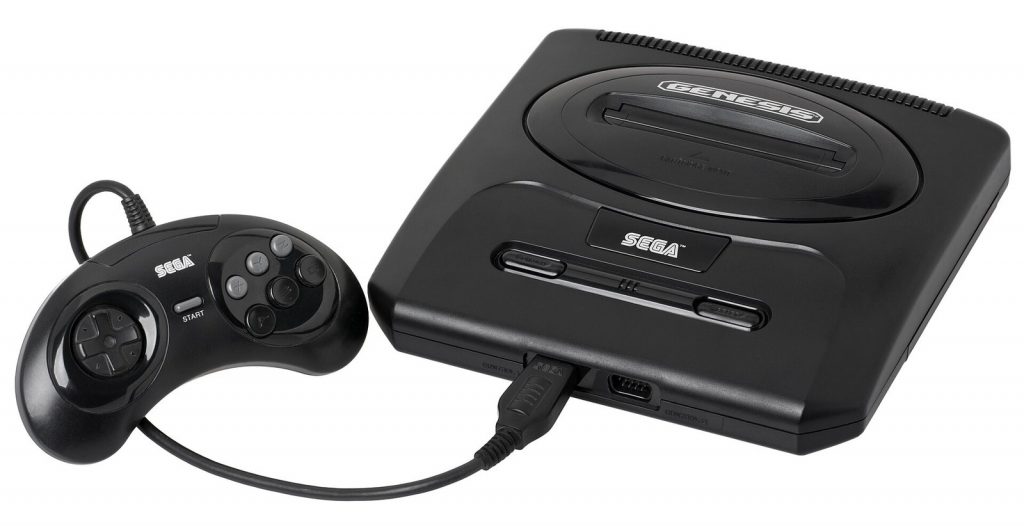
Tom Kalinske, the head of Sega of America, decided to bundle Sonic the Hedgehog with new Genesis consoles in North America, replacing the previous pack-in, Altered Beast. The bundle began in November 1991. Giving away the company’s most promising new game with every console was a risky move, because it meant forgoing standalone sales of that game to many new owners. Kalinske’s reasoning was that the console, not the game, was the product that mattered: if every new Genesis owner got Sonic in the box, the character would sell the hardware and the hardware would sell more games.
The timing was significant because Nintendo’s Super NES launched in North America in 1991. Sonic’s arrival on store shelves gave Sega a recognizable star to put in front of buyers comparing the two machines. The broader marketing battle, including Sega’s aggressive American advertising, is covered in our Sega vs. Nintendo console war explainer.
Sales and Market Impact
The results were dramatic. Reference accounts based on contemporary reports say the game sold around one million cartridges in the US by Christmas 1991 and two million copies worldwide by the end of that year, making it the best-selling home video game of 1991. By 1997 it had reportedly sold more than 14 million copies worldwide, a total boosted by the many copies sold as part of console bundles.
The hardware benefited too. According to reported figures, the Genesis outsold the Super NES by roughly two to one during the 1991 holiday season, and at its peak in early 1992 the Genesis held a majority of the US 16-bit console market. These figures came from the companies and trade press of the time and are best read as a snapshot of a specific period rather than a final verdict on the rivalry, which continued for several more years.
Equally important was perception. Sonic made Sega look like the modern, slightly rebellious alternative to Nintendo, an image that suited Sega’s marketing to older children and teenagers.
The 8-Bit Version
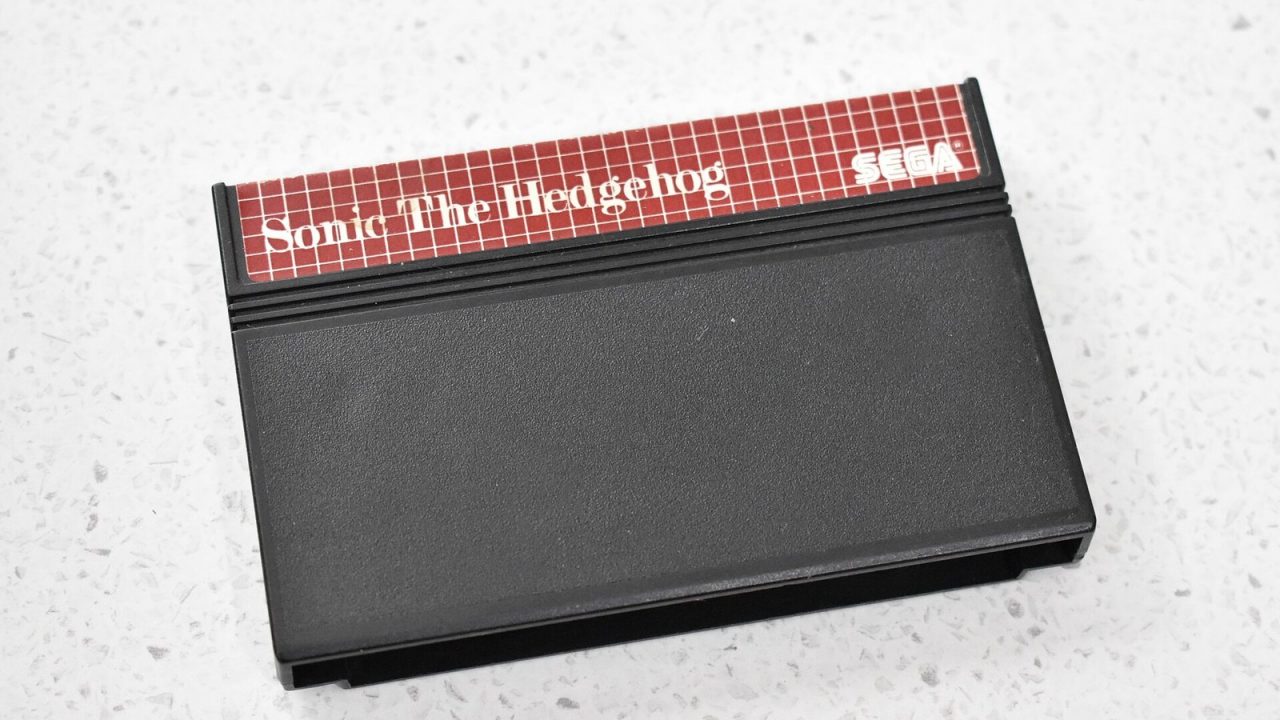
Sega also released a separate Sonic the Hedgehog for its 8-bit Master System and the Game Gear handheld in late 1991. Developed by the studio Ancient, it is not a straight port: the levels are different, the gameplay is simplified, there are no vertical loops, and the soundtrack was composed by Yuzo Koshiro. The Master System version was particularly important in Europe and Brazil, where Sega’s 8-bit console remained popular.
Legacy
The game’s influence reached well beyond its own sales:
- A franchise. Sonic became one of the biggest series in gaming, with sequels beginning with Sonic the Hedgehog 2 in 1992, which was developed in the United States at Sega Technical Institute by Naka, Yasuhara and others.
- A design template for “speed” platformers. Momentum, slopes and branching routes became a recognizable alternative to Mario’s precise, methodical approach; see our Super Mario Bros. history for the other side of that design contrast.
- A model for mascot marketing. Through the 1990s, many companies tried to create characters with “attitude” to sell their platforms, with mixed success.
- Sonic Team as a studio. The team that made the game continued as one of Sega’s flagship developers. Naka later said that Nights into Dreams (1996) was the point where Sonic Team truly became established as a brand, and he remained associated with the studio until announcing his departure from Sega in May 2006 to found his own company, Prope.
Common Misconceptions
“Sonic was created by one person.” The character and game came from a team. Ohshima designed the character, Naka programmed the game, and Yasuhara led level design; others contributed art, programming and sound.
“Sonic was always a pack-in.” The game was first sold on its own. The North American Genesis bundle began in November 1991, several months after release.
“Sonic single-handedly beat Nintendo.” Sonic gave Sega a period of strong momentum in the early 1990s, especially in North America and Europe, but the 16-bit rivalry was long and competitive, and the overall results varied by region and year.