The Tetris Story: From a Soviet Computer Lab to Global Phenomenon
How Alexey Pajitnov's Soviet puzzle game became a worldwide hit, and how a tangle of licenses ended with Nintendo, the Game Boy and The Tetris Company.
Few video games have a creation story as simple, or a business history as complicated, as Tetris. The game itself was made by one programmer in a Moscow research institute on a computer without color graphics. Getting it out of the Soviet Union, however, involved a British software agent, a newspaper magnate’s publishing empire, an American subsidiary, a Dutch-born entrepreneur living in Japan, a state trading agency, and Nintendo and Atari Games fighting it out in an American court.
This article separates the well-documented parts of that story from the dramatized versions. Where reliable sources disagree, including on the exact year the game was created, we say so.
A Puzzle Game at the Academy of Sciences
Alexey Pajitnov was born in Moscow in 1955. After graduating in 1979, he joined the Dorodnitsyn Computing Centre of the Soviet Academy of Sciences, where he worked on speech recognition research. He was also interested in puzzles, and in particular in pentominoes, a classic puzzle made of shapes built from five squares.
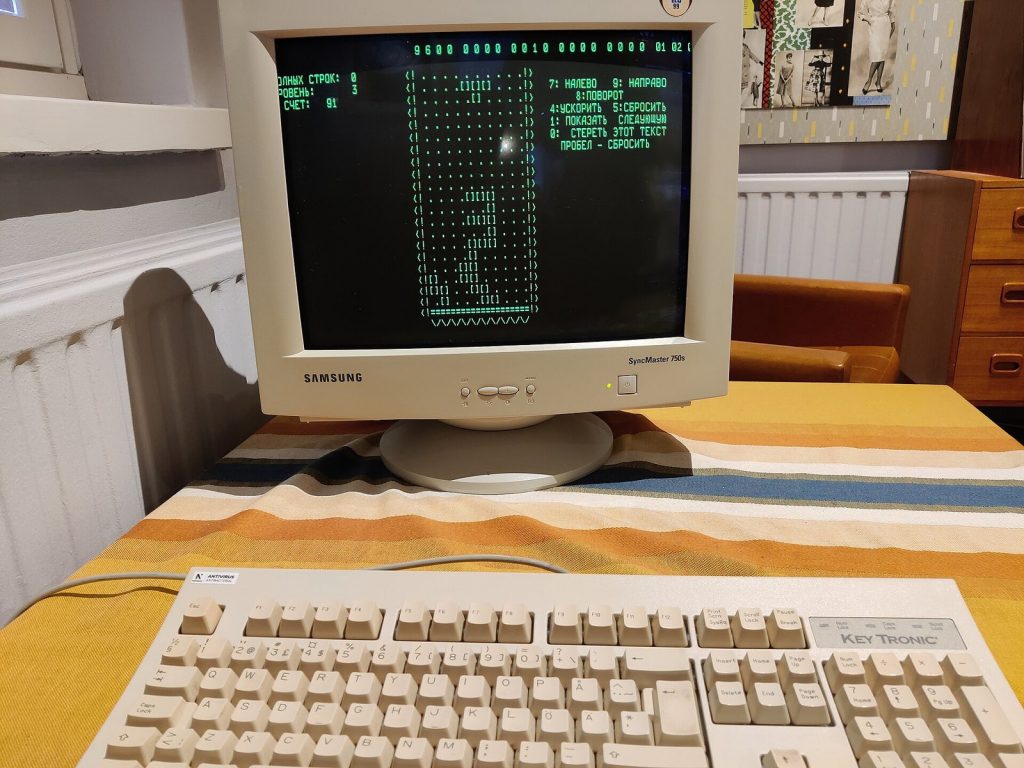
Pajitnov simplified the idea to shapes built from four squares, called tetrominoes. There are seven of them, and they are now instantly recognizable: the straight line, the square, the T, two L shapes and two S shapes. In his game, pieces fall into a well; the player moves and rotates them, and complete horizontal rows disappear. As the game progresses, the pieces fall faster.
The name joins “tetra,” the Greek prefix for four, with tennis, Pajitnov’s favorite sport. Sources differ on the exact date: The Strong National Museum of Play and many accounts give 1984, while other references place the first finished version in 1985. Pajitnov wrote it for the Electronika 60, a Soviet computer that displayed text rather than graphics, so the blocks were drawn with bracket characters. He later told an interviewer that the first version took about three weeks.
Pajitnov, Dmitry Pavlovsky and Vadim Gerasimov, a 16-year-old programming prodigy, helped port the game to the IBM PC, which added color and a score display. Copies then spread informally among computer users in Moscow and beyond. Under the arrangement in place at the time, the Computing Centre held the rights, and Pajitnov, as a state employee, did not receive royalties.
Out of the Soviet Union: Robert Stein and Mirrorsoft
A copy of the PC version reached the SZKI institute in Budapest in 1986, where Robert Stein saw it during a visit. Stein ran Andromeda Software, a London company that licensed Hungarian software to British publishers. Stein recognized its potential and contacted the Computing Centre about rights.
Here the story becomes complicated. According to detailed reference accounts, Stein began selling rights before he had a finalized agreement with the Soviet side. He licensed the game to Mirrorsoft, the software arm of Robert Maxwell’s British publishing group, and to its American affiliate Spectrum HoloByte. Mirrorsoft released the game in the UK on January 27, 1988, and Spectrum HoloByte released it in the United States two days later.
Meanwhile, software export from the Soviet Union was the responsibility of Elorg (Elektronorgtechnica), the state organization that held a monopoly on importing and exporting computer software and hardware. Elorg took over negotiations, and an agreement with Stein was drafted in early 1988 and finalized by May. Crucially, it covered computer versions. What it did not clearly cover were arcade, console and handheld rights, and that ambiguity was about to matter a great deal.
Henk Rogers and the Race for Console Rights
Henk Rogers was a Dutch-born game developer and publisher based in Japan, where he ran Bullet-Proof Software. He encountered Tetris at the Consumer Electronics Show in early 1988 and set about acquiring Japanese rights for computers and consoles through the existing chain of sublicenses. Bullet-Proof released versions for Japanese computers in November 1988 and a Famicom version in December 1988.
Nintendo, meanwhile, was preparing to launch the Game Boy and wanted a game that would appeal to everyone. Rogers believed Tetris was that game and set out to secure handheld rights. When his efforts through Stein stalled, he did something unusual: in February 1989 he traveled to Moscow and approached Elorg directly.
Accounts of that trip have been embellished over the years, most recently in the 2023 film Tetris, which dramatizes events with car chases and confrontations that did not happen as shown. The documented outcome is clear, though. Elorg’s officials learned how the game was being sold in the West, and they confirmed that console and handheld rights had not been granted to anyone. Rogers negotiated handheld rights for Nintendo, and Nintendo ultimately secured both handheld and home console rights directly from Elorg.
Other parties were negotiating with Elorg in the same period, including Stein and Kevin Maxwell of the Maxwell publishing group, adding to the confusion. Mirrorsoft had also sold non-computer rights to Tengen, the console label of Atari Games, which prepared its own NES version. When the dispute reached court, the judge found that Mirrorsoft and Spectrum HoloByte had never received explicit authorization for console versions.
Nintendo vs. Atari Games: The Court Battle
The dispute came to a head in 1989. The sequence, as reconstructed from court records and reference sources, was:
| Date | Event |
|---|---|
| March 31, 1989 | Nintendo’s Howard Lincoln sends a cease-and-desist letter to Atari Games over Tengen’s planned NES Tetris |
| May 17, 1989 | Tengen releases its NES version anyway |
| June 14, 1989 | Game Boy Tetris released in Japan |
| June 22, 1989 | Judge Fern M. Smith grants Nintendo a preliminary injunction against Atari Games; Tengen withdraws its cartridge |
| July 31, 1989 | Game Boy launches in North America with Tetris bundled |
| November 13, 1989 | The court grants Nintendo summary judgment, confirming its console rights |
Tengen’s version was on shelves for only a matter of weeks. Nintendo released its own NES Tetris in North America later in 1989. The episode was also part of a broader legal conflict between the two companies over Atari Games’ unlicensed NES cartridges, which deserves its own explanation.
The Game Boy Version: A Perfect Match
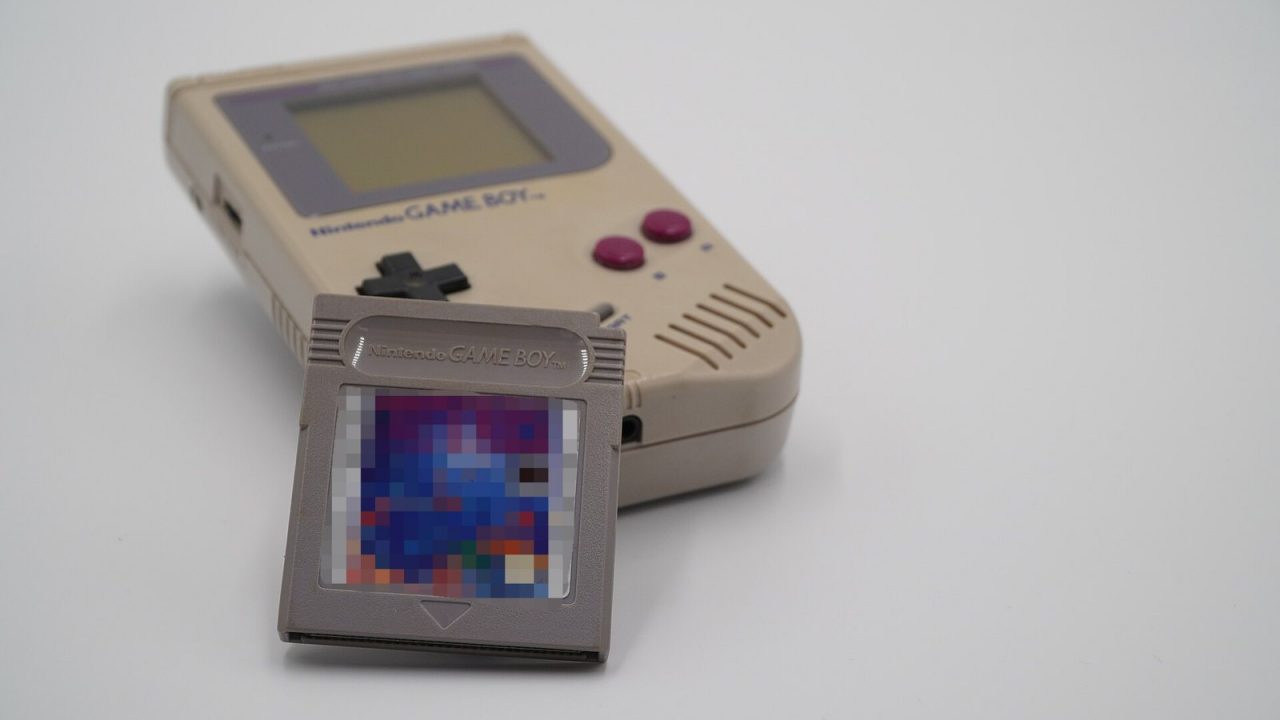
The Game Boy version, developed by Nintendo, became the definitive edition for millions of players. Outside Japan, it was bundled with the console, a decision covered in our history of the Game Boy. Tetris suited the hardware perfectly. It was readable on a small monochrome screen, worked in short sessions, did not suffer from the screen’s motion blur, and supported two-player battles over the Game Link Cable.
Its music also became famous. The best-known track, “Type A” in the game, is an arrangement of “Korobeiniki,” a 19th-century Russian folk song. For many players outside Russia, the Game Boy was their first encounter with the melody.
Reference sources report that the Game Boy version has sold about 35 million copies, making it the best-selling single version of the game. The Strong museum credits the Game Boy bundle with turning Tetris into a worldwide pop-culture phenomenon, and the museum inducted the game into its World Video Game Hall of Fame in 2015.
Rights Return to Pajitnov and The Tetris Company
The Soviet Union collapsed in 1991, and Pajitnov moved to the United States, where Rogers helped him settle. The Computing Centre’s ten-year rights arrangement expired at the end of 1995, and the rights reverted to Pajitnov. Rogers formed Blue Planet Software to work with him, and in 1996 The Tetris Company was established as a partnership between Blue Planet and Elorg. Only then did Pajitnov begin to earn royalties from his creation, more than a decade after he made it.

The Tetris Company introduced standardized guidelines for licensed versions, covering elements such as piece colors, controls and rotation behavior, so that official Tetris games feel consistent across platforms. In 2005, Rogers acquired Elorg’s interest and formed Tetris Holding, which took over the trademarks and rights. The company has defended the game’s look and feel in court: in a 2012 case, Tetris Holding v. Xio Interactive, a US judge ruled that a mobile clone infringed Tetris’s copyright.
Pajitnov himself worked at Microsoft from 1996 to 2005, contributing to puzzle games there, and designed other puzzle titles, including Hexic. He has received industry honors including the Game Developers Choice Awards’ First Penguin Award in 2007.
Common Myths and Misunderstandings
- “Pajitnov got rich immediately.” He received no royalties while the game was owned by his state employer; his share came after the rights reverted in the mid-1990s.
- “Nintendo stole the game from Atari.” The courts found that Atari Games’ sublicense did not cover console rights, and Nintendo had obtained them from Elorg directly.
- “The film is a documentary.” The 2023 movie follows the real outline of Rogers’s trip but invents or exaggerates many scenes for drama.
- “Tetris has an exact creation date.” Reliable sources give different years, 1984 or 1985, and the precise date is less certain than popular retellings suggest.
- “Tetris is the best-selling game ever.” Totals are often quoted in the hundreds of millions, but they combine many different versions, including mobile downloads. The Tetris Company has reported cumulative figures over 500 million, while some outlets dispute comparing that total with single-release games.
Why Tetris Endures
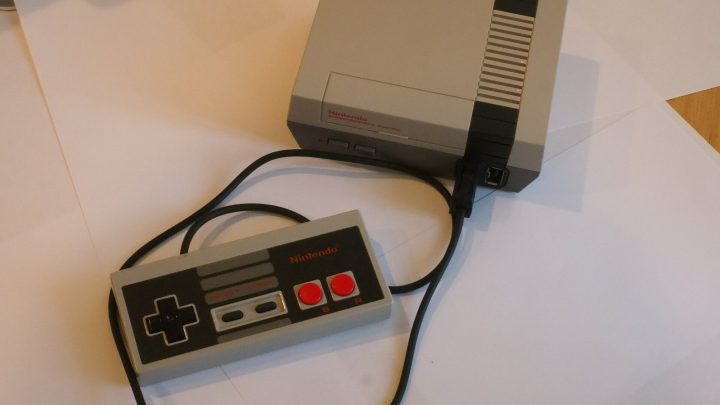
Tetris has appeared on almost every gaming platform: arcades, home computers, consoles, handhelds and phones. Its rules fit in a sentence, yet it keeps generating new challenges, from casual play to modern competitive scenes built around classic versions such as NES Tetris. It also had an outsized effect on Nintendo: it helped turn the Game Boy into a mass-market device and showed that games could appeal far beyond the traditional audience. The NES had brought home gaming back in North America; Tetris on the Game Boy helped bring gaming to people who had never thought of themselves as players.
Perhaps the most remarkable part of the story is the contrast at its heart. A game designed by one researcher, with no thought of profit, became the subject of international negotiations and courtroom battles. Yet the falling blocks themselves have remained essentially unchanged, which is the best evidence of how well Pajitnov got the design right the first time.