The Nintendo Entertainment System: How the NES Revived Home Gaming
How Nintendo's Famicom became the NES: the 1983 Japanese launch, the VCR-style redesign, R.O.B. as a toy-store strategy, licensing rules and the launch games.
When the Nintendo Entertainment System reached American stores in 1985, many retailers were convinced home video games were finished. Two years earlier the North American console market had collapsed, leaving warehouses full of unsold cartridges and buyers who had sworn off the category. Within a few years the NES was everywhere, and Nintendo had become a household name.
The NES story actually starts in Japan with the Family Computer, or Famicom. This article follows the console from its Japanese debut through its careful reinvention for North America, including the design decisions, the robot and the licensing rules that made the comeback possible.
The Famicom: Nintendo’s Home Console Debut in Japan
Nintendo had already made dedicated home consoles (the Color TV-Game series) and arcade machines, including the hit Donkey Kong, before it built a cartridge-based system. The Family Computer was designed under the direction of company president Hiroshi Yamauchi, with Masayuki Uemura as lead engineer. The goal was a machine that was simple and cheap enough to sell widely while still running arcade-style games well.
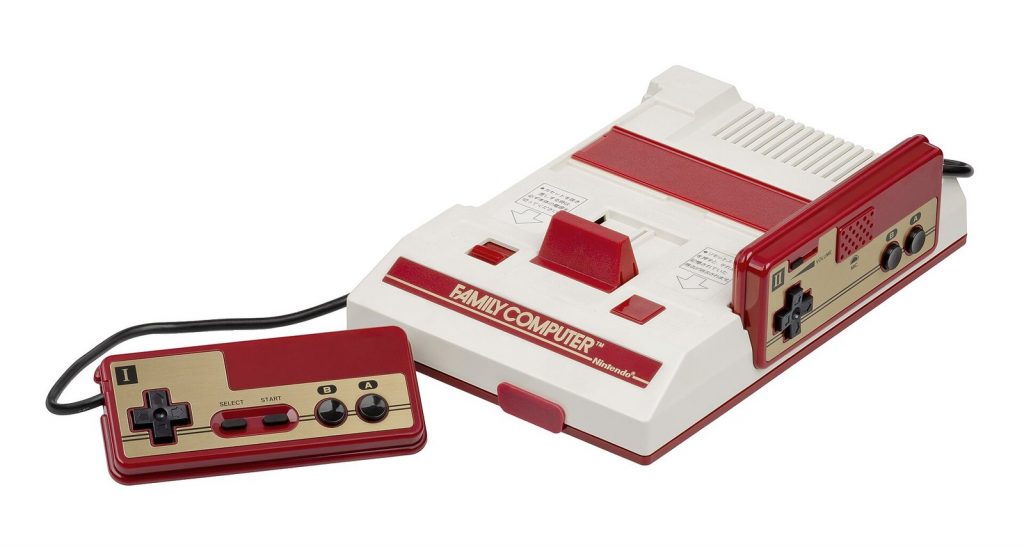
The Famicom launched in Japan on July 15, 1983, priced at ¥14,800. It came with a distinctive red-and-white case and two controllers hardwired into the console. Its three launch games were Nintendo’s own arcade conversions: Donkey Kong, Donkey Kong Jr. and Popeye.
The launch was not smooth. Early units had a faulty chip that could cause the console to freeze, and Yamauchi ordered a full recall to fix the problem, a costly decision that protected the system’s reputation. After that rough start, the Famicom became a major success in Japan, helped by a growing library and the arrival of third-party publishers, which Nintendo allowed from 1984 in exchange for licensing fees.
Finding a Way Into America
Bringing the Famicom to North America was complicated by timing. The American market was in the middle of the video game crash of 1983, and retailers had little appetite for another console.
Nintendo first explored a distribution deal with Atari, then the biggest name in American gaming. Those negotiations collapsed in 1983, amid a dispute over a Donkey Kong conversion that Coleco had shown on a home computer and turmoil at Atari’s top level. Nintendo decided to go it alone through its American subsidiary.
Its first attempt was a more computer-like package called the Advanced Video System, shown at the Winter Consumer Electronics Show in January 1985. It did not find buyers among retailers, and Nintendo went back to the drawing board.
The Front-Loading “Toaster” Redesign
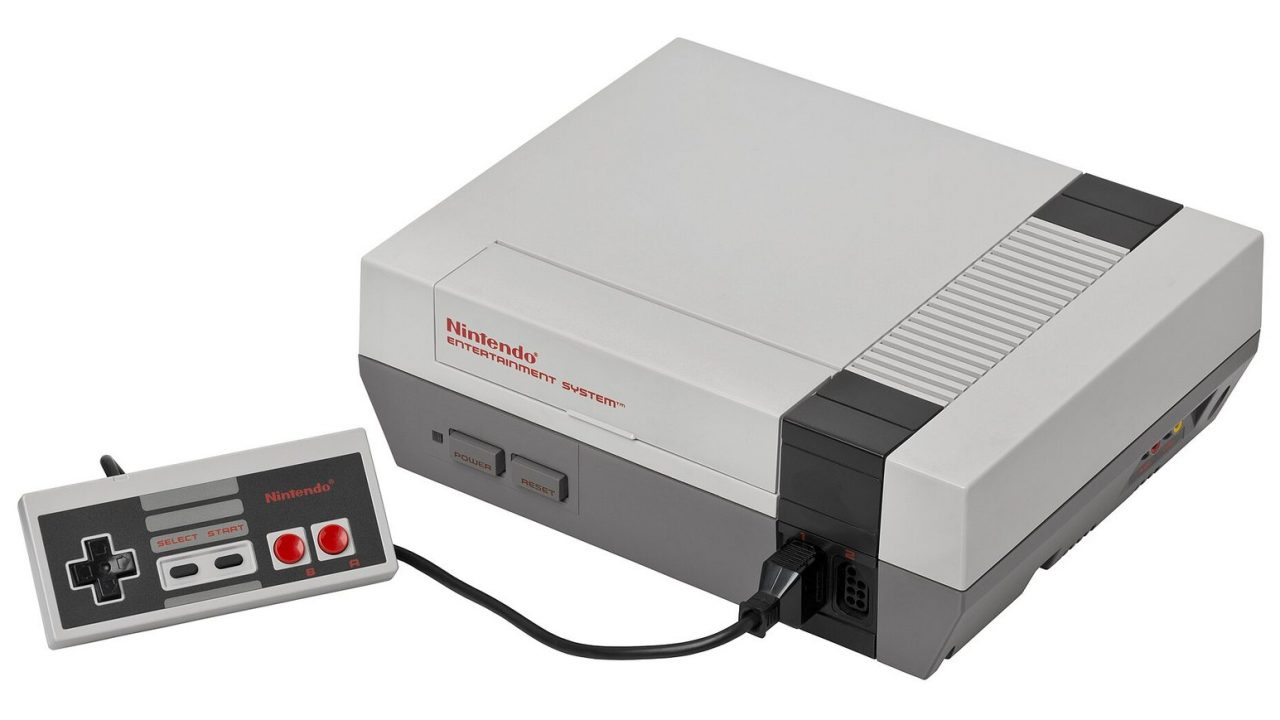
The console Nintendo actually launched in North America looked nothing like the Famicom. Designers Lance Barr and Don James created a gray, boxy unit with a hinged door on the front. You slid a cartridge in horizontally and pushed it down, much as you would load a tape into a VCR. Fans later nicknamed it the “toaster,” but the resemblance to home video equipment was intentional.
Nintendo also changed the language around the product. It was not a video game console; it was the Nintendo Entertainment System. The console was the “Control Deck,” and cartridges were “Game Paks,” terms credited to Nintendo of America’s Gail Tilden. Everything was designed to separate the NES from the consoles retailers had been burned by.
Under the redesign, the hardware was closely related to the Famicom. Both used a Ricoh processor based on the MOS Technology 6502. The NES used a 72-pin cartridge connector, compared with 60 pins on the Famicom, and some early North American games were actually Famicom boards fitted with adapters inside NES shells. The front-loading mechanism had a downside: over time its connector could wear and fail to make good contact, which produced the familiar blinking screen and the era’s well-known (and not recommended) habit of blowing into cartridges. Nintendo later released a smaller top-loading model, the NES-101, in 1993.
R.O.B. the Robot: A Toy Store Strategy
Perhaps the cleverest part of the North American launch was R.O.B., the Robotic Operating Buddy. Released in North America on October 18, 1985, alongside the NES itself, R.O.B. was a small plastic robot that responded to flashes of light from the TV screen using a photosensor, the same basic technology as the NES Zapper light gun.
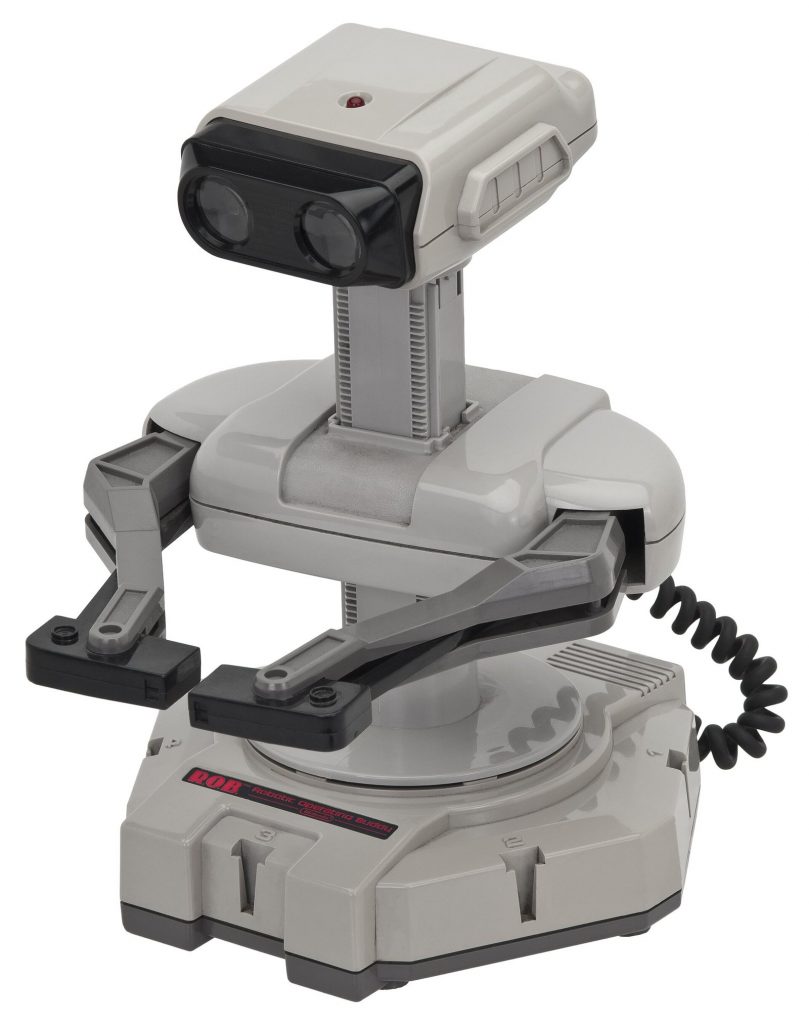
R.O.B. worked with only two games, Gyromite and Stack-Up, and was slow and fiddly to play with. But that was not really the point. The robot let Nintendo pitch the NES as a high-tech toy, which helped it into toy stores and toy departments that were refusing to stock “video games.” Historians often call R.O.B. a Trojan horse: once the NES was in the home, players spent their time with regular controller games. Even so, the robot clearly worked as a hook; a 1986 survey of NES owners cited by Wikipedia found that children wanting the robot was the most common reason for buying the system.
The 1985 Deluxe Set bundled the NES with R.O.B., the Zapper and games. A cheaper 1986 package, the Control Deck bundled with Super Mario Bros., eventually became the more popular way to buy the system.
A Careful Rollout
Nintendo did not launch everywhere at once. The NES had a test launch in New York City on October 18, 1985, followed by Los Angeles in February 1986, then additional markets, before a nationwide release in September 1986. To reassure nervous stores, Nintendo reportedly took on much of the risk of unsold inventory.
Europe and Australia received the NES later and more slowly. Parts of Europe got the console in 1986, with most other European countries following in 1987. In several markets, including the UK, Italy and Australia, distribution was initially handled by Mattel. In Europe, home computers remained strong competitors through the decade.
Licensing Rules and the Seal of Quality
Nintendo’s biggest lesson from the crash was that a platform flooded with poor games could lose the public’s trust. Its answer was strict control over who could publish NES games and how.
- The 10NES lockout chip. NES consoles contained an authentication chip designed to stop unlicensed cartridges from running.
- Nintendo controlled manufacturing. Licensed publishers had to have their cartridges produced through Nintendo, which gave Nintendo control over supply and quality.
- Release limits. Publishers were generally limited in how many titles they could release per year, initially five, and were expected to keep their NES games exclusive to the platform for a period.
- The Seal of Quality. Approved games carried Nintendo’s official seal, signaling to shoppers that a game had been licensed.
Some publishers worked around the yearly limit by setting up additional labels. Others, such as Tengen, challenged the system directly. Nintendo’s practices eventually attracted antitrust scrutiny, and the company reached a settlement with the US Federal Trade Commission in 1991. Still, the rules achieved Nintendo’s main goal: retailers were willing to trust video games again.
The Launch Games
The North American launch lineup leaned heavily on Nintendo’s own titles, many of them simple sports or arcade-style games that had already appeared on the Famicom. Among the best known:
- Super Mario Bros. The game that defined the system and, for many people, the entire side-scrolling platformer genre.
- Duck Hunt and Hogan’s Alley, light-gun games for the Zapper.
- Gyromite and Stack-Up, the R.O.B. games.
- Excitebike, a motocross game with a built-in track editor.
- Sports titles such as Tennis, Golf, Baseball and Soccer.
Super Mario Bros. in particular gave the NES something no previous console had in quite the same way: a single game that showed off a new style of play and made people want the hardware. Within a few years the console’s library would include the first entries in series such as The Legend of Zelda, Metroid, Mega Man and Castlevania.
The Famicom Disk System and Japanese Extras
The Japanese version of the platform had extras American players never saw. The Famicom Disk System, released in Japan on February 21, 1986, added a drive that used small proprietary floppy disks. Disks held more data than cartridges of the time and allowed games to save progress, and kiosks in shops let players rewrite disks with new games for a fee. Advances in cartridge technology soon made the add-on less necessary, and the last Disk System game was released in 1992.
Sales and Long Life
According to Nintendo’s official figures, the Famicom and NES together sold 61.91 million units worldwide, with about 500 million software units, as listed on Nintendo’s investor relations site. The system enjoyed an unusually long life. The NES was discontinued in North America, Europe and Australia in 1995, while the Famicom remained in production in Japan until September 2003.
Why the NES Mattered
The NES did more than sell well. It rebuilt the North American console market after the crash, established Nintendo as a global brand and helped Japanese companies dominate console gaming for years. Its licensing model, with a platform holder approving and controlling software, became the template for the console business. Many of its franchises are still running decades later.
It also left a lasting mark on how consoles are remembered and resold. Nintendo’s NES Classic Edition, a miniature replica with 30 built-in games, sold out repeatedly after its November 2016 release. For where the NES sits among its contemporaries, see our guide to console generations; if you want to own one, our beginner’s guide to collecting covers the basics.