Video Game Console Generations Explained: From the Odyssey to the Modern Era
How console generations are counted, from the 1972 Magnavox Odyssey to the PS5 and Switch 2, with the key machines and technical shifts of each era.
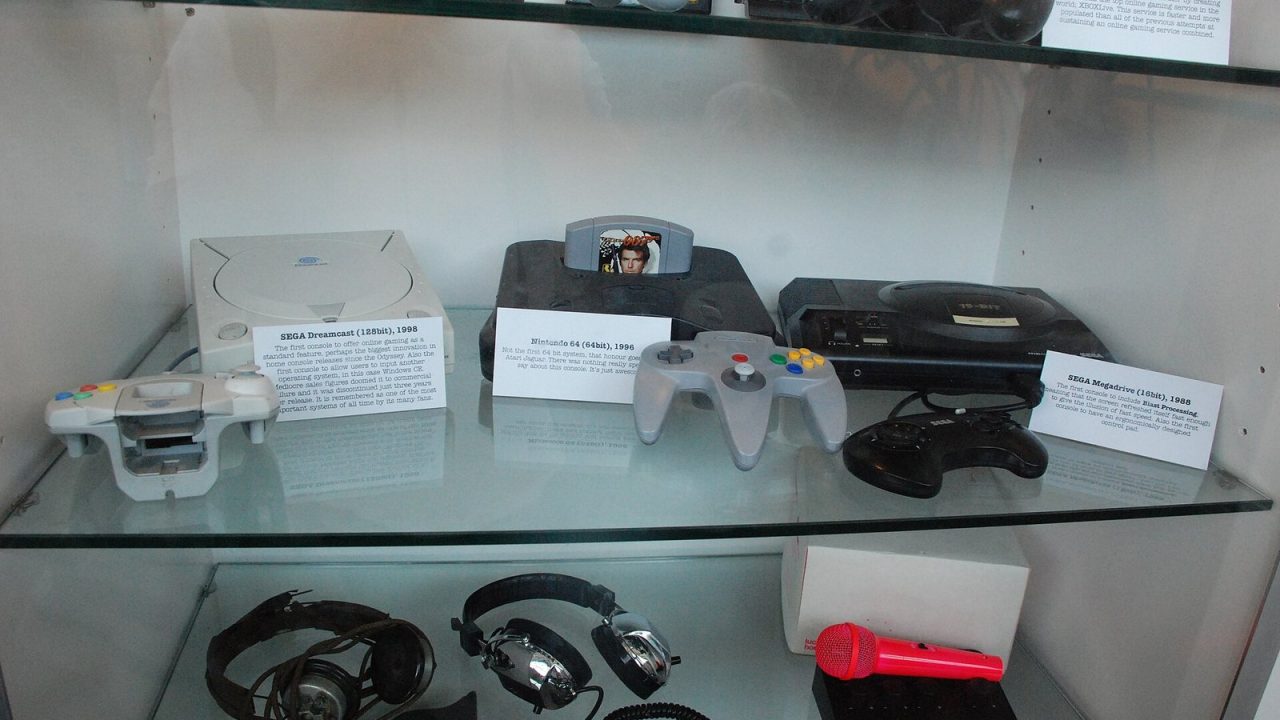
Ask any long-time player which “generation” the Super Nintendo belongs to and you will probably hear “the fourth” or “the 16-bit era” without hesitation. Ask the same question about the Neo Geo, the TurboGrafx-16 or the Dreamcast and the answers start to wobble. Console generations are one of the most useful tools for talking about gaming history, but they are also a convention, applied after the fact, that historians and writers do not always agree on.
This guide walks through the generations as they are most commonly counted, from the Magnavox Odyssey in 1972 to the current era, and explains the technical shifts that make each one feel distinct. It also flags where the boundaries blur.
What a “Generation” Actually Means
A console generation is a rough grouping of machines released around the same time that competed with each other and shared a similar level of technology. The most widely used numbering, popularized by Wikipedia and repeated across the press, describes generations as lasting roughly five to seven years, though the eras overlap heavily: a generation is usually said to begin when the first console with its defining features appears and to end only when the last of its machines is discontinued.
Three points are worth keeping in mind before diving in:
- The numbering is retroactive. Nobody in 1977 called the Atari VCS a “second-generation console.” The labels were applied decades later, mostly in the 2000s, to organize history neatly.
- There is no official standard. No industry body or academic authority defines the generations. Some historians group machines by market data, others by technology, and they reach different results.
- “Bits” stopped being useful. For the early eras, processor word size (8-bit, 16-bit) was a handy shorthand, partly because marketing made it one. By the late 1990s hardware had diverged so much that bit counts became meaningless, and later generations are grouped mostly by release date.
The First Generation (1972 onward): Dedicated Machines
The story starts with the Magnavox Odyssey, released in 1972 and based on Ralph Baer’s “Brown Box” prototype. It had no processor in the modern sense and no sound. Games were selected with plug-in circuit cards that rewired the machine’s logic, and players taped translucent overlays onto their TV screens to add color and scenery.
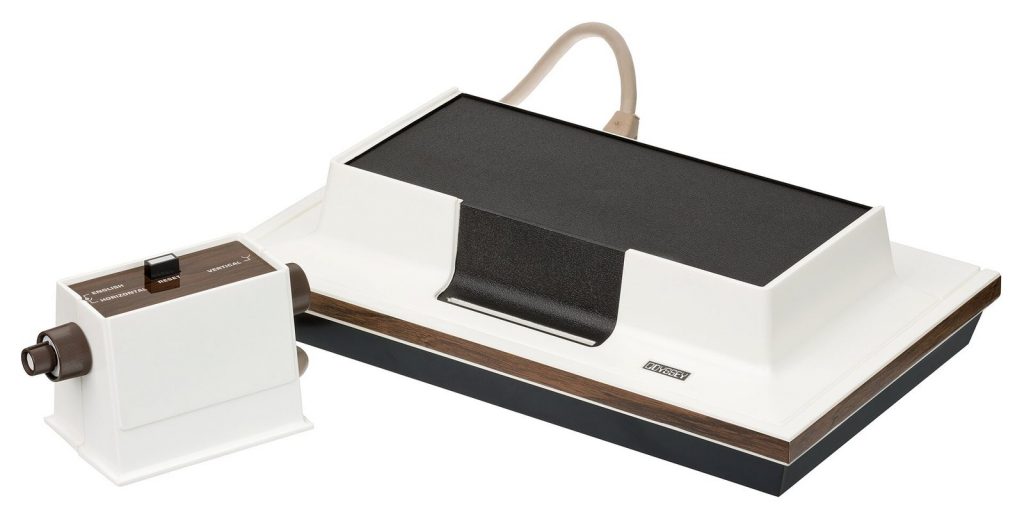
The Odyssey’s ping-pong game inspired Atari’s arcade Pong, and Atari’s own Home Pong arrived in 1975, sold through Sears. A wave of dedicated machines followed, including Coleco’s Telstar (1976) and Nintendo’s Color TV-Game series in Japan (from 1977). Most first-generation consoles played only a handful of built-in ball-and-paddle variations, and a flood of near-identical clones helped the format fade once programmable systems appeared.
The Second Generation (1976 onward): Cartridges Change Everything
The defining shift of the second generation was the ROM cartridge. The Fairchild Channel F, released in November 1976, was the first console to use swappable ROM cartridges, meaning one machine could play an open-ended library of games. Atari’s VCS, later renamed the Atari 2600, followed in 1977 and became the era’s dominant system.
Other important machines included Mattel’s Intellivision (1980) and the ColecoVision (1982), which offered graphics closer to arcade games of the period. This was also the generation when third-party publishers appeared, starting with Activision, founded by former Atari programmers. The era ended badly in North America: an oversupplied market and a glut of weak games led to the market collapse now known as the video game crash of 1983, which left North American retailers wary of consoles for several years. That collapse is a big part of why the next generation’s defining machine came out of Japan.
The Third Generation (1983 onward): The 8-Bit Era
Nintendo’s Family Computer (Famicom) launched in Japan in 1983, the same year as Sega’s SG-1000. Nintendo redesigned the Famicom for North America as the Nintendo Entertainment System, which launched there in 1985. Sega answered with the Master System in 1986, and Atari released the 7800 in 1987.
The third generation is usually called the 8-bit era because of the processors these machines used. Its real significance: Nintendo’s licensing system and tight control over cartridge manufacturing helped rebuild retailer confidence after the crash, and the NES library established the conventions of the side-scrolling platformer, the console action-adventure and the console RPG. Japanese companies would dominate the hardware business for the next decade and a half.
The Fourth Generation (1987 onward): The 16-Bit Wars
The fourth generation began with NEC’s PC Engine in Japan in 1987, sold in North America as the TurboGrafx-16. Its marketing leaned heavily on the “16-bit” label even though its main CPU was an 8-bit chip with 16-bit graphics hardware, an early sign that bit counts were becoming advertising rather than engineering.
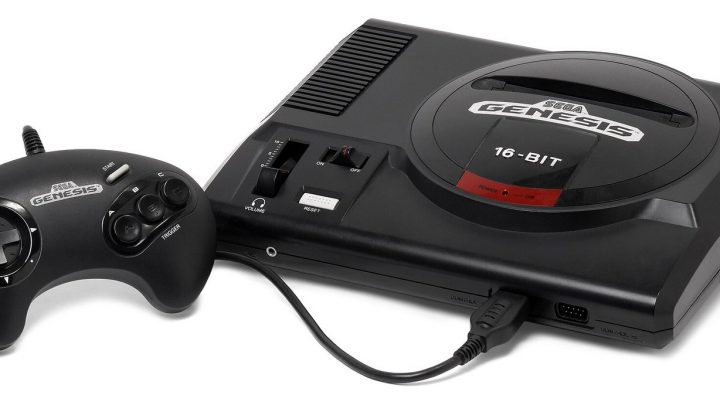
Sega’s Mega Drive followed in Japan in 1988 and reached North America as the Genesis in 1989. Nintendo’s Super Famicom launched in Japan in 1990 and arrived in North America as the Super NES the following year. SNK’s Neo Geo, a home version of its arcade hardware, also launched in 1990 at a much higher price point.
This era is remembered for the marketing rivalry between Sega and Nintendo, and for the first steps toward optical media and 3D. CD-ROM add-ons appeared for the PC Engine (1988) and the Mega Drive (Mega-CD, 1991). On the SNES, the Super FX chip inside Star Fox cartridges (1993) brought real-time polygon graphics to a mainstream console.
The Fifth Generation (1993 onward): Discs and the Jump to 3D
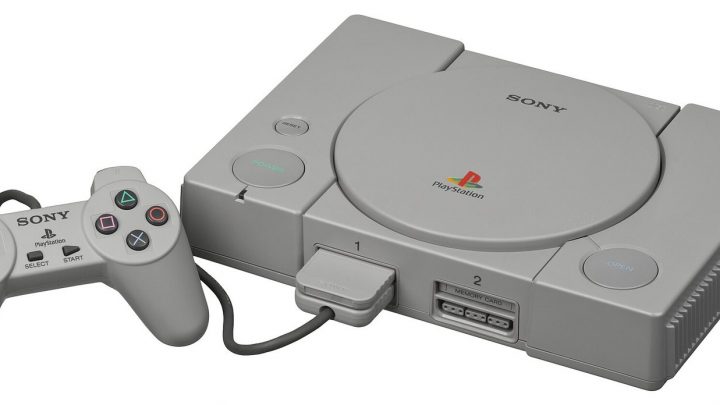
The fifth generation is where the old categories break. The 3DO and Atari Jaguar both launched in 1993, the Jaguar with heavy “64-bit” marketing. Sega’s Saturn and Sony’s PlayStation both debuted in Japan in late 1994, and Nintendo followed with the Nintendo 64 in 1996.
Two technical shifts define the era:
- Optical discs became standard. CDs were cheap to manufacture and held far more data than cartridges, enabling full-motion video, CD-quality audio and larger games. The Nintendo 64 was the notable exception, sticking with cartridges for their fast loading and resistance to copying.
- 3D polygons became the default. Developers had to invent new answers to camera control, movement and level design. The Nintendo 64’s analog stick and the PlayStation’s later DualShock controller reflected how much input had to change to suit 3D worlds.
The Sixth Generation (1998 onward): Online Arrives
Sega’s Dreamcast launched in Japan in 1998 and in the West in 1999. It was the first console with a built-in modem, an important step toward online console play. Sony’s PlayStation 2 followed in 2000 and added DVD playback, which made it an attractive purchase for households that had not yet bought a DVD player. Microsoft entered the market with the Xbox in 2001, the same year Nintendo released the GameCube.
Microsoft’s Xbox Live service, launched in 2002, is generally credited as the first major unified online service for a console, with a single account system, voice chat and matchmaking. The Dreamcast’s early exit also marked the end of Sega’s time as a hardware maker; the company announced in 2001 that it was leaving the console business to focus on software.
The Seventh Generation (2005 onward): HD, Motion and Downloads
The Xbox 360 launched in 2005, followed by the PlayStation 3 and Nintendo’s Wii in 2006. The 360 and PS3 brought high-definition output into the mainstream, while the Wii took a different route with motion controls and a strong pitch to people who had never thought of themselves as gamers.
This generation also normalized digital distribution on consoles. Downloadable games, retro re-releases and paid add-ons became routine through online stores such as the PlayStation Store and the now-closed Wii Shop Channel.
The Eighth and Ninth Generations: The Modern Era
The eighth generation began with Nintendo’s Wii U in 2012, followed by the PlayStation 4 and Xbox One in 2013 and the Nintendo Switch in 2017. Both the PS4 and Xbox One moved to x86 processors similar to those in PCs, which made cross-platform development simpler. Mid-generation refreshes such as the PS4 Pro and Xbox One X pushed toward 4K output. The Switch blurred the line between home and handheld consoles entirely.
The ninth generation started in November 2020 with the Xbox Series X/S (November 10) and the PlayStation 5 (November 12). Their headline features are fast internal SSDs that cut loading times, hardware support for ray tracing and high frame rates at 4K. Nintendo’s Switch 2 launched on June 5, 2025. Writers do not all agree on whether it belongs in the ninth generation.
Summary Table of Key Home Consoles by Generation
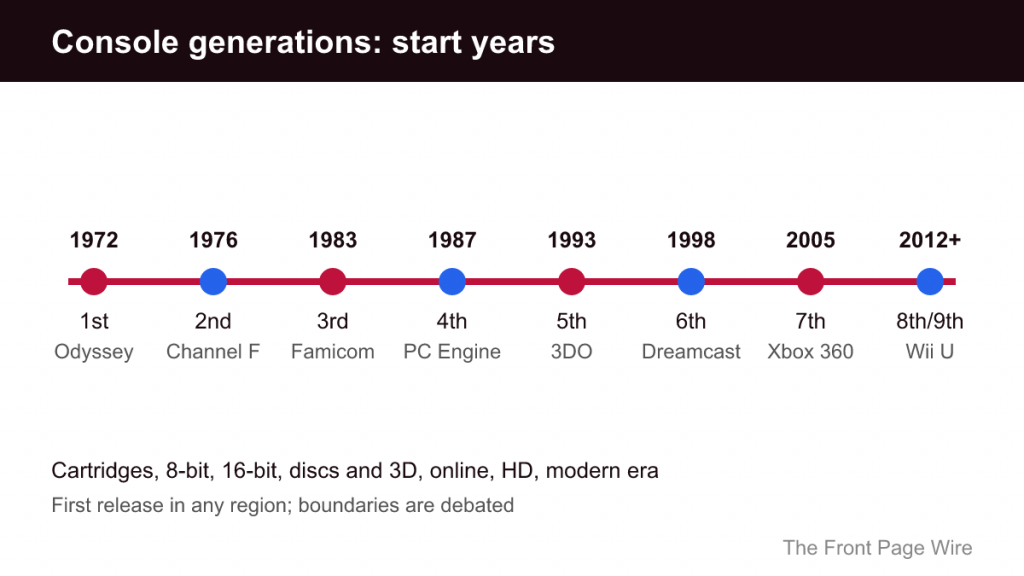
Years below are first-release years in any region, as commonly listed in reference sources. Regional launches were often a year or more apart.
| Generation | Key consoles (first release year) | Defining shift |
|---|---|---|
| First | Magnavox Odyssey (1972), Home Pong (1975), Coleco Telstar (1976) | Dedicated machines with built-in games |
| Second | Fairchild Channel F (1976), Atari VCS/2600 (1977), Intellivision (1980), ColecoVision (1982) | Swappable ROM cartridges, third-party publishers |
| Third | Famicom (1983), SG-1000 (1983), NES (1985), Master System (1986), Atari 7800 (1987) | 8-bit era, Nintendo licensing model |
| Fourth | PC Engine/TurboGrafx-16 (1987), Mega Drive/Genesis (1988), Super Famicom/SNES (1990), Neo Geo (1990) | 16-bit graphics, early CD add-ons |
| Fifth | 3DO (1993), Jaguar (1993), Saturn (1994), PlayStation (1994), Nintendo 64 (1996) | CD-ROM as standard, 3D polygons |
| Sixth | Dreamcast (1998), PlayStation 2 (2000), GameCube (2001), Xbox (2001) | Built-in online play, DVD |
| Seventh | Xbox 360 (2005), PlayStation 3 (2006), Wii (2006) | HD output, motion control, digital stores |
| Eighth | Wii U (2012), PlayStation 4 (2013), Xbox One (2013), Switch (2017) | x86 architecture, 4K refreshes, hybrid handheld |
| Ninth | Xbox Series X/S (2020), PlayStation 5 (2020), Switch 2 (2025, classification debated) | SSD storage, ray tracing |
Why the Boundaries Are Disputed
Once you look closely, the tidy table above hides plenty of awkward cases:
- Long-lived consoles straddle eras. The Atari 2600 was sold for well over a decade, so it shared shelves with NES games. The PlayStation 2 was still being sold years after the PlayStation 3 launched.
- Add-ons muddy the picture. Is a Mega Drive with a Mega-CD and 32X attached still a fourth-generation console? Most lists say yes, but it was clearly reaching for the next era.
- Regional timing differs. The Super Famicom was in Japanese homes about a year before the SNES reached North America and longer before Europe. Depending on where you grew up, the “16-bit era” started at different times.
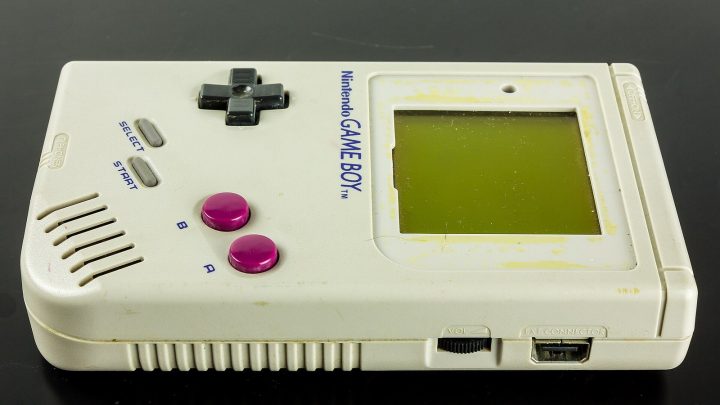
- Handhelds rarely fit. The Game Boy (1989) sold for years alongside consoles from two different generations. Many historians track handhelds separately for exactly this reason.
- Marketing claims are not specs. “16-bit,” “64-bit” and similar labels were often chosen for advertising rather than engineering accuracy.
Academic researchers have proposed alternative groupings based on sales data or market competition rather than hardware, and they do not always line up with the popular numbering. None of this makes the generation model useless. It is a shared vocabulary rather than a scientific classification, and it works best when you treat it as approximate.
One more blind spot: in the UK and much of Europe, home computers such as the ZX Spectrum and Commodore 64 shaped the 1980s at least as much as consoles did, and a console-only model tends to overlook them. Read with these caveats, the nine generations are less a strict timeline than a set of chapters, each marked by a big shift: cartridges, the 8-bit revival, 16-bit rivalry, 3D and discs, online play, HD and motion, and finally the fast-storage machines of today.