How to Start Collecting Retro Games: A Practical Beginner’s Guide
A practical guide to starting a retro game collection: choosing a focus, where to buy, condition terms like loose and CIB, budgeting and beginner mistakes.
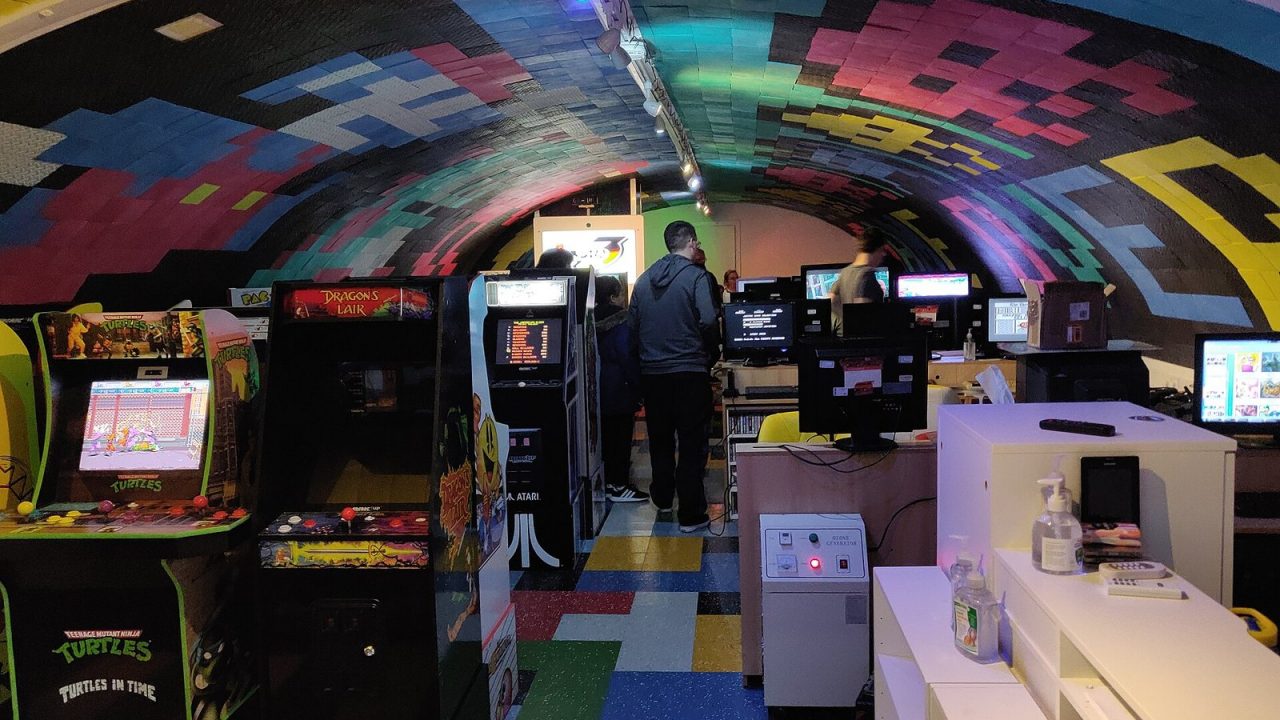
Retro game collecting can start with something as simple as finding your childhood console in a relative’s attic. Before long you are scanning flea-market tables, comparing label conditions and wondering whether you really need a second copy of a game “because this one has the manual.” It is a rewarding hobby, but it is also easy to spend money badly in the first few months.
This guide is for people at the very beginning. It covers how to decide what to collect, where collectors usually buy, the condition terms you will see everywhere, how to set a budget and the mistakes most beginners make. It deliberately avoids specific prices, because those change constantly; instead it explains the factors that drive value so you can judge a deal for yourself.
Why People Collect Retro Games
Collectors have different motives, and knowing yours will shape every other decision. The most common reasons are:
- Nostalgia. Many people want to own the games they played, or wished they had, as children.
- Authenticity. Some players want the experience of original hardware, controllers and media, rather than an emulated version.
- Preservation and history. Some collectors see themselves as keeping physical artifacts of gaming history in working order.
- The hunt itself. For many, finding a game in the wild at a fair price is half the fun.
A collection built to play is very different from one built to display. A player cares about working cartridges and good controllers; a display collector cares about boxes, manuals and condition. Both are valid, but mixing the two goals without thinking about it is a quick way to overspend.
Step One: Choose a Focus
The single best piece of advice for beginners is to pick a focus. Trying to collect “everything retro” leads to a pile of random games and an empty wallet. Common approaches include:
- One system. Pick a console you love, such as the NES, Super Nintendo, Sega Genesis or original PlayStation, and build a library for it. If you are not sure which console fits you, our overview of console generations is a useful starting map.
- A favorite series or character. Collecting every release in one franchise across multiple systems can be a fun way to see how a series evolved.
- A genre. Some collectors focus on shoot ’em ups, sports games or platformers.
- A region. Japanese releases often have different box art and are popular with collectors, though region locking and video standards can complicate playing them.
- Complete-in-box only. Some collectors only buy games with original box and manual. This is more expensive but gives a very clear goal.
- A “top 25” or “favorites” set. Instead of a full set, you collect only the games you actually want to play.
A narrow focus also makes it easier to learn what genuine items look like, which matters a great deal when spotting reproductions later.
Understanding Condition Terms
Listings and shop labels use shorthand that can be confusing at first. These are the terms you will see most often:
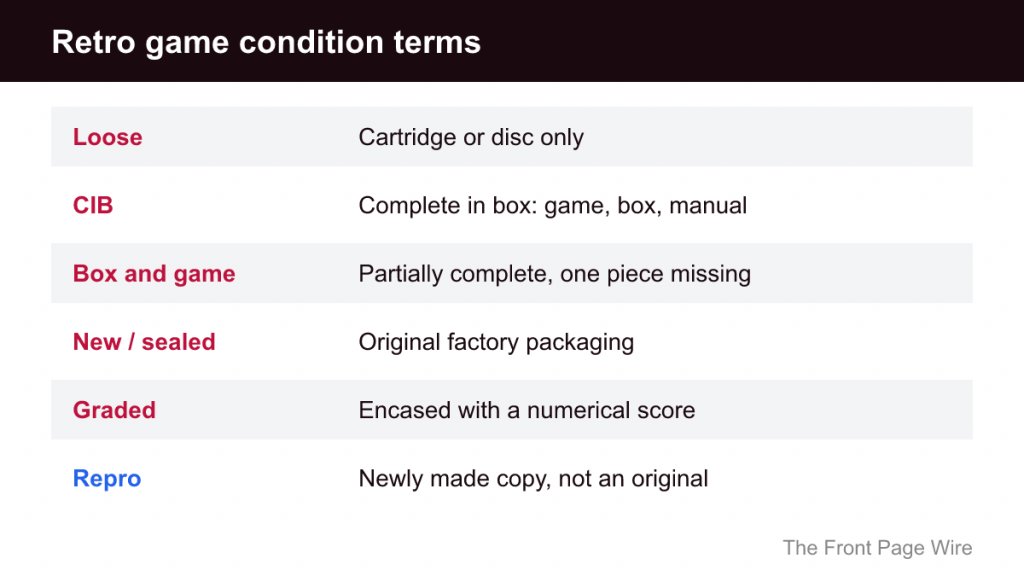
| Term | Meaning |
|---|---|
| Loose | The cartridge or disc only, with no box or manual. |
| CIB (complete in box) | The game, its original box and manual, and typically any inserts that came with it. |
| Box and game / game and manual | Partially complete; one piece is missing. |
| New / sealed | Still in the original factory packaging. |
| Graded | Assessed and encased by a professional grading company with a numerical score. |
| Repro / reproduction | A newly made copy, not an original release. It should always be clearly labeled as such. |
“Complete” can mean different things on different systems. For some cartridge games, original packaging included inner trays, dust sleeves, posters, maps or registration cards. Before paying a premium for a “CIB” copy, check what the original release actually included and whether the listing has it.
Sealed and graded games are a specialist corner of the hobby. Wikipedia’s article on video game collecting notes that sealed games can be worth considerably more than opened ones, and it also records serious questions raised by journalists and preservationists about the high-end sealed market. Beginners are better off starting with games they can open and play.
Where Collectors Usually Buy
Each place to buy has its own strengths and risks.
Local game shops
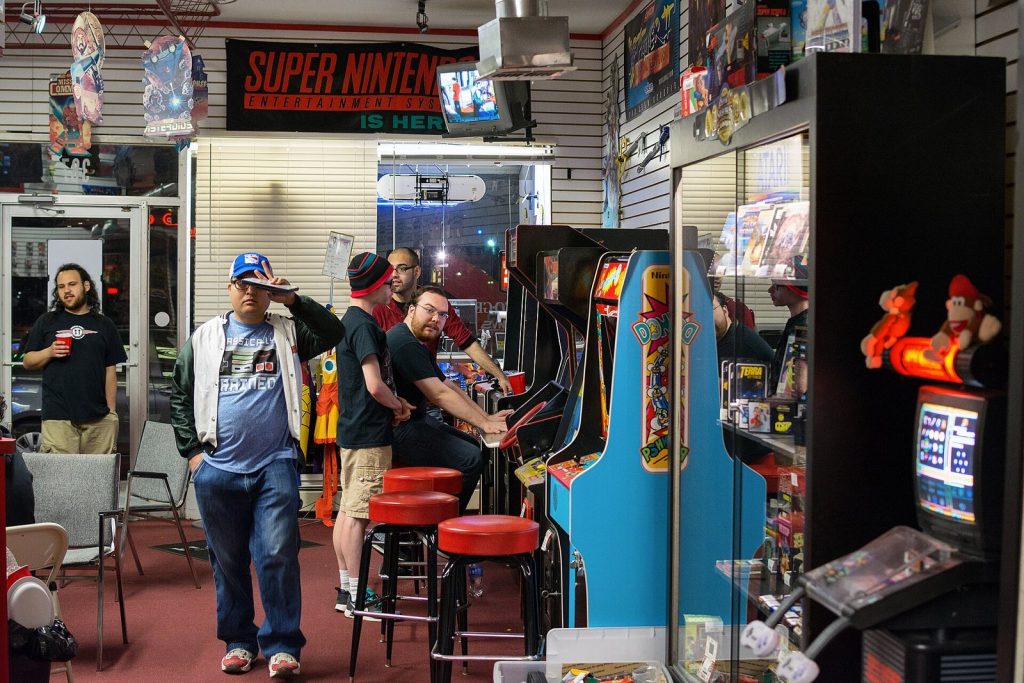
Independent retro stores usually charge market prices or close to them, but you can inspect items in person, test games and build a relationship with the staff. Many shops also buy and trade, which helps you turn duplicates into games you actually want.
Conventions and retro game fairs
Gaming conventions and dedicated retro fairs gather many sellers in one place. Comparing several tables helps you learn typical prices quickly, and there is often room to negotiate, especially near the end of the day.
Flea markets, yard sales and thrift stores
This is where the “hunt” happens. Finds are unpredictable, prices can be low and many sellers do not specialize in games. On the other hand, items may be untested or damaged, and you will spend many trips coming home empty-handed.
Online marketplaces and auctions
Online auction sites and marketplaces have the widest selection and make it easy to compare recent sold prices. The risks are that you cannot inspect items before buying, photos can hide flaws, and reproductions are more common. Read descriptions carefully, check seller feedback and use payment methods with buyer protection.
Friends, family and local groups
Old consoles often sit forgotten in closets. Telling people that you collect can bring surprising offers. Local social media groups and community boards can also turn up whole collections for sale.
What Makes a Retro Game Valuable?
Prices fluctuate, but the underlying value factors are fairly stable:
- Rarity. Games produced in small quantities, or released late in a console’s life when fewer copies were made, tend to cost more.
- Demand. A common game can still be expensive if many people want it. Well-known franchises often command higher prices than obscure titles of similar rarity.
- Completeness. Box, manual and original inserts can add considerably to a game’s value, especially for systems that used easily damaged cardboard boxes.
- Condition. Label damage, writing on the cartridge, sun fading, crushed boxes and torn manuals all reduce value.
- Region and variant. Some regional releases, label variants and special editions are more sought after than standard versions.
- Market trends. Retro prices have risen and fallen with wider trends. Wikipedia notes, for example, that demand for vintage hardware spiked during the COVID-19 pandemic.
Before buying any game that seems expensive, look up recent completed sales rather than current asking prices. Asking prices tell you what sellers hope for; completed sales tell you what buyers actually paid.
Setting a Budget
Retro collecting has no natural end point, so a budget is essential. A few approaches that collectors commonly use:
- A monthly limit. Decide a fixed amount for games each month and stick to it.
- A wish list with ceilings. Write down the games you want and the most you are willing to pay for each. This prevents impulse buys at fairs.
- Sell or trade duplicates. Bulk lots often include games you do not need. Trading them back to shops or other collectors can fund new purchases.
- Prioritize hardware first. A reliable console, working controllers and a good way to connect to your TV matter more than any single game.
Treat collecting as a hobby rather than an investment. Prices can fall as well as rise, and buying primarily to resell turns a fun pastime into a stressful one.
Common Beginner Mistakes
- Buying everything at once. Early excitement leads to overpaying. Slow down and learn typical prices first.
- Ignoring hardware condition. A cheap console with a bad power supply, worn connector or broken controller can cost more to fix than buying a good one.
- Not testing games. When possible, test cartridges and discs before buying, or buy from sellers who offer returns.
- Falling for “too good to be true” deals. Very cheap sealed copies of famous games are a classic warning sign of reproductions or reseals.
- Paying CIB prices for incomplete items. Check every piece in a listing, including inserts.
- Poor storage. Heat, humidity and sunlight damage cartridges, discs, boxes and manuals. Store your collection in a cool, dry place out of direct light.
- Forgetting display and space. Collections grow. Plan shelving early and protect cardboard boxes from crushing.
- Not keeping records. A simple spreadsheet of what you own and what you paid stops you from buying duplicates by accident.
Playing What You Collect
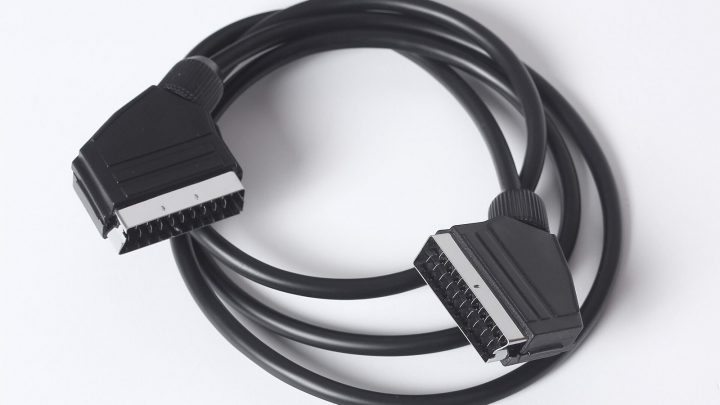
Many collectors buy games to play them, and getting old consoles to look good on a modern television can be a challenge of its own. Original video outputs such as RF and composite often look soft on modern flat panels, and some displays add noticeable input lag. Collectors often look into better cables, upscalers or older CRT televisions as their collection grows.
It is also worth knowing the legal options for playing classic games without original hardware, such as official re-releases, collections and mini consoles. Original cartridges and discs are wonderful objects, but there is no need to buy an expensive original just to try a game you have never played.
A Simple Plan to Get Started
- Pick one system or series you genuinely love.
- Buy a reliable console and at least one good controller.
- Make a short wish list of ten games you want to play, with maximum prices.
- Visit a local shop or fair to see items in person and learn what originals look like.
- Track every purchase and enjoy playing what you buy.
Collecting rewards patience. The games are not going anywhere, and the most satisfying collections are usually built slowly, one carefully chosen piece at a time.