The Sega Dreamcast: Sega’s Last Console and Its Lasting Influence
From the 9.9.99 launch to Sega's 2001 exit from hardware: how the Dreamcast pioneered console online play and why it still has devoted fans.
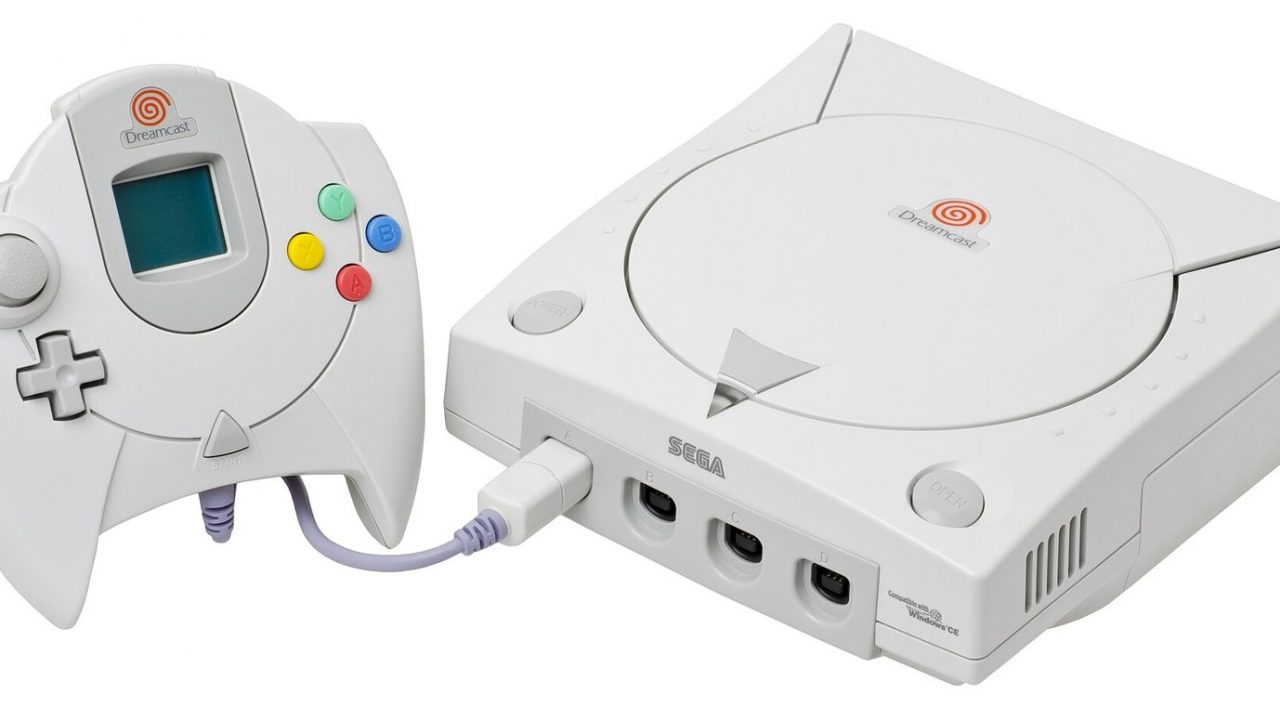
The Dreamcast had one of the shortest lives of any major console and one of the longest afterlives. Sega launched it in Japan in November 1998, celebrated a record-setting North American debut in September 1999, and announced its discontinuation in January 2001. Worldwide sales ended at about 9.13 million units, according to reference sources. Yet the machine is remembered with unusual affection, and many of its ideas, from a built-in modem to a second screen in the controller, turned up again on later consoles.
This article covers the hardware, the launches, the online ambitions, the competition that overwhelmed it, and the decision that ended Sega’s time as a console maker.
Why Sega Needed a Fresh Start
By the late 1990s, Sega’s position in the home console market had weakened considerably. The Sega Saturn had done reasonably well in Japan but struggled in North America and Europe, hurt by a complicated dual-processor design, a surprise early US launch that upset retailers, and a price disadvantage against Sony. Before that, the 32X and Sega CD add-ons for the Genesis had confused buyers and damaged confidence in Sega hardware.
Sony’s original PlayStation had meanwhile become the dominant console of the era, and Nintendo still had a loyal audience with the Nintendo 64. Sega needed a machine that was powerful, easy for developers to work with, and clearly different from what came before. The Dreamcast was designed with all three goals in mind.
An important figure in Sega of America at the time was Bernie Stolar, a former Sony executive who had become executive vice president. He was fired in August 1999, shortly before the North American launch, and Peter Moore led the launch campaign. Moore became president and chief operating officer of Sega of America in May 2000.
The Hardware: Built for Developers
The Saturn’s architecture had been difficult to program. The Dreamcast went the other way, using a cleaner design based on off-the-shelf components:
| Component | Dreamcast |
|---|---|
| CPU | Hitachi SH-4 at 200 MHz |
| Graphics | NEC PowerVR2 at 100 MHz |
| Memory | 16 MB main RAM, 8 MB video RAM, 2 MB audio RAM |
| Media | GD-ROM discs, read by a 12x drive |
| Online | Built-in modem (33.6 kbit/s in Japan and PAL regions at launch; 56 kbit/s in North America) |
Microsoft also produced a custom version of Windows CE for the console, intended to make porting PC games easier, and some Dreamcast discs carry a Windows CE logo. In practice, many developers preferred Sega’s own development libraries.
The hardware was closely related to Sega’s NAOMI arcade board, which made it relatively straightforward to bring arcade games home. That connection gave the Dreamcast some of its best-known titles, including Crazy Taxi.
GD-ROM: Sega’s Own Disc Format
Instead of using standard CDs or the then-expensive DVD format, Sega worked with Yamaha on the GD-ROM (gigabyte disc). It was based on CD technology but packed data more densely, holding up to about 1 GB, compared with roughly 650 MB on a standard CD-ROM. A disc had a standard-density area near the center and a high-density area surrounding it that held most of the game data.
The format had two purposes. It gave developers more room than CDs without the cost of a DVD drive, and it was expected to make piracy harder, a lesson Sega drew from how widely PlayStation discs had been copied. That second goal did not hold. The Dreamcast also supported a mixed-media CD format called MIL-CD, and a flaw in that support allowed copied games to run without a GD-ROM. Once the exploit spread in 2000, unauthorized copies circulated widely. Sega pursued legal action against distributors and removed MIL-CD support from a later hardware revision, but the damage to software sales was significant. (For the legal side of copying and emulation, see our explainer on whether emulation is legal.)
GD-ROM also crossed back into the arcade world. It was offered as a storage option for NAOMI arcade boards and later Sega arcade systems.
Launches: Japan in 1998 and “9.9.99” in North America
The Dreamcast launched in Japan on November 27, 1998, priced at ¥29,000. Initial stock sold out, but supply was limited, and the launch lineup was thin. A strong start in Japan did not materialize, partly because some highly anticipated titles were not ready.
Sega had time to prepare the West. The North American launch, set for September 9, 1999, was marketed through its date and price: “9/9/99 for $199.” Sega reported selling more than 225,000 units in the first 24 hours, worth $98.4 million, a figure Peter Moore described as the biggest 24 hours in entertainment retail history. The North American 56k modem was also an improvement on the original Japanese units.
Europe followed on October 14, 1999, at £200, and Sega of Europe reported around 500,000 units sold by Christmas 1999. Australia and New Zealand received the console on November 30, 1999, where its launch was marked by shortages.
Online Play Before It Was Normal
Every Dreamcast shipped with a modem built in. Earlier consoles had offered modems as optional accessories, but making online access part of the base hardware was a statement about where Sega thought games were going.
In North America, Sega launched SegaNet on September 7, 2000, as a dedicated online gaming service, with a monthly subscription. Notable online games included:
- ChuChu Rocket!, a puzzle game from Sonic Team, described as the Dreamcast’s first online game.
- Phantasy Star Online, widely described as the first online console role-playing game, where players from different countries could team up.
- Quake III Arena and Unreal Tournament, ports of PC shooters with online multiplayer.
Some games also offered downloadable extras and web features through the built-in browser. Dial-up connections meant the experience was limited compared with broadband-era gaming, but the console laid groundwork that later systems, including the Xbox with Xbox Live, would build on. Today, fan-run private servers have restored online functionality to some Dreamcast games, a notable example of community-driven preservation.
The VMU: A Screen in Your Controller
The Dreamcast’s memory card was not just storage. The Visual Memory Unit (VMU) was a small device with a monochrome LCD screen, a D-pad and buttons, plugged into a slot in the controller so its screen was visible to the player. It contained 128 KB of flash memory, with 200 blocks available for saves.
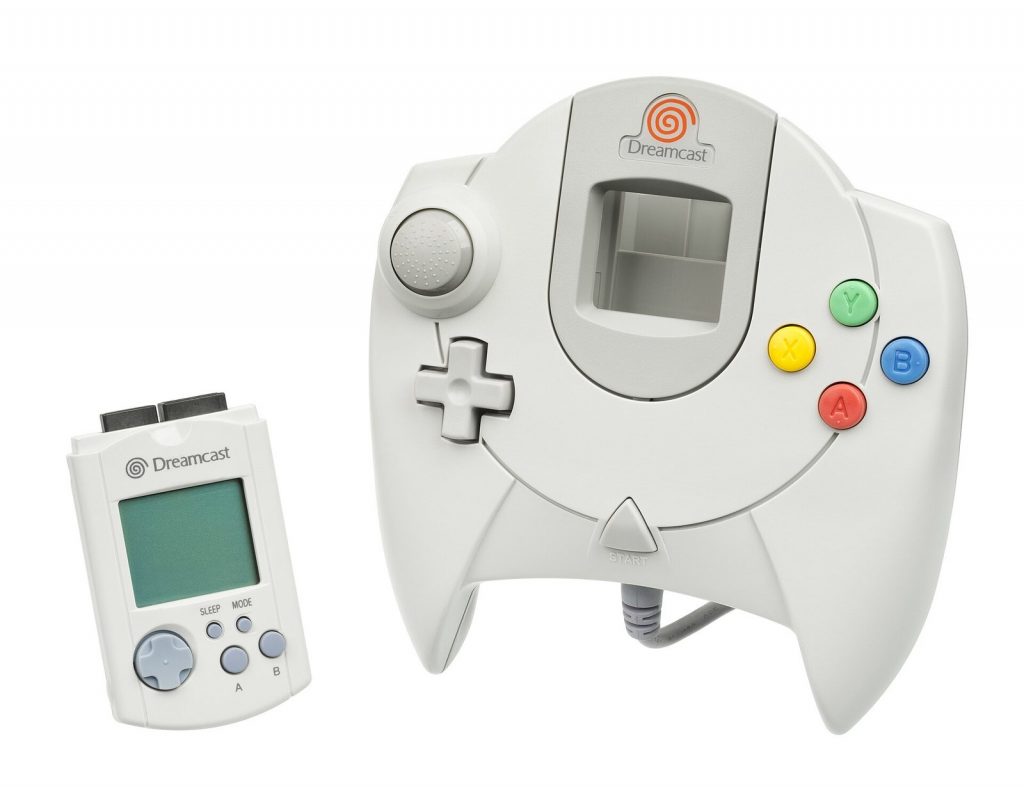
The VMU had several roles:
- Save storage for game progress.
- A private second screen. In multiplayer games, information could be shown only to the player holding the controller. NFL 2K2, for example, could show selected plays on the VMU.
- A tiny standalone handheld. Some games let players transfer minigames to the VMU. The best known is Chao Adventure in Sonic Adventure, where players raised a Chao creature on the go.
The VMU was powered by two CR2032 coin-cell batteries for standalone use. Without batteries it still worked as a memory card when plugged into a controller, though many owners remember it beeping when its batteries ran low. Sony released a similar device, the PocketStation, in Japan.
The Library: Short Life, Remarkable Games
Reference sources count more than 600 games released across all regions. In a lifespan of roughly two and a half years, the Dreamcast received an unusual concentration of creative, often experimental titles:
- Sonic Adventure (the console’s best-selling game, at about 2.5 million copies), bringing Sega’s mascot into full 3D.
- Soulcalibur, Namco’s weapon-based fighting game, widely praised as an early demonstration of the hardware’s power.
- Crazy Taxi, an arcade game about racing passengers through a city.
- Shenmue, an ambitious open-world adventure set in 1980s Japan.
- Jet Set Radio, notable for its cel-shaded graphics and graffiti theme.
- Phantasy Star Online and ChuChu Rocket!, already mentioned for their online play.
The Dreamcast also had a strong reputation for arcade-quality fighting games and for Sega’s own sports titles, such as NFL 2K, which helped compensate for the absence of some major third-party sports franchises.
The PlayStation 2 Shadow
The Dreamcast’s biggest problem was timing. Sony revealed the PlayStation 2 on March 2, 1999, months before the Dreamcast reached North America. The announcement promised a more powerful machine with DVD playback, and many consumers chose to wait.
Third-party support was another weakness. Electronic Arts, then the largest third-party publisher, declined to develop for the Dreamcast. EA’s sports franchises were especially important to North American console sales, and their absence was a serious gap, although Sega’s own sports games partly filled it.
The PlayStation 2 launched in North America on October 26, 2000, at $299. Combined with Sega’s existing financial losses and the piracy issues described above, the pressure was too much. Sega cut the Dreamcast’s price repeatedly, first to $99 and then lower, but sales were not enough to justify continuing.
January 31, 2001: Sega Leaves the Hardware Business
On January 31, 2001, Sega announced that it would discontinue the Dreamcast and restructure as a platform-agnostic third-party publisher. Production ended on March 31, 2001. Remaining stock was cleared at low prices in the following months.
The decision ended Sega’s history as a console maker, a history that stretched from the SG-1000 in 1983 through the Master System, the Genesis/Mega Drive and the Saturn. Sega’s games, including Sonic, soon began appearing on Nintendo, Sony and Microsoft platforms, something that would have seemed unthinkable during the 16-bit console war. Sega continued to repair Dreamcast units for years afterward, with official repairs reported to have ended in 2007.
Why the Dreamcast Still Matters
The Dreamcast’s influence is visible in several places:
- Online play as a standard feature. The built-in modem anticipated a future where every console was expected to connect to the internet.
- Second-screen ideas. The VMU’s private screen and portable minigames prefigured later dual-screen and companion-device concepts.
- Experimental software. Games like Jet Set Radio and Shenmue are frequently cited as ahead of their time.
- Community preservation. Fans have kept parts of its online infrastructure alive through private servers, and homebrew developers have continued to release new software.
Collecting the Dreamcast Today
For collectors, the Dreamcast is accessible. A few general points help:
- Disc drive wear. The GD-ROM drive is the most common failure point. Testing a console with a game before buying is the best precaution.
- Internal clock battery. Many consoles ask for the date and time on every boot because the internal rechargeable battery has run down. It is a common issue and does not necessarily mean the console is faulty.
- VMU batteries. Remove coin-cell batteries from stored VMUs to avoid leakage.
- Regional differences. Japanese, North American and PAL releases differ in packaging and sometimes content, and region locking applies to many games.
Its commercial story is short, but the Dreamcast shows how much a console can matter beyond its sales figures, and why so many players still consider it Sega’s most interesting machine.