The Sega Saturn: Why a Powerful Console Struggled in the West
How the Sega Saturn's complex dual-CPU design, surprise E3 1995 launch and retailer fallout hurt it in the West while it thrived in Japan.
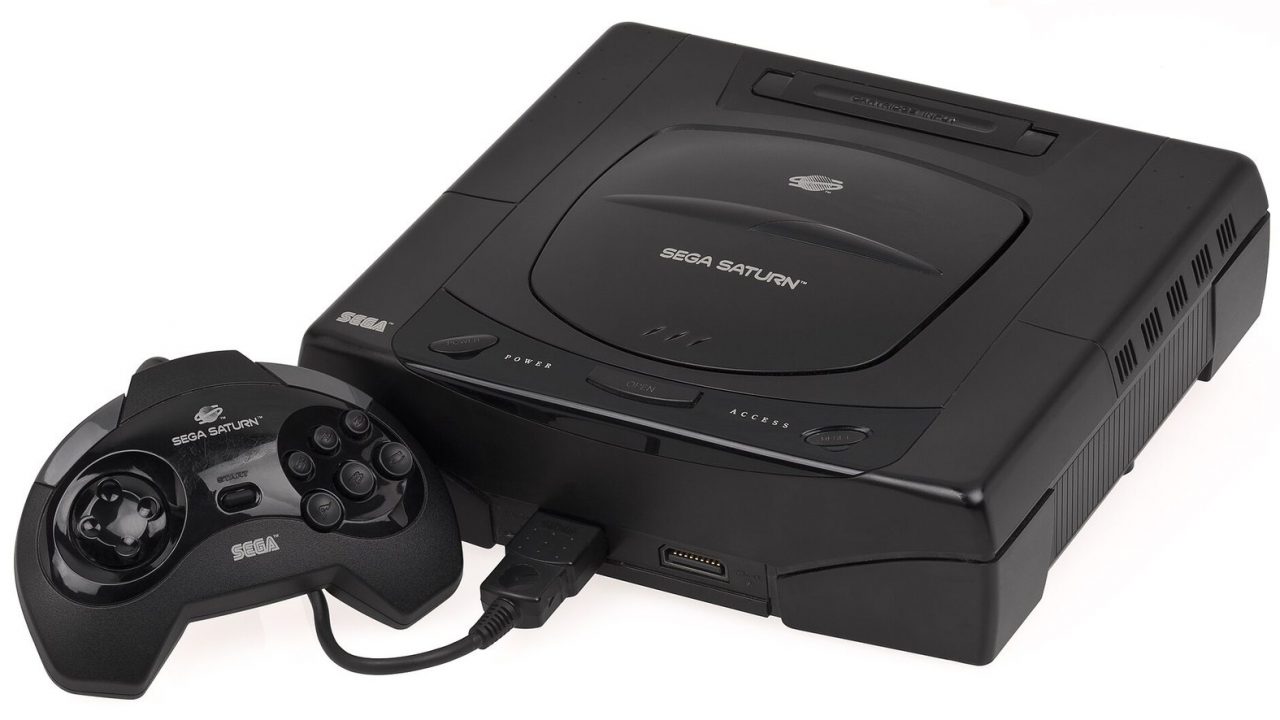
The Sega Saturn is one of the great “what ifs” of console history. It was a capable machine with a library that includes some of the most admired arcade conversions and cult classics of the 1990s. In Japan, it competed seriously with Sony’s PlayStation for a time. In North America and Europe, however, it stumbled from its first day on sale, and within a few years Sega’s own American executives were publicly signaling that it was not the company’s future.
This article looks at why: a powerful but complicated architecture, a surprise launch that alienated retailers and developers, a price war Sega was not ready for, and strategic tension between Sega’s Japanese and American divisions. It also explains why the Saturn has become so appealing to collectors.
A Complex Machine Built for 2D and Arcade Games
The Saturn’s hardware reflected Sega’s strengths at the time. Sega was an arcade powerhouse, and the Saturn was designed to handle both the detailed 2D sprite graphics Sega excelled at and the emerging world of 3D. Its core components included:
- Two Hitachi SH-2 processors running at 28.6 MHz
- Two video display processors: VDP1, which handled sprites and polygons, and VDP2, which handled backgrounds
- Additional processors for sound and other tasks
Sega’s engineers chose a dual-CPU design because, as one Sega engineer put it, a single CPU would not be enough to calculate a 3D world. Reports of the PlayStation’s capabilities also prompted Sega to add a second video processor during development in early 1994.
The result was powerful but difficult to program. Getting the most out of the Saturn meant splitting work carefully between processors that shared resources, a challenge most developers were not equipped for at the time. Yu Suzuki, the celebrated designer behind Virtua Fighter, said that only about one in 100 programmers were good enough to get the full speed out of the dual-CPU design, and that most got about one and a half times the performance of a single SH-2.
The Saturn also rendered 3D graphics using quadrilaterals (four-sided shapes) as its basic building block, while the PlayStation and later the Nintendo 64 used triangles. Developers creating games for multiple platforms found this awkward, and some industry figures believed it undermined third-party support.
Success in Japan
The Saturn launched in Japan on November 22, 1994, at ¥44,800, shortly before the PlayStation. Its early success there was driven largely by Virtua Fighter, a conversion of Sega’s 3D arcade fighting game, which sold at nearly a one-to-one ratio with the console in its early period.
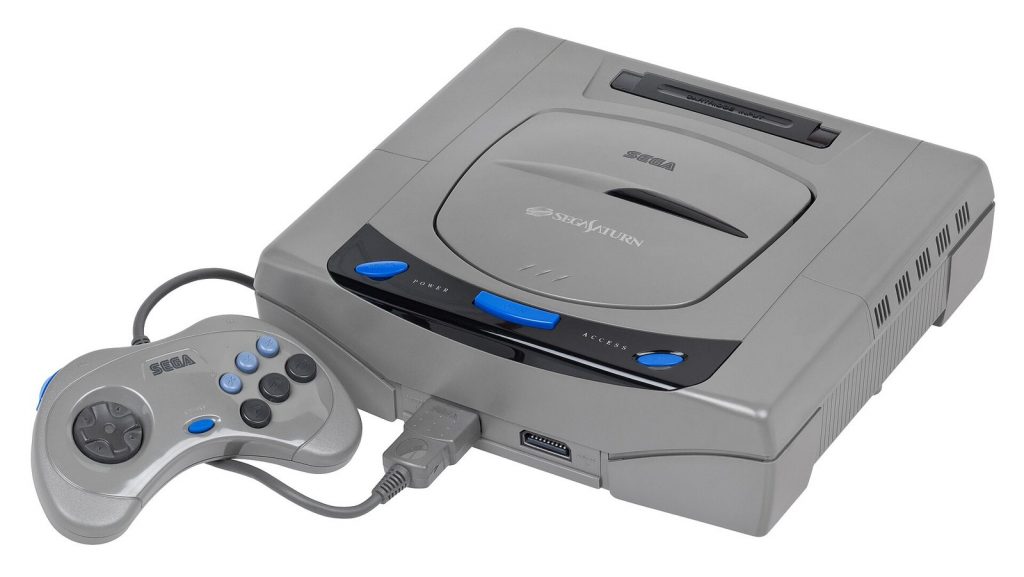
Japan remained the Saturn’s strongest market. Of its roughly 9.26 million worldwide sales, about 5.75 million came from Japan. Many well-regarded games, including the Sakura Wars series, were never released in the West, and the Japanese library remained active until the console was discontinued there in 2000.
The Surprise Launch at E3 1995
In the West, things went wrong from the start. In March 1995, Sega of America president Tom Kalinske announced a North American launch date of Saturday, September 2, 1995, promoted as “Saturnday.” Sega of Japan, however, wanted to get ahead of the PlayStation, which was due to launch in North America that September.
At the first Electronic Entertainment Expo (E3) in May 1995, Kalinske revealed that the Saturn was available immediately, at $399, including a copy of Virtua Fighter. About 30,000 units had been shipped to four retailers for immediate sale: Toys “R” Us, Babbage’s, Electronics Boutique and Software Etc. The official North American release date was May 11, 1995.
The surprise had several damaging effects:
- Retailer anger. Stores left out of the early shipment felt betrayed. KB Toys responded by refusing to carry the Saturn at all.
- A thin launch library. Most third-party games had been planned around the September date. The early launch had only six games, all published by Sega.
- A price disadvantage. At the same show, Sony announced that the PlayStation would launch at $299, a hundred dollars less. The contrast became one of the most famous moments in industry history, discussed in our history of the original PlayStation.
Europe received the Saturn on July 8, 1995, at £399.99, a few months ahead of the PlayStation’s European launch. But the momentum in Western markets quickly swung to Sony.
Corporate Tension and a Missing Mascot
Behind the launch was a growing divide between Sega’s Japanese headquarters and its American division. Sega of America had led the company’s greatest Western success with the Genesis, described in our history of the Genesis / Mega Drive, but it often disagreed with Sega of Japan’s decisions. Sega also had to manage other hardware in the West at the same time, including Genesis add-ons that had already strained its reputation.
Kalinske’s departure was announced in July 1996, effective at the end of September, after long-running disagreements with Sega of Japan. Shoichiro Irimajiri, a former Honda executive, was named chairman and CEO of Sega of America.
The Saturn also lacked something crucial: a 3D Sonic game. Sonic X-treme, planned as a flagship platformer, was cancelled in early 1997. Sonic had defined Sega’s identity during the Genesis years, and without a new mainline adventure, the Saturn had no answer to Nintendo’s Super Mario 64 or the PlayStation’s growing roster of new characters.
At E3 1997, Sega of America’s Bernie Stolar told the audience that “the Saturn is not our future.” Whatever the strategic logic, the statement made it clear to players and retailers that Sega was preparing to move on. The Saturn was discontinued in North America in March 1998 and in Europe the same year. Its successor, the Dreamcast, did not launch in North America until September 1999, leaving Western Sega fans with little new hardware support for over a year.
Arcade Ports and Standout Games
Despite its commercial troubles, the Saturn has an excellent library, especially for fans of arcade games and 2D action. Sega’s ST-V (Titan) arcade board was based on Saturn hardware, which made converting those arcade games relatively straightforward.
Highlights often cited include:
- Virtua Fighter and its sequel, which showcased Sega’s arcade fighting expertise.
- Sega Rally and Virtua Cop, strong conversions of Sega arcade hits.
- Nights into Dreams, an inventive flying game from Sonic Team.
- The Panzer Dragoon series, rail shooters with distinctive art direction, plus the later Panzer Dragoon Saga.
- Guardian Heroes, a beat ’em up with branching paths.
- Radiant Silvergun, a shoot ’em up with a strong cult following.
The Saturn’s strength in 2D also made it a favored platform for Capcom’s fighting game conversions in Japan, with some games using RAM expansion cartridges that plugged into the console’s cartridge slot to bring the home versions closer to the arcade originals.
Why the Saturn Appeals to Collectors
The Saturn’s commercial failure in the West is part of what makes it attractive to collectors today. Several factors contribute:
- A deep Japanese library. Because many acclaimed games never left Japan, importing is a big part of Saturn collecting.
- Cult classics. Games like Panzer Dragoon Saga and Radiant Silvergun have strong followings and are sought after.
- Arcade heritage. For fans of 1990s Sega and Capcom arcade games, the Saturn offers some of the best home versions of the era.
- Relatively small Western production. Lower Western sales mean some games had limited print runs.
Collectors should be aware of practical issues. Saturn consoles use optical drives that can wear over time, and an internal battery keeps the system clock and save memory. Region locking also affects imported games, so check compatibility before buying Japanese titles. Our article on the Sega vs. Nintendo console war covers the era just before the Saturn, when Sega’s fortunes were very different.
Lessons From the Saturn
Historians usually point to a combination of factors rather than one fatal mistake:
- Complex hardware that made development harder than on the PlayStation.
- A rushed launch that damaged relationships with retailers and left the library thin.
- A higher price than the main competitor at a crucial moment.
- Internal divisions between Sega’s Japanese and American arms.
- A missing flagship game, as Sonic never received a mainline 3D Saturn title.
Yet in Japan the same hardware sold millions and built a loyal following. The Saturn’s story is a reminder that a console’s fate depends on timing, pricing and relationships as much as on technology, and that a commercial failure can still leave behind a library worth treasuring.