Sega vs. Nintendo: The 16-Bit Console War Explained
The Sega vs. Nintendo rivalry of the 16-bit era: Genesis Does What Nintendon't, Tom Kalinske's Sonic strategy, blast processing, Mortal Kombat and how it ended.
For a few years in the early 1990s, choosing a video game console felt like picking a side. You owned a Sega Genesis or a Super Nintendo, and the playground debates about which was better could be surprisingly heated. The two companies encouraged that feeling with some of the most aggressive advertising the games business had seen.
This article focuses on the rivalry itself rather than chip-by-chip hardware comparisons: how Sega went from a distant second to a genuine challenger, the slogans and strategies that defined the fight, the Mortal Kombat controversy and how the war ended when a new competitor arrived.
The Starting Point: Nintendo’s Dominance
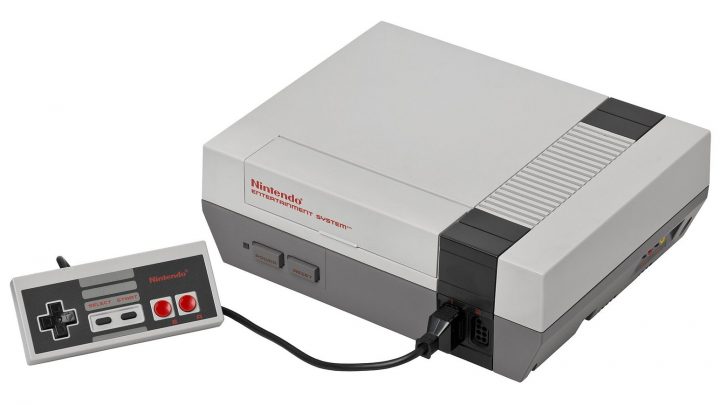
By the end of the 1980s, Nintendo dominated home consoles in North America and Japan. The NES had revived the market after the crash, as covered in our history of the NES, and Nintendo’s strict licensing rules gave it enormous influence over publishers and retailers.
Sega had competed in the 8-bit era with the Master System, which did well in some markets, notably Europe and Brazil, but trailed far behind Nintendo in North America and Japan. Sega’s next move was to get to the next generation first.
Genesis Arrives First
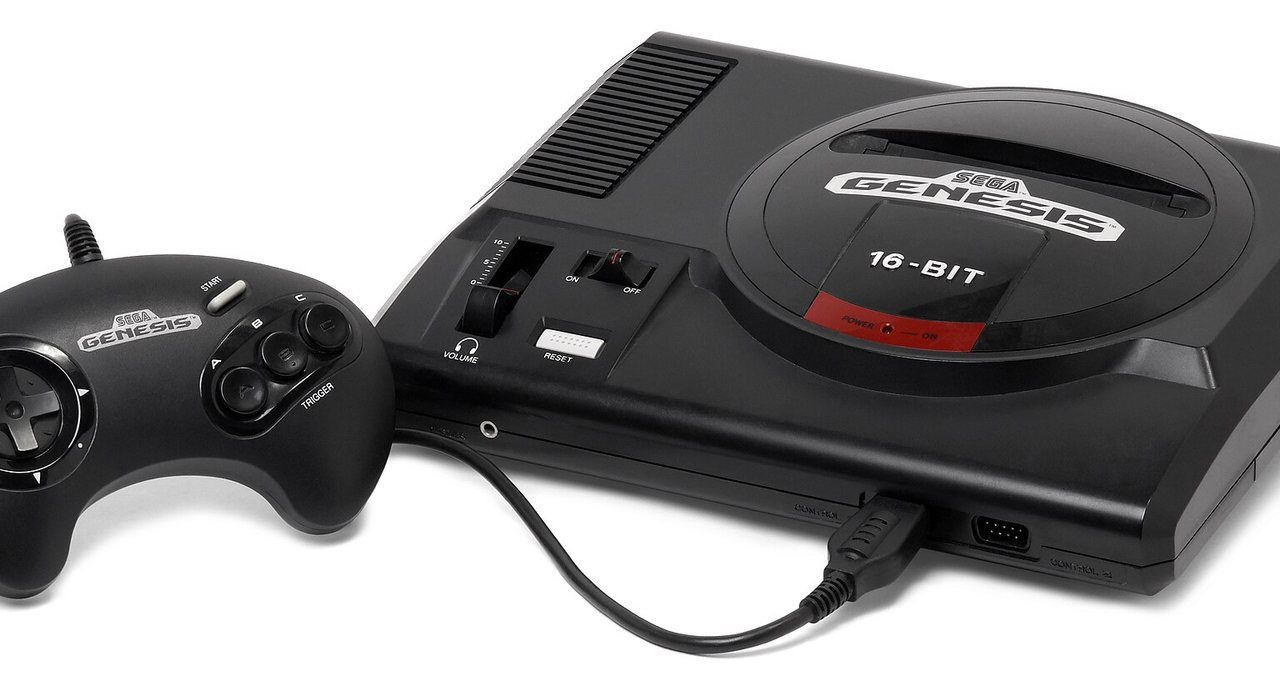
Sega released the Mega Drive in Japan on October 29, 1988. In North America the console was renamed the Genesis and went on sale in 1989, first in New York City and Los Angeles in August, with a wider launch following. It reached Europe in 1990.
Sega’s early pitch was simple: the Genesis could bring arcade-quality games home. It launched with Altered Beast as the pack-in title and leaned on conversions of Sega’s arcade hits. Nintendo, meanwhile, had no 16-bit system on sale in the West yet. The Super Famicom launched in Japan in 1990, and the Super Nintendo Entertainment System did not reach North America until 1991. That head start of roughly two years gave Sega the time it needed to build a library and an audience.
“Genesis Does What Nintendon’t”
Sega of America’s first big marketing push came under Michael Katz, appointed CEO in late 1989. His campaign used the slogan “Genesis does what Nintendon’t,” a direct, comparative jab that would have been unusual in the more polite world of toy advertising. The message was that the Genesis was more advanced and more grown-up than Nintendo’s 8-bit console.
Katz also signed celebrity-endorsed sports games, an area where the Genesis became strong. Another key relationship came from Electronic Arts. EA reverse-engineered the Genesis rather than accept Sega’s standard licensing terms, then negotiated a more favorable deal with Sega in 1990. EA’s sports titles went on to become a major reason many older players chose the Genesis.
Tom Kalinske and the Sonic Strategy
In mid-1990 Sega of America got a new CEO, Tom Kalinske, a former president of Mattel with deep experience in toy marketing but little in video games. Kalinske’s plan rested on a few big moves:
- Cut the price. The Genesis dropped from $189 to $149, undercutting the Super Nintendo’s planned $199 price.
- Change the pack-in. Replace Altered Beast with Sega’s brand-new mascot game.
- Build American development. Create more games for Western tastes.
- Advertise aggressively. Target teenagers and older players with an edgier tone than Nintendo’s family-friendly image.
The mascot was Sonic the Hedgehog. Sonic the Hedgehog was released in June 1991, and Kalinske made it the Genesis pack-in game, effectively giving away the company’s biggest new release to sell hardware. Owners of the earlier Altered Beast bundle could even trade it in for Sonic.
Sonic was designed as a deliberate contrast to Mario: fast, cool and a little rebellious. Where Super Mario Bros. rewarded careful exploration, Sonic’s levels were built around speed and momentum. The Sonic bundle arrived just as the Super Nintendo launched in North America, and it gave Sega a mascot that could stand alongside Mario in advertising and on toy-store shelves.
Blast Processing and the Ad Wars
Sega’s advertising grew more confrontational. Commercials compared Genesis games directly with their Nintendo rivals, and many ended with the shouted “SEGA!” known as the “Sega Scream.”
The most famous piece of jargon from the era is “blast processing.” Sega used the term in advertising to suggest that the Genesis was dramatically faster than the Super Nintendo. Reference accounts describe it as a marketing phrase built around an obscure graphics programming method that games did not really use, rather than a meaningful hardware feature. In other words, it was branding, but it worked: many players who grew up in the era still remember the phrase.
Speed made sense as a theme. The Genesis’s main processor was faster than the SNES’s, while the Super Nintendo had advantages elsewhere, notably in color palette, sound and special graphics modes such as Mode 7. Both companies emphasized their strengths and ignored their weaknesses, which is why spec-sheet arguments from this period are best taken with skepticism.
Who Was Winning?
Market share during the 16-bit war is genuinely hard to pin down, because both companies publicized favorable figures. Some points are clear:
- Sega made huge gains in North America in the early 1990s and outsold the Super Nintendo during several holiday seasons.
- Sega claimed 55 percent of 16-bit hardware sales in 1994, while Nintendo made competing claims of its own.
- A 2014 analysis by Wedbush Securities using revised NPD sales data concluded that the Super Nintendo outsold the Genesis in the US by about 1.5 million units over the period.
- Worldwide, Nintendo’s official figures list 49.10 million Super Famicom/SNES consoles sold. Sega’s Genesis is commonly estimated at around 30.75 million units, with additional machines sold by licensed partners such as Tectoy in Brazil.
Regional differences mattered. Sega performed strongly in North America, Europe and Brazil, but in Japan the Super Famicom was far ahead. The most accurate summary is that Sega turned a one-sided market into a genuine contest in the West, while Nintendo ended up ahead on worldwide totals.
Mortal Kombat: Two Versions, Two Images
The rivalry’s most famous single episode came in September 1993, when Acclaim released home versions of Midway’s arcade fighting game Mortal Kombat on both consoles. The arcade game was notorious for blood and graphic “fatalities.”
- On the Super Nintendo, Nintendo required a toned-down version. Blood was replaced with grey “sweat,” and the fatalities were changed.
- On the Genesis, the default version was also censored, but entering a code restored the blood and arcade fatalities.
The Genesis version reportedly outsold the SNES version by a wide margin, a result widely seen as proof that Sega’s edgier positioning appealed to older players.
The controversy also had consequences beyond the rivalry. In December 1993, US senators Joe Lieberman and Herb Kohl held hearings on violence in video games, where Nintendo and Sega representatives publicly criticized each other. The industry responded by creating the Entertainment Software Rating Board (ESRB), which began rating games in 1994. That story deserves its own article, and it gets one later in this series.
Add-Ons and Overreach
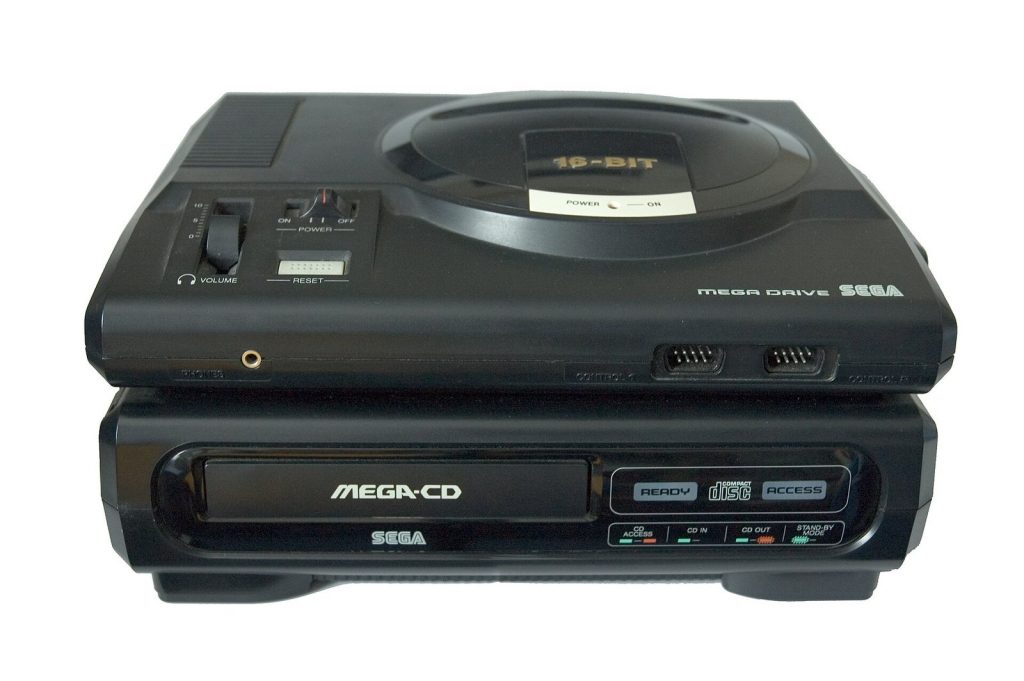
As the war went on, both companies looked for ways to extend their 16-bit hardware. Sega released the Sega CD (Mega-CD outside North America) and later the 32X, both of which sold modestly. Neither attracted a strong library, and the 32X in particular arrived shortly before Sega’s next console, the Saturn, which confused consumers and retailers. Nintendo, for its part, extended the SNES with enhancement chips inside cartridges, such as the Super FX chip used in Star Fox.
How the War Ended
The Sega-versus-Nintendo war did not end with one side defeating the other. It ended when a third company changed the field.
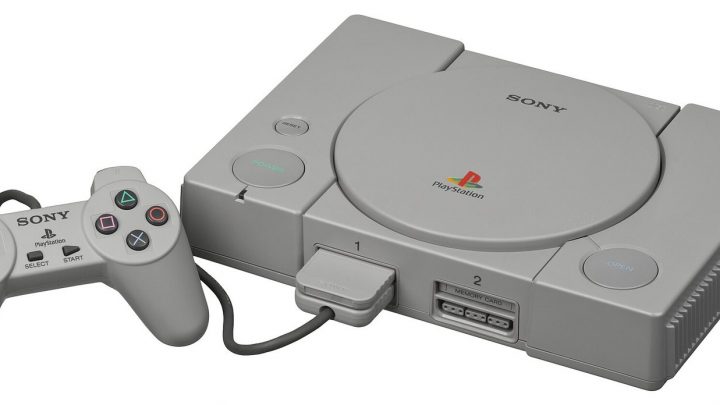
Sega launched the Saturn in Japan in November 1994, and Sony followed with the PlayStation in December 1994. At the first E3 trade show in May 1995, Sony announced a US price of $299 for the PlayStation, undercutting the Saturn’s $399. The PlayStation went on to dominate the generation in North America and Europe, while Nintendo’s cartridge-based Nintendo 64, released in 1996, built a loyal audience but lost much of its third-party support to Sony.
Sega never regained its early-1990s momentum. After the Dreamcast, Sega announced in 2001 that it would stop making consoles and become a third-party publisher. In a twist that would have seemed impossible during the war, Sonic games later appeared on Nintendo consoles.
Common Myths About the 16-Bit War
- “Sega won the war.” Sega won a great deal of ground in North America and Europe, and for a time it led in some markets and seasons. On worldwide totals, though, the Super Nintendo finished ahead, helped by its dominance in Japan.
- “Blast processing was a real chip.” It was an advertising term, not a component or a feature games relied on.
- “The Genesis had more mature games because Sega had no rules.” Sega had its own content policies and created its own rating system, the Videogame Rating Council, before the ESRB existed. The Mortal Kombat difference came from different decisions about how to handle one game.
- “It was just hardware specs.” Price cuts, pack-in games, sports licenses, third-party deals and advertising tone mattered at least as much as processors.
What the Console War Left Behind
- Comparative marketing became normal. Direct attacks on a rival’s product became a standard part of console advertising.
- Games grew up. Sega’s push toward teenagers and older players helped broaden the audience beyond children.
- Ratings arrived. The Mortal Kombat controversy led directly to the ESRB.
- Mascots mattered. Every platform holder learned the value of a recognizable character.
- Fan tribalism began. The habit of identifying with a console brand, now familiar online, took shape in this era.