Space Invaders (1978): How Taito’s Shooter Launched the Arcade Boom
How Tomohiro Nishikado built Space Invaders, why the aliens speed up, the yen-coin shortage myth, Midway's US release and the Atari 2600 port that sold consoles.
Rows of pixelated aliens shuffle left and right, drop a little lower each time they reach the edge of the screen and move faster as their numbers dwindle. A thumping four-note bass line speeds up with them. Released by Taito in Japan in 1978, Space Invaders is one of the most influential video games ever made. It turned arcade video games from a novelty into a mass phenomenon, created the shoot ’em up as we know it, and later became the game that sold the Atari 2600 to millions of households.
This article covers how the game was designed, the hardware quirk that created its most famous feature, its impact in Japan and the United States, and the stories about it that do not hold up.
Tomohiro Nishikado and the Design
Space Invaders was created by Tomohiro Nishikado, an engineer at Taito who designed both the game and the custom hardware it ran on. He worked on it for about a year, largely on his own. Taito did not initially credit him publicly, reportedly because of an anonymity clause in his contract, which was common in the industry at the time.
Nishikado drew on several influences. Atari’s Breakout (1976) showed him the appeal of clearing a screen of targets one by one. Electro-mechanical target-shooting games, a staple of amusement arcades, provided another model. For the theme, he looked to science fiction, including H. G. Wells’ The War of the Worlds, the anime Space Battleship Yamato and the excitement around Star Wars. The game was initially called Space Monsters before Taito’s management changed the name.
The basic structure is simple. The player moves a laser cannon along the bottom of the screen and fires upward at formations of aliens, who march side to side and step down toward the ground. Destructible shields offer cover but wear away under fire from both sides. A mystery ship occasionally crosses the top of the screen for bonus points. If the aliens reach the bottom, the game is over.
A Hardware Limit Turned Into a Feature
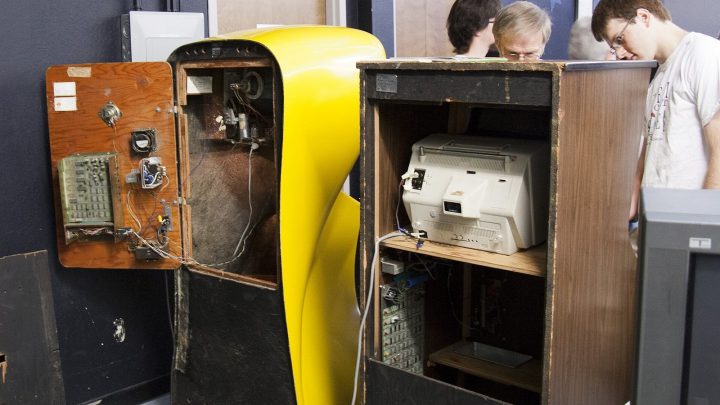
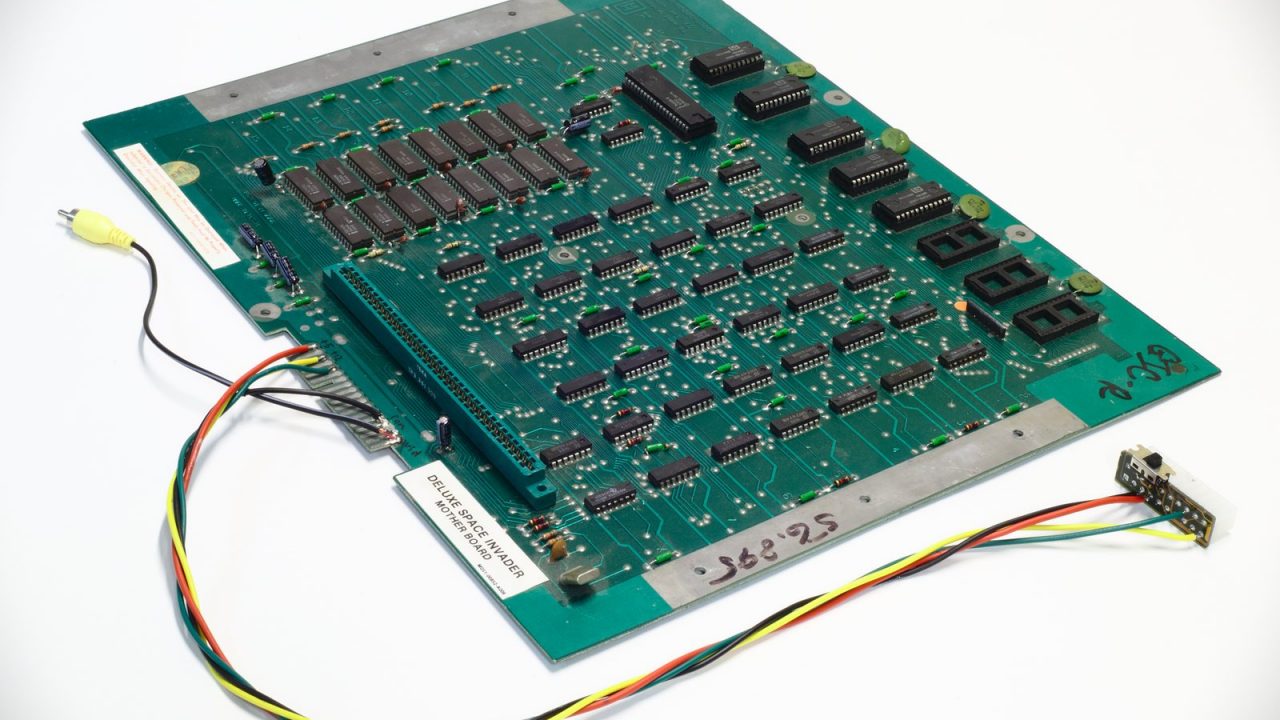
The game ran on an Intel 8080 microprocessor, a powerful choice for the time but still limited for drawing dozens of moving objects. The result was a happy accident. With a full formation on screen, the processor took longer to draw each frame, so the aliens moved slowly. As the player destroyed them, there was less to draw, and the remaining aliens moved faster.
Nishikado noticed the effect and decided to keep it. The accelerating invaders, together with the speeding-up bass line, created a natural difficulty curve and a growing sense of panic as a wave neared its end. The last alien in a wave is famously fast. That mechanic, born from technical limits, is one of the reasons the game still feels tense today.
The sound hardware, built using a Texas Instruments sound chip and additional circuitry, produced the march, the laser shots and the warbling mystery ship. The rhythmic “heartbeat” sound is often cited as an early example of game audio driving player emotion.
A Phenomenon in Japan
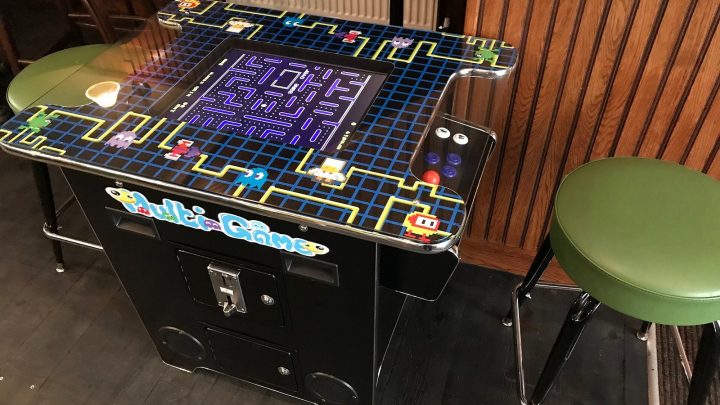
Taito released Space Invaders in Japan in 1978, first as an upright cabinet and soon afterwards as a cocktail-table version that players could sit at. It was an immediate hit. By the end of the year, more than 100,000 machines had reportedly been installed across Japan.
The game spread far beyond traditional amusement arcades. Machines appeared in coffee shops, pachinko parlors and bowling alleys, and dedicated arcades opened that offered little else but Space Invaders. Players developed techniques for maximizing scores, and the game became a widely discussed social phenomenon in Japan.
The 100-Yen Coin Shortage: A Popular Myth
One of the most repeated stories about Space Invaders is that the game was so popular in Japan it caused a national shortage of 100-yen coins, forcing the government to increase production. It is a great story, and it appears in many books and articles.
It is also very likely untrue. Researchers who examined the evidence have found no support for it:
- Japanese coin collectors at the time reported nothing unusual around the game’s release.
- Numismatic researcher Mark Fox compared Japan Mint production figures with the game’s reported earnings and found no change attributable to the game. He pointed out that operators emptied their machines regularly, putting the coins back into circulation.
- A later article in The Numismatist agreed, noting that the Japan Mint and the Bank of Japan had no evidence supporting the claim, and suggested that misreported newspaper stories and Taito’s failure to deny them helped the legend spread.
- Nishikado himself has expressed skepticism about it.
The myth may have been fueled by lower 100-yen coin production in 1978 and 1979, which had nothing to do with arcades. Treat it as a legend that illustrates how popular the game was, not as a documented fact.
Midway Brings the Invaders to America
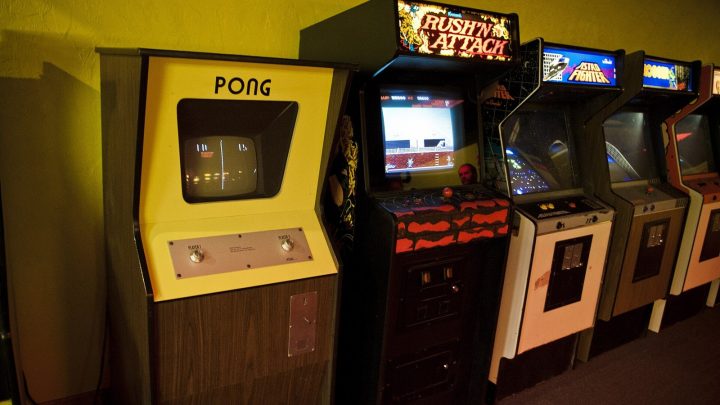
Demand outside Japan was strong, and Taito licensed the game for overseas distribution. In North America, Midway released Space Invaders in late 1978. It became a major hit there in 1979, and many historians date the American golden age of arcade games from that point, as covered in our overview of the golden age of arcade games.
The game’s earnings were enormous by any standard, although reported figures vary between sources. Commonly cited estimates put its gross revenue in the billions of dollars by the early 1980s, which would have made it one of the highest-grossing entertainment products of its time. Because the published figures differ significantly, they are best read as signs of scale rather than precise numbers.
The Atari 2600 Port: A Killer App
The game’s second life began at home. Atari released Space Invaders for the Atari 2600 (then still widely known as the VCS) on March 10, 1980. Programmer Rick Maurer had started working on a version on his own initiative before Atari showed much interest, and Atari then licensed the official rights from Taito.
The 2600 version could not match the arcade’s visuals, but it added many variations, including moving shields, zigzagging shots and invisible invaders, plus cooperative and alternating two-player modes. It was a huge success:
- It earned Atari more than $100 million.
- Atari 2600 console sales reportedly quadrupled after its release.
- The magazine Electronic Games said the game “sold the entire system in many cases.”
It is often described as the first “killer app” for a home console: a single game so desirable that people bought the hardware to play it. It also established a model that dominated the early 1980s, with console makers competing for licenses to popular arcade games. That model had a downside, as weak conversions later damaged trust, a story told in our article on the video game crash of 1983.
Influence on Games and Designers
Space Invaders established many of the conventions of arcade games:
- The shoot ’em up. Later shooters such as Galaxian and Galaga built directly on its template.
- Enemies that fight back. Earlier target games had mostly passive targets; the invaders fire at the player.
- Escalating difficulty and multiple lives. Waves restart faster and lower, and the player has several attempts before game over.
- High scores as motivation. The game saved the high score, giving players a public target to beat.
Its influence on individual creators is also well documented. Shigeru Miyamoto, the creator of Super Mario Bros., and Hideo Kojima, the creator of Metal Gear, have both cited Space Invaders as the game that drew them toward video games. The game won the first Arcade Awards for best coin-op electronic game and was inducted into the World Video Game Hall of Fame in 2016.
Why the Design Still Works
Playing Space Invaders today, it is striking how much tension comes from so few elements. A few design choices explain why it has aged better than many of its contemporaries:
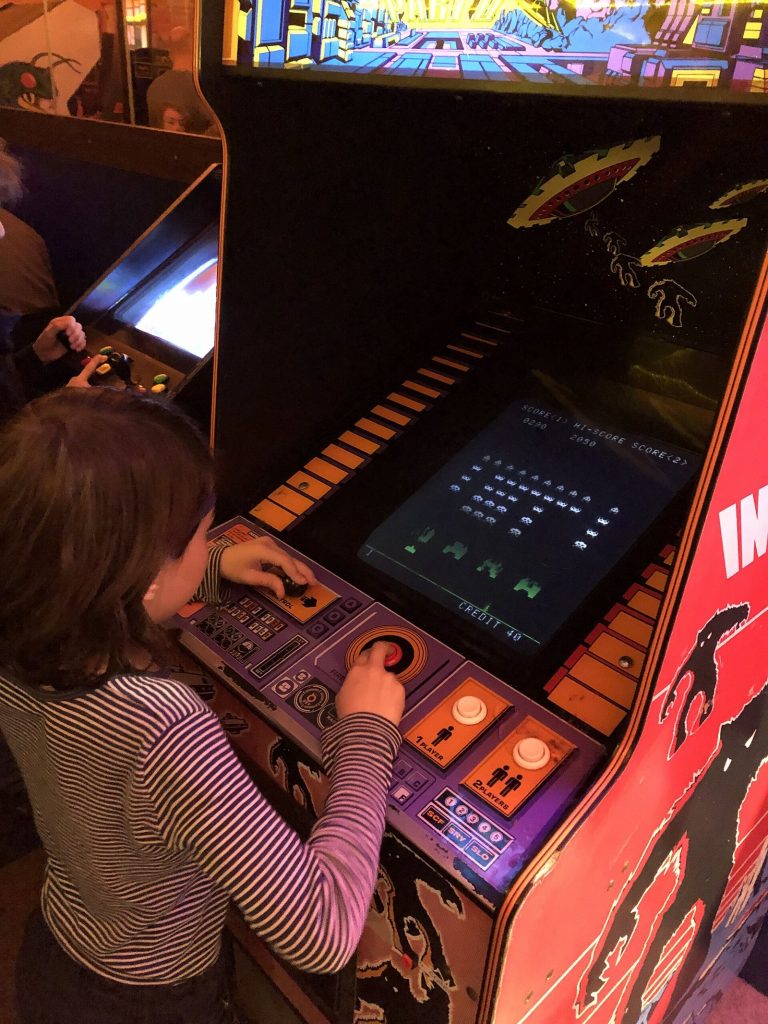
- Clear goals. Everything you need to know is visible on one screen: the threat, your cover and your score.
- Risk and reward. The mystery ship tempts you to leave cover and take a shot, while the descending formation punishes hesitation.
- Shrinking safety. Your shields erode with every exchange of fire, so each wave becomes slightly more dangerous than the last, even before the speed-up begins.
- Audio as pressure. The marching beat ties what you hear to what you see, so you can feel the formation getting faster without looking at it.
Those principles, clear information, meaningful risk and escalating pressure, still underpin arcade-style game design.
Space Invaders in Popular Culture
The pixel-art invader became one of the most recognizable images in gaming. It has appeared on clothing, in street art and in countless references in film and television. Taito has released many sequels, remakes and re-releases over the years, and the original remains a staple of retro compilations and official collections.
Quick Facts
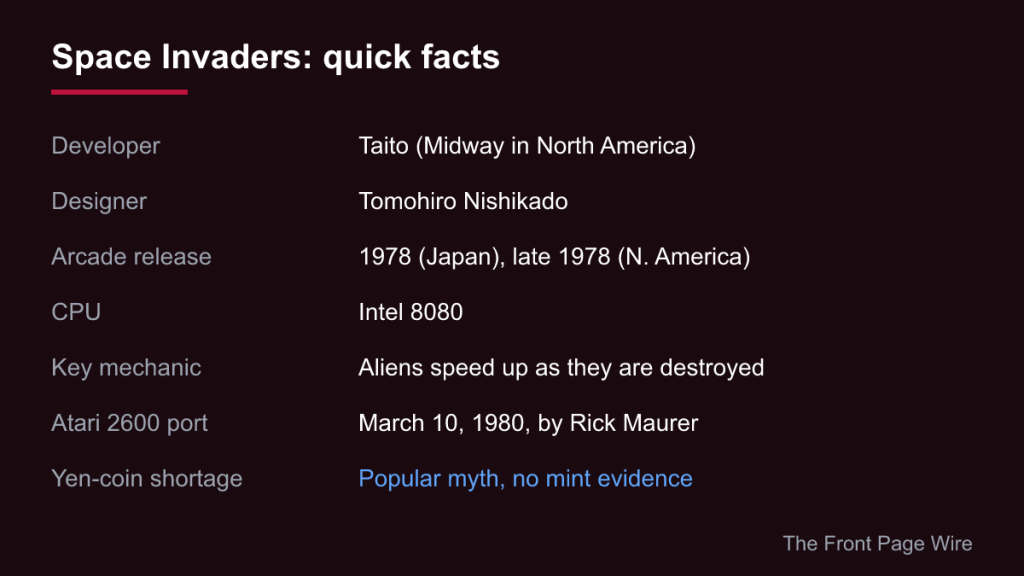
| Item | Detail |
|---|---|
| Developer / publisher | Taito (Midway in North America) |
| Designer | Tomohiro Nishikado |
| Arcade release | 1978 (Japan), late 1978 (North America) |
| CPU | Intel 8080 |
| Signature mechanic | Aliens speed up as they are destroyed, a side effect of hardware limits |
| Atari 2600 version | Released March 10, 1980; programmed by Rick Maurer |
| Yen-coin shortage | Popular myth; no supporting evidence from mint data |