Why Video Game Preservation Matters and Why So Many Classic Games Are Disappearing
Why classic games are disappearing: decaying media, closed storefronts and servers, lost source code, and what the 2023 study finding 87% out of print means.
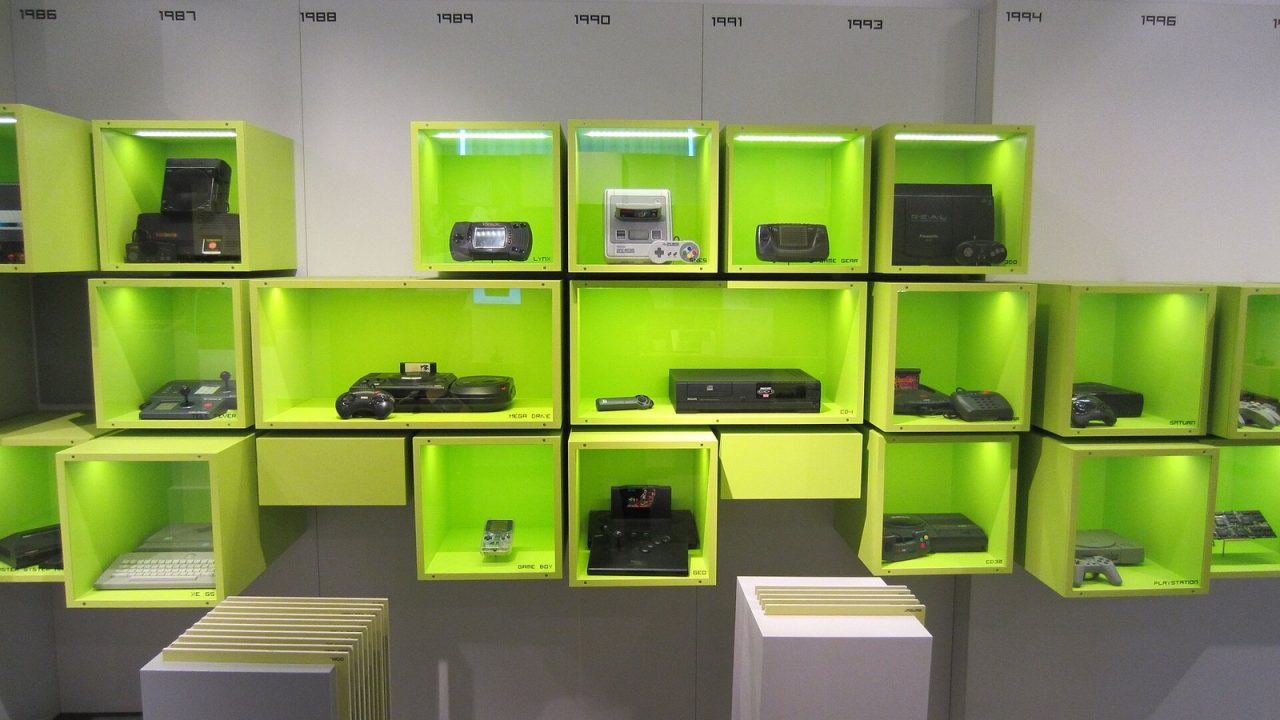
A film from the 1980s is usually easy to watch today. Most well-known novels from any decade are still in print. Classic video games are different. Many of the games that shaped the medium can no longer be bought legally in any form, and some are at risk of disappearing entirely as the hardware they ran on fails and the companies that made them change hands or close.
This article explains why games are so vulnerable, what a widely reported 2023 study actually found about their availability, and what preservation involves in practice. It also explains why preservation is a legal question as much as a technical one.
The 2023 Study: What “87 Percent” Really Means
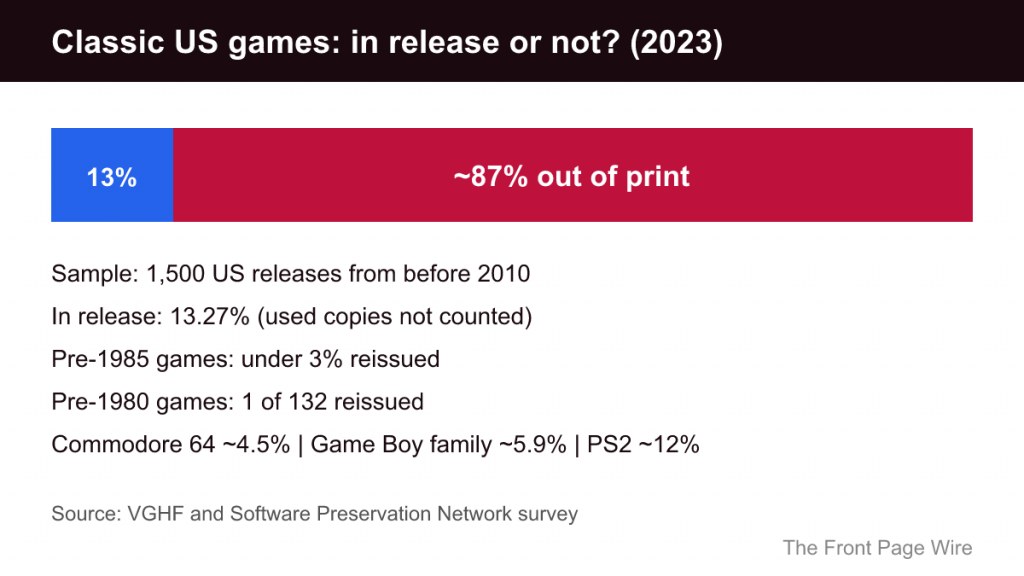
In July 2023, the Video Game History Foundation (VGHF), working with the Software Preservation Network, published a report titled Survey of the Video Game Reissue Market in the United States, written by VGHF librarian Phil Salvador. Its headline finding, repeated across gaming news sites, is that about 87 percent of classic video games released in the United States are out of print.
That figure is easy to misread, so the scope matters:
- It covers US releases before 2010. The study did not look at all games ever made, or at markets outside the United States.
- It is based on a sample. Researchers studied a random sample of 1,500 games drawn from the MobyGames database, with results accurate as of April 2023.
- “Available” means legally available new. A game counted as in release if it could currently be bought in some legal form, such as a reissue, digital re-release, remaster or compilation. Used copies on the second-hand market did not count.
- The precise number is 13.27 percent in release. The “87 percent” figure is the remainder, the share of games with no current commercial release.
Some of the detailed findings were even more striking. For games released before 1985, the reissue rate fell below 3 percent. Only one of the 132 games in the sample released before 1980 had been reissued. Platform results varied widely: according to reporting on the study, only about 4.5 percent of Commodore 64 games and about 5.9 percent of Game Boy-family games in the sample were available, compared with around 12 percent for PlayStation 2 games.
The researchers stressed that they were not blaming specific companies. Their point was that the commercial market alone does not keep most of gaming history available, so libraries and archives need to be able to do that work. University of Virginia librarian Brandon Butler summed up the argument: “if we lose access to our digital cultural heritage, it’s not a market failure; it’s a policy failure.”
Problem One: Physical Media and Hardware Decay
Games were never designed to last forever. Each storage medium has its own weaknesses:
- Optical discs. CDs and DVDs can suffer from “disc rot,” where the reflective layer degrades, making data unreadable.
- Magnetic media. Floppy disks and cassette tapes used for home computer games lose data as their magnetic coating degrades, and the drives to read them are increasingly scarce.
- Cartridges. ROM chips are relatively durable, but many cartridges stored saves in memory kept alive by a small battery. When the battery dies, saves disappear.
- Hardware. Consoles, arcade boards and computers contain parts such as capacitors that degrade over time. Spare parts become rarer each year.
Collectors play a real role in keeping working examples alive, but private collections are not the same as public access. Our guide to starting a retro game collection covers caring for your own games; preservation at scale requires institutions.
Problem Two: Delisted and Closed Digital Stores
Digital distribution was supposed to make games permanently available. In practice, digital storefronts close, and games sold only digitally can vanish with them.
Nintendo’s Wii U and 3DS eShops stopped selling games worldwide on March 27, 2023. Wikipedia’s article on video game preservation notes that around 1,000 digital-only games were affected. Previously purchased games could still be redownloaded for the time being, but new buyers lost access, and many of those titles have no other release. The VGHF study itself noted that the Game Boy family had been well served by Nintendo’s eShop re-releases until those stores closed.
Games are also delisted for other reasons: licenses for music, cars, sports leagues or film characters expire, and publishers remove games rather than renegotiate. A game can disappear from sale years before its platform does.
Problem Three: Online Services Shut Down
Many games depend on servers run by their publisher, for multiplayer, for authentication, or for the entire game in the case of online-only titles. When those servers close, parts of the game, or the whole game, can become unplayable unless the publisher updates it to remove the dependency. Games that rely on third-party middleware can break when the company providing it goes out of business.
Live-service games add a further problem: even if a server is restored, the experience of playing with thousands of people during a specific season or event cannot easily be recreated. Documentation such as videos, screenshots and player accounts becomes the only record.
Problem Four: Lost Source Code and Assets
A game’s source code and original assets are essential for remastering, porting or simply understanding how it was made. Yet many were never archived properly.
- After the North American video game crash of 1983, many companies folded, and source code for many early games was lost or destroyed.
- Assets for some later games have been lost during office moves, acquisitions or simple neglect. Wikipedia’s preservation article cites Westwood’s Blade Runner (1997), whose assets were lost during a move after an acquisition, which long complicated any re-release.
- Developers who kept personal copies often cannot release them, because work-for-hire contracts mean their former employer owns the rights.
- Rights disputes can block re-releases for years even when the code survives, as happened with GoldenEye 007.
What Preservation Actually Involves
Preserving a game means much more than keeping a copy of its data. Preservationists typically work on several fronts at once.
Capturing the software
Data from cartridges, discs and disks is read and stored in archival formats before the media fails. For many systems this requires specialized hardware, and for copy-protected formats it raises legal questions.
Making it playable
Emulation is one of the main long-term strategies, because original hardware will eventually fail. Accurate emulators document how hardware behaved and allow archived software to run on future machines. Other approaches include recreating game engines and officially porting games using original source code. As our article on emulation and the law explains, building emulators through clean reverse engineering has been upheld in US courts, but copying and distributing games is a separate matter.
Documentation
Games exist within a context: manuals, box art, magazines, advertisements, design documents, interviews and recordings of play. Archives scan and catalog these materials, and databases such as MobyGames record release details that would otherwise be scattered.
Hardware
Museums and archives keep and repair original consoles, computers and arcade machines, both to run software authentically and as historical objects in their own right.
Legal access
Perhaps the biggest obstacle is legal. In the United States, the Digital Millennium Copyright Act makes it illegal to circumvent copy protection, and libraries and archives rely on specific exemptions granted through the Copyright Office’s rulemaking process. Those exemptions have been expanded over time, for example to cover games that require authentication servers, but in 2024 the Copyright Office declined a proposed exemption that would have let researchers access archived games remotely. As things stand, a researcher who wants to study many out-of-print games often has to visit an archive in person.
Who Does This Work?
Preservation involves a mix of institutions and volunteers:
- The Video Game History Foundation, a non-profit founded by Frank Cifaldi, focuses on preserving and providing access to game history and its documentation.
- The Strong National Museum of Play in Rochester, New York, operates the International Center for the History of Electronic Games.
- The Library of Congress has funded and supported digital preservation projects.
- Museums and archives in many countries keep collections of games and hardware.
- Publishers and developers sometimes preserve their own catalogs, and some companies specialize in carefully restored re-releases.
We will profile several of these organizations in more depth later in this series.
Why It Matters
Video games are one of the defining creative forms of the last half-century. They influenced film, music, art and design, and they record how people played, socialized and imagined technology at different moments in history. Losing them would be like losing a large share of silent films, which is in fact what happened to cinema before preservation was taken seriously.
There are also practical reasons. Designers learn from older games, historians and journalists need access to check claims, and players deserve to experience the games behind the stories that are still told about them. A history that can only be read about, never played, is a poorer history.
For individuals, the most useful contributions are simple: buy official re-releases when they exist so publishers see demand, look after any original media you own, support preservation organizations, and treat old manuals, magazines and promotional materials as historical documents rather than clutter.