Pong and the Birth of Atari: How a Tennis Game Started an Industry
How Nolan Bushnell, Ted Dabney and Allan Alcorn turned a simple tennis game into Atari's first hit, plus the Odyssey patent fight and Home Pong.
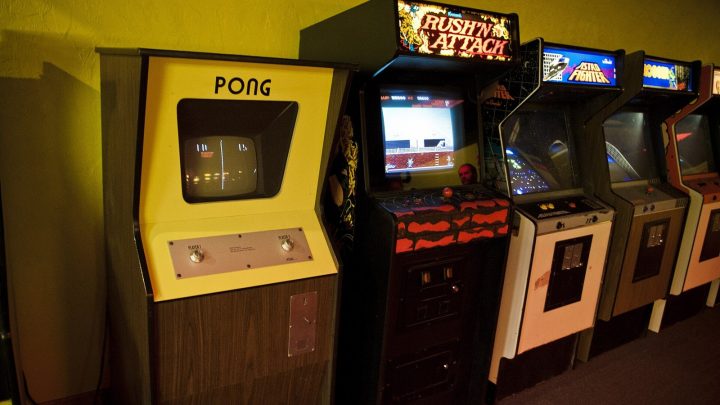
Two paddles, a square ball and a score at the top of the screen. By modern standards Pong is almost nothing, yet few games have mattered more. It was the first commercially successful arcade video game, it turned a tiny California startup into the most famous name in early gaming, and it proved to bar owners, distributors and eventually families that people would pay to play games on a TV screen.
The Pong story is also wrapped in anecdotes that have been retold so often they are hard to separate from fact. This article sets out what reliable sources say about how Atari began, how Pong was built and tested, the patent dispute with Magnavox and the arrival of Home Pong, and it flags the stories that are better treated as legends.
Before Atari: Syzygy and Computer Space
Atari’s founders were two engineers, Nolan Bushnell and Ted Dabney. In 1971 they formed a partnership called Syzygy Engineering, each reportedly putting in $250 of their own money, to develop a coin-operated version of Spacewar!, the 1960s game popular on university computers.
The result was Computer Space, built with and sold by the coin-op manufacturer Nutting Associates. Its futuristic fiberglass cabinet was striking, but the game was hard to understand and sold poorly. The lesson Bushnell drew from it was important: the next game had to be simple enough that anyone, including someone in a bar with a drink in hand, could understand it immediately.
The Founding of Atari in 1972
When Bushnell and Dabney went to incorporate their company, they discovered that the name Syzygy was already in use. They chose “Atari,” a term from the board game Go that describes a position where a group of stones is about to be captured, roughly comparable to “check” in chess. Atari was incorporated in California on June 27, 1972.
Dabney’s role in Atari’s early history is often underplayed in popular retellings, which tend to focus on Bushnell. Dabney left the company in March 1973 after a growing rift with Bushnell, selling his share. Many later accounts give Bushnell sole credit as “the founder of Atari,” which is a simplification.
Allan Alcorn Builds Pong
Atari’s first full-time engineer was Allan Alcorn, who had met Dabney while working at the video technology company Ampex. According to the commonly told story, Bushnell gave Alcorn a simple ping-pong game to build as a warm-up exercise, presenting it as though it were connected to a contract with General Electric. In most retellings the project was intended as training rather than a planned product, and the GE connection is best read as part of how Bushnell framed the job, not as evidence of a real deal.
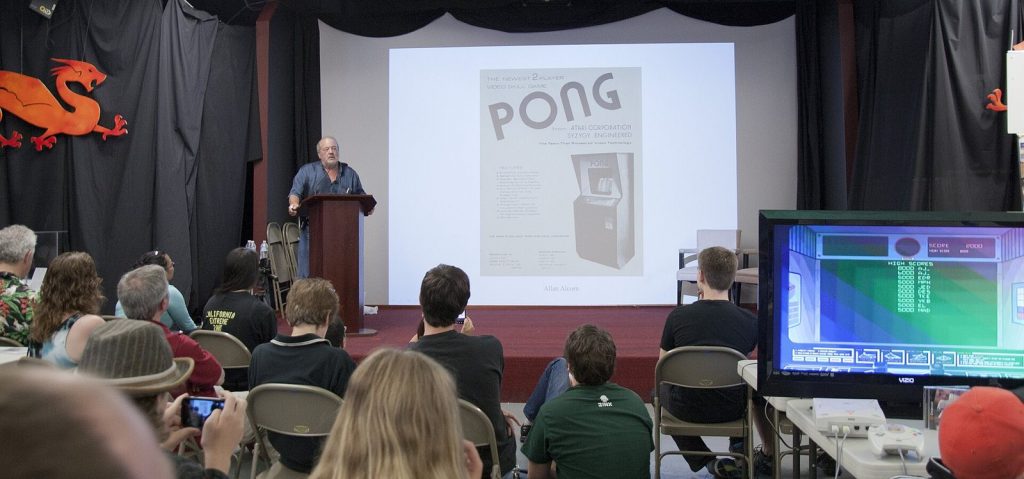
Alcorn went well beyond the brief. Using discrete transistor-transistor logic chips rather than a microprocessor, he added several touches that made the game far more interesting than a basic ball-and-paddle demo:
- Segmented paddles. Each paddle was divided into eight segments, and the ball bounced back at a different angle depending on which segment it hit. This gave players a sense of control and skill.
- Speeding up. The ball accelerated the longer a rally lasted, building tension.
- A gap at the top. The paddles could not quite reach the top of the screen, partly due to a quirk in the circuit, which meant a skilled player could exploit it. Alcorn kept it in.
- Sound effects. Bushnell wanted crowd noises; Alcorn instead used tones generated by the circuit’s sync generator, producing the famous “blip” sounds.
Bushnell and Atari quickly realized that the “training exercise” was fun enough to sell.
The Odyssey Connection
Pong was not the first electronic tennis game. The Magnavox Odyssey, the first commercial home video game console, designed by Ralph Baer and his team at Sanders Associates, included a table tennis game and went on sale in 1972.
The two key figures remember Pong‘s inspiration differently. Alcorn has said the project was a response to Bushnell seeing a demonstration of the Odyssey’s table tennis game in May 1972 in Burlingame, California. Bushnell has pointed to earlier electronic tennis games he had seen. Evidence later produced in court, including a guest book, showed that Bushnell had attended a Magnavox demonstration before Pong was developed. Whatever the precise chain of inspiration, the similarity mattered a great deal once Pong became a hit.
The Andy Capp’s Tavern Test
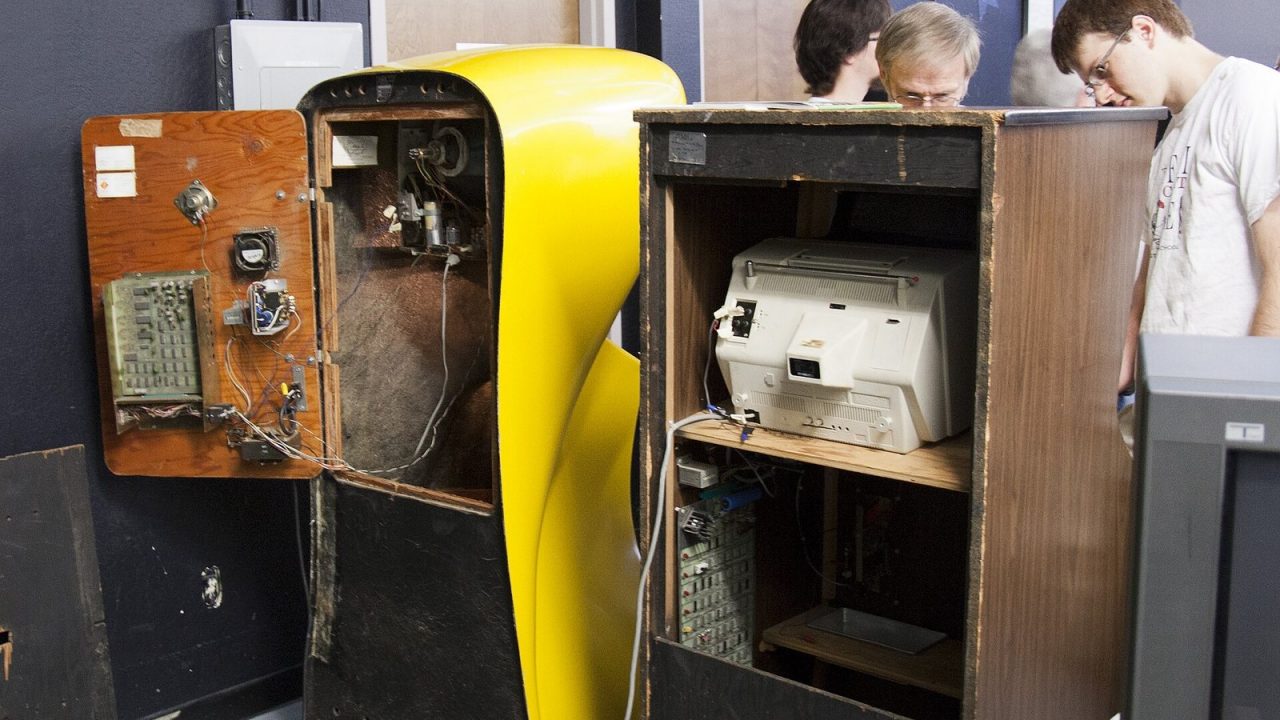
In August 1972, Bushnell and Alcorn placed a prototype Pong machine in Andy Capp’s Tavern, a local bar. Players took to it quickly.
Here is where the most famous Pong legend begins. As the story is usually told, the bar’s manager called Alcorn after a few days to say the machine had stopped working; Alcorn arrived to find that the coin mechanism was jammed because it was overflowing with quarters. The story appears in Steven L. Kent’s 2001 book The Ultimate History of Video Games, based on participants’ recollections. Wikipedia’s account confirms that the prototype was popular and suffered a coin mechanism failure that Alcorn fixed, but the specific detail about coins overflowing comes from that one retelling. It is best enjoyed as a good story that may have grown in the telling, rather than a documented fact.
What is clear is that the test convinced Atari to manufacture Pong itself rather than license it to another company, a decision that turned Atari from a design firm into a manufacturer.
Release and Early Success
Atari announced Pong on November 29, 1972. Production was at first chaotic: the early assembly line reportedly turned out around ten machines a day, and many failed quality testing. The company recruited workers quickly and improved its process, and by 1973 it was shipping overseas.
The game earned far more per machine than typical coin-op attractions of the time. Atari sold cabinets at a healthy markup, filled thousands of orders in its first year and, according to figures cited by Wikipedia, had sold more than 8,000 units by the end of 1974.
Success brought imitators. Because Atari had been slow to protect its design, other manufacturers released their own ball-and-paddle games, and Wikipedia notes that Atari reportedly built less than a third of the Pong-style machines in circulation. Japanese companies including Taito and Sega released their own versions as well, an early sign of the role Japan would play in the arcade business. Atari responded by moving on to new games and, in 1973, by setting up a nominally separate subsidiary, Kee Games, to get around distributors’ exclusivity arrangements. Kee was merged back into Atari in 1974.
The Magnavox Patent Dispute
Magnavox, which held the license to Ralph Baer’s patents through Sanders Associates, saw Pong and its clones as infringing on its video game patents. In April 1974 it sued Atari and several other companies.
Atari chose to settle rather than fight. In June 1976 it agreed to become a licensee of the patents, paying Magnavox $1.5 million in installments. That figure looks small in hindsight given how large Atari became. Magnavox and Sanders continued to pursue other manufacturers and went on to win substantial sums from lawsuits and licensing over the following years.
The dispute is the origin of a long-running debate about who “invented” video games. Ralph Baer is widely recognized as the father of the home video game console, while Bushnell and Alcorn are credited with making arcade video games a business. Both claims can be true at once.
Home Pong (1975)
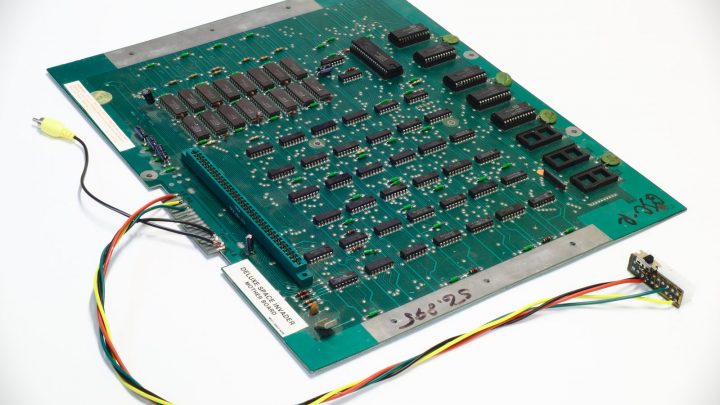
Atari’s next big step was bringing Pong into the living room. In 1974, Atari engineer Harold Lee proposed a home version. Lee and Alcorn designed it around a single custom chip, which made the product affordable to manufacture compared with the many discrete chips in the arcade machine.
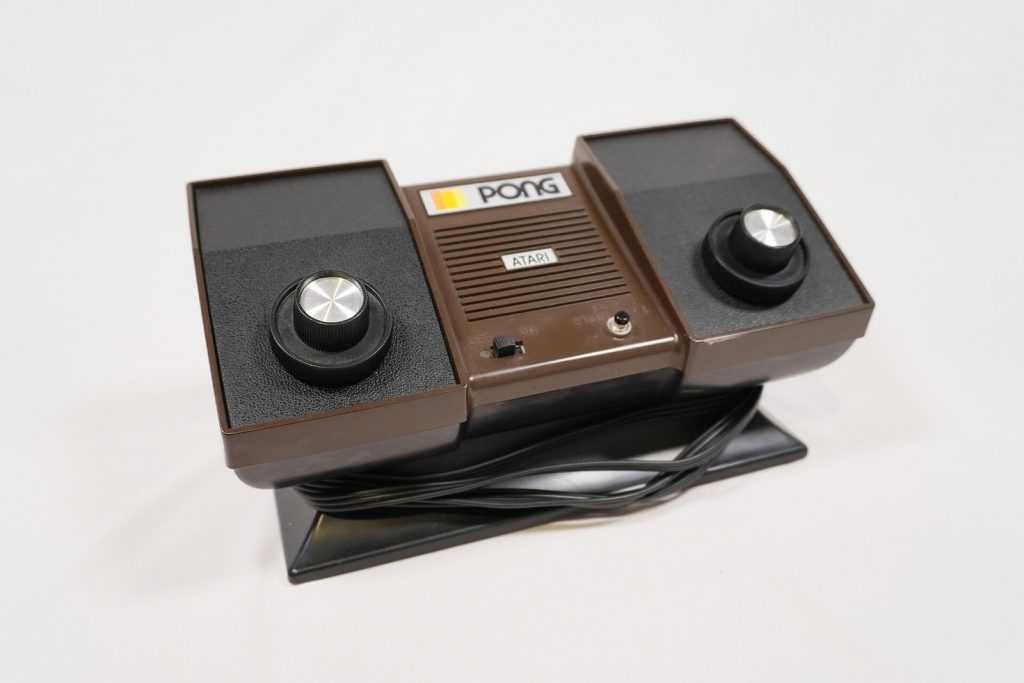
Toy and electronics retailers were initially uninterested. The breakthrough came from Sears. After Atari demonstrated the product, Sears ordered far more units than Bushnell had initially proposed and sold the console under its own brand as the Sears Tele-Games Pong for the 1975 holiday season, at a price of $98.95. It was a hit, with around 150,000 units sold that season according to figures cited by Wikipedia, and Atari followed with its own branded version.
Home Pong kicked off a wave of dedicated home consoles from many manufacturers, almost all of them playing variations of ball-and-paddle games. That wave belongs to what historians call the first console generation, covered in our overview of console generations explained.
From Pong to Warner and Beyond
Atari’s growth was fast but expensive. To fund its next big project, a programmable console that could play games on cartridges, Bushnell sold the company to Warner Communications in 1976 for a reported $28 million. That console became the Atari VCS, later known as the Atari 2600, launched in 1977.
Bushnell’s relationship with Warner deteriorated, and he left Atari in 1978. Under Warner, Atari became enormous and then, in the early 1980s, a central figure in the market collapse covered in our article on the video game crash of 1983. But it all started with two paddles and a ball.
Legends Versus Documented Facts
| Claim | Status |
|---|---|
| Atari was incorporated in June 1972 | Documented |
| Pong was built as a training exercise for Allan Alcorn | Widely reported by participants |
| The Andy Capp’s prototype stopped working because the coin box overflowed | Popular anecdote based on recollections; treat as legend |
| Bushnell had seen the Magnavox Odyssey’s tennis game before Pong | Supported by evidence from the Magnavox lawsuit |
| Atari paid $1.5 million to settle with Magnavox in 1976 | Documented |
| Nolan Bushnell founded Atari alone | Simplification; Ted Dabney was co-founder |
Today Pong is held in the Smithsonian’s collection and was among the first games inducted into the World Video Game Hall of Fame in 2015. Its simplicity is the reason it still makes sense to anyone who sees it.