The Game Boy Story: How Nintendo’s Handheld Dominated Portable Gaming
How Gunpei Yokoi's "withered technology" philosophy, Tetris and long battery life turned Nintendo's 1989 Game Boy into a handheld giant.
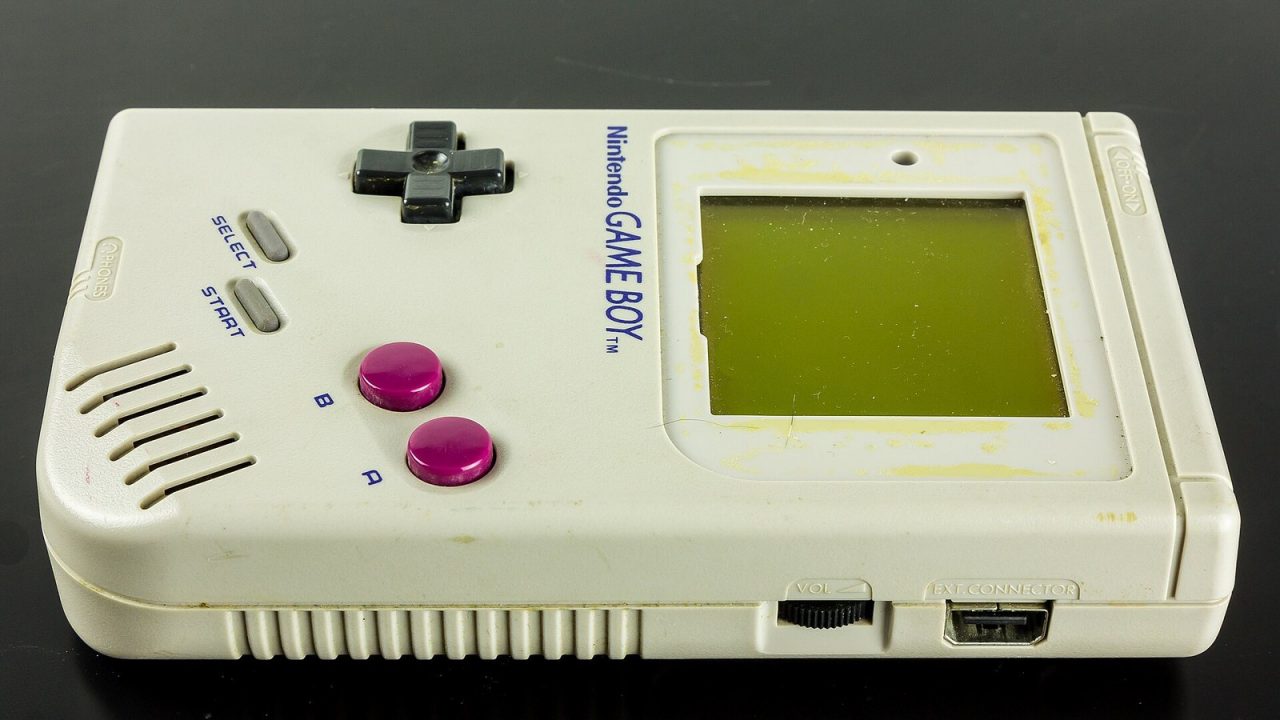
On paper, the Game Boy should have lost. Its screen was a small monochrome LCD that showed four shades of greenish grey. It had no backlight. Within a couple of years of launch it faced rivals with bright color displays from Atari and Sega. Yet Nintendo’s handheld, together with its successor the Game Boy Color, went on to sell 118.69 million units worldwide, according to Nintendo’s own investor relations figures. Understanding why tells you a lot about how hardware succeeds: not by having the best specifications, but by getting the balance of price, battery life, durability and software right.
This article follows the Game Boy from its design philosophy through its 1989 launch, the decision to pack in Tetris, the battle with color competitors, the Pocket and Color revisions, and the remarkably long life that ended only in 2003.
Gunpei Yokoi and “Lateral Thinking With Withered Technology”
The Game Boy was developed by Nintendo Research & Development 1 (R&D1), the division led by Gunpei Yokoi, with engineer Satoru Okada playing a central role. Yokoi had joined Nintendo when it was still mainly a playing card and toy company. In 1966 he built an extending grabber arm for his own amusement; Nintendo president Hiroshi Yamauchi saw it and had it turned into a product, the Ultra Hand. Later Yokoi created the Game & Watch line of LCD handhelds, first released in 1980.
Yokoi’s guiding idea is usually translated as “lateral thinking with withered technology” (in Japanese, kareta gijutsu no suihei shikō). The “withered” technology is mature technology: components that have been around long enough to be cheap, well understood and reliable. The “lateral thinking” is finding a new, playful use for them.
The Game Boy is the most famous application of that philosophy. Color LCD technology existed in 1989, but it was expensive and power hungry. A monochrome STN screen was cheap, readable in daylight and frugal with batteries. The trade-off was image quality, especially motion blur on fast-moving games.
The Hardware: What Was Inside the Brick
The original Game Boy, often nicknamed the “brick” by fans for its chunky shape, was modest even for its time. Its main specifications, as documented in reference sources, were:
| Component | Original Game Boy (1989) |
|---|---|
| Processor | Sharp SM83 at about 4.19 MHz, a design related to the Intel 8080 and Zilog Z80 |
| Screen | 2.5-inch monochrome STN LCD, 160 × 144 pixels, four shades |
| Power | Four AA batteries, up to about 30 hours of play |
| Media | ROM cartridges, some with battery-backed save memory |
| Connectivity | Game Link Cable for two-player play and data exchange |
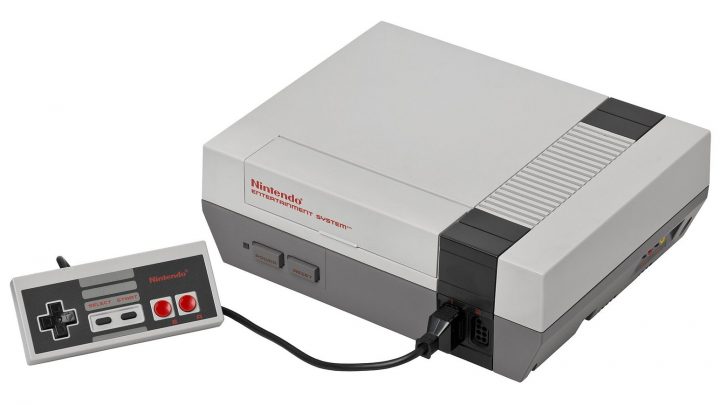
The controls established a pattern Nintendo had already used on the NES and on later Game & Watch units: a cross-shaped directional pad on the left, A and B buttons on the right, and Start and Select in between. Anyone who had used the controller of the Nintendo Entertainment System already knew how to hold a Game Boy.
The Game Link Cable, developed under Okada, turned out to be one of the system’s most important features. It allowed head-to-head play in games such as Tetris and, years later, became the backbone of trading and battling in Pokémon. Adapters later allowed up to four systems to connect in supported games.
The 1989 Launch and the Tetris Decision
Nintendo released the Game Boy in Japan on April 21, 1989, and in North America on July 31, 1989. Europe followed on September 28, 1990. In Japan the price was ¥12,500; the US launch price was reported at roughly $90 (sources differ slightly on whether it was $89.95 or $89.99).
Outside Japan, the console came bundled with Tetris. In Japan it was sold without that pack-in. The choice proved to be one of the smartest bundling decisions in gaming history. Tetris was easy to understand, endlessly replayable in short sessions, readable on a small monochrome screen, and appealing to people who did not consider themselves gamers. Adults who would never buy a console for themselves found themselves playing it on commutes and lunch breaks. The game’s falling blocks also did not suffer much from the screen’s motion blur, unlike fast-scrolling action games.
The launch lineup also included Super Mario Land, a compact platformer that gave the system a familiar mascot from day one. The story of how Nintendo secured handheld rights to Tetris involves a famously complicated licensing chain, which deserves its own article.
Monochrome Versus Color: Why Battery Life Won
The Game Boy’s main competitors arrived quickly. Atari’s Lynx, designed by Epyx and launched in North America on September 1, 1989, offered a backlit 3.5-inch color screen. Sega’s Game Gear launched in Japan in October 1990 and reached North America and Europe in April 1991, with a backlit color LCD and hardware derived from the Sega Master System. NEC also offered the TurboExpress, a portable version of its TurboGrafx-16.
On specifications alone, these machines were more impressive. In everyday use, the picture was different:
- Battery life. The original Game Boy ran up to about 30 hours on four AA batteries. The Lynx needed six AA batteries and lasted roughly four to five hours on the original model. The Game Gear also used six AAs and is usually reported at about three to five hours. For a family buying batteries, the difference was enormous.
- Size and price. Backlit color screens added bulk and cost. The Lynx launched at around $180, about twice the Game Boy’s price.
- Software. The Game Boy had Nintendo’s own franchises and broad third-party support. Many Game Gear titles were ports of Master System games, and the Lynx library remained small.
- Durability. The simple design tolerated drops and rough handling well, which mattered for a device often owned by children.
Reference sources estimate the Game Gear’s lifetime sales at about 14 million units and the Lynx’s at about 2 million. Against the Game Boy family’s total, neither came close. We look at these challengers in more depth in a separate piece on the first handheld wars; the short version is that Nintendo’s “withered technology” bet proved correct. Portability means little if a device dies after a few hours.
Game Boy Pocket, Light and the Color Era
Rather than replacing the Game Boy quickly, Nintendo refined it. The Game Boy Pocket arrived in Japan on July 20, 1996, and in North America on September 2, 1996. It was smaller and lighter, used two AAA batteries instead of four AAs, and had an improved screen with true black-and-white tones rather than the green tint of the original. The trade-off was battery life, which dropped to about 10 hours.
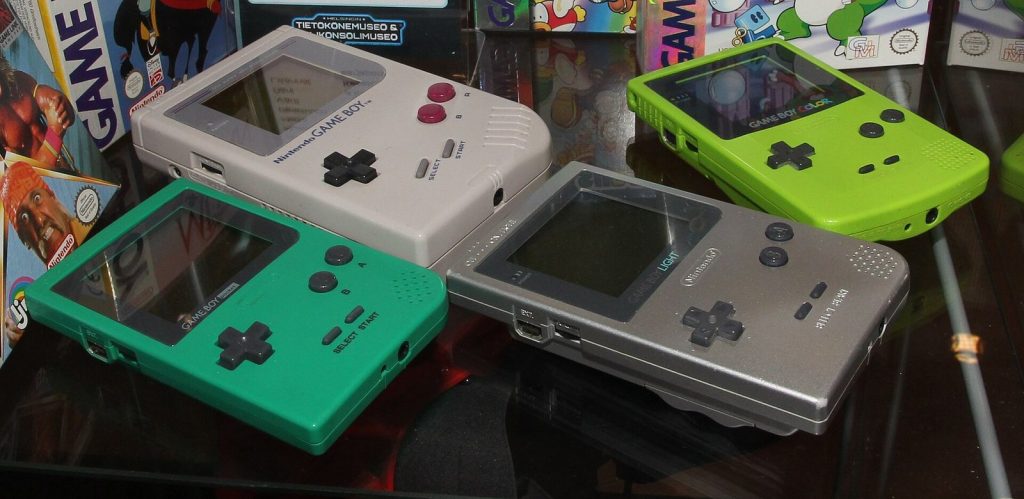
In Japan, Nintendo also released the Game Boy Light on April 14, 1998. It added an electroluminescent backlight, finally letting owners play in the dark, and ran on two AA batteries for about 12 hours with the light on or about 20 with it off. It was never released outside Japan, which has made it a sought-after collector item for importers.
The bigger change came later that year. The Game Boy Color launched in Japan on October 21, 1998, then in North America on November 18 and in Europe on November 23, 1998. It kept the same basic processor design but could run it at double speed in Color-specific games, and its screen could display up to 56 colors at once from a palette of 32,768. Crucially, it was backward compatible with the existing library, and some cartridges were “dual mode,” playing in color on the new system and in monochrome on older ones.
Launch titles included Tetris DX, Wario Land II and Pocket Bomberman, and the system later received enhanced versions such as The Legend of Zelda: Link’s Awakening DX and Super Mario Bros. Deluxe. The biggest sellers of the Color era, though, were the second-generation Pokémon games: Pokémon Gold and Silver are reported to have sold about 23 million units.
Pokémon and the Second Life of an Old Machine
Most consoles are past their peak seven years after launch. The Game Boy received its biggest boost around that point. Pokémon Red and Green launched in Japan in 1996, and the series’ design was built around the Game Link Cable: certain creatures could be obtained only by trading with a friend who owned the other version. A seven-year-old piece of hardware suddenly had a reason to be in every schoolbag again.
Because the hardware was cheap and the installed base was huge, developers could keep making profitable games for it long after more powerful machines existed.
A Long Life and a Clean Handover
The Game Boy Advance arrived in 2001 and, importantly, could play Game Boy and Game Boy Color cartridges. That backward compatibility allowed Nintendo to move the audience forward without cutting off the old library. The Game Boy and Game Boy Color were officially discontinued on March 31, 2003, roughly 14 years after the original’s Japanese launch. Some final software trickled out afterward; a Japan-only Doraemon educational title was released in July 2003.
Nintendo reports combined Game Boy and Game Boy Color sales of 118.69 million units, which makes the family one of the best-selling video game hardware lines ever. For comparison, Nintendo’s own figures put the Famicom/NES at 61.91 million and the Game Boy Advance at 81.51 million units.
Gunpei Yokoi did not see the full extent of that legacy. After the commercial failure of the Virtual Boy in 1995, he left Nintendo in August 1996 and founded his own company, Koto, which went on to develop Bandai’s WonderSwan handheld. He died in a road accident in October 1997, aged 56. The WonderSwan launched in 1999, after his death.
Why the Game Boy Mattered
The Game Boy’s impact goes beyond sales figures. Several ideas it popularized are still central to portable gaming:
- Short, pick-up-and-play sessions that suit commutes and breaks.
- Battery life as a core feature, a lesson later handheld makers relearned repeatedly.
- Social play through links, the ancestor of local wireless play on later handhelds.
- Backward compatibility that carried libraries forward from one model to the next.
- A broader audience, helped by a bundle that appealed to adults as much as children.
It also shows why console generations are conventions rather than hard rules: the Game Boy was an “8-bit” machine that stayed relevant deep into the 32/64-bit home-console era.
Collecting and Playing the Game Boy Today
For collectors, the Game Boy family is approachable. Hardware was produced in enormous quantities, and loose cartridges for many common games remain easy to find. A few practical points are worth knowing:
- Screens age. Original Game Boy screens can develop dead vertical or horizontal lines, often linked to the ribbon connection. Inspect a unit or ask for photos of a running game before buying.
- Save batteries. Many cartridges with save features used a small coin-cell battery to keep save data. After decades, these batteries can run out, erasing saves.
- Region variants. The Game Boy Light was Japan-only, and many special editions of the Pocket and Color were released in limited regions.
- Fakes and reproductions. Popular games, especially Pokémon titles, are frequently counterfeited. Our guide on spotting fake and reproduction retro games covers labels, shells and board checks.
Whichever way you play, the Game Boy remains a lesson in design restraint: a deliberately modest machine that outlasted flashier rivals because it was built around how people would actually use it.