Donkey Kong (1981): The Arcade Game That Made Nintendo
How a warehouse full of unsold Radar Scope cabinets led to Donkey Kong, Mario's debut, a King Kong lawsuit and gaming's most famous high-score rivalry.
Before Nintendo was the company behind Mario, Zelda and some of the best-selling consoles ever made, it was a Kyoto company known for playing cards and toys, trying to break into the American arcade business. It had a problem: a warehouse full of arcade cabinets nobody wanted. The game that solved that problem, Donkey Kong, ended up doing far more than clearing inventory. It introduced the designer Shigeru Miyamoto, gave the world the character who became Mario, survived a lawsuit from one of Hollywood’s biggest studios, and decades later became the stage for the most argued-about high-score rivalry in video game history.
The Problem: Radar Scope and 2,000 Unsold Cabinets
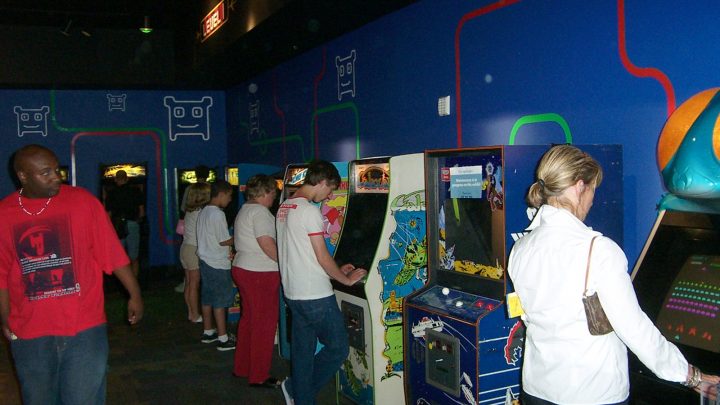
At the start of the 1980s, the American arcade market was booming. Space Invaders and Pac-Man had shown how much money a hit coin-op machine could make, and Nintendo wanted a share of it through its young US subsidiary, Nintendo of America, led by Minoru Arakawa. (For the wider context of this boom, see our overview of the golden age of arcade games.)
Nintendo’s bet was Radar Scope, a space shooter. Nintendo of America ordered cabinets in volume, but the game was poorly received in the US, where it had to compete in a crowded field of shooters. According to the commonly cited account, Nintendo of America was left with roughly 2,000 unsold Radar Scope cabinets.
Shipping them back or scrapping them would have been an expensive failure for a subsidiary that was supposed to prove Nintendo could compete in America. Arakawa asked Nintendo president Hiroshi Yamauchi for a new game that could be installed into the existing cabinets, turning dead stock into something sellable. That conversion requirement shaped everything that followed: the new game had to run on hardware closely based on Radar Scope‘s board and fit into the same cabinet.
A First-Time Designer Gets the Job
Yamauchi gave the project to Shigeru Miyamoto, a young Nintendo employee who had not led a game before. Gunpei Yokoi, the engineer behind Nintendo’s Game & Watch handhelds, supervised the project. Miyamoto was not a programmer, and that turned out to matter: he approached the game as a story with characters first, rather than as a technical exercise.
The original idea was reportedly built around Popeye, with Popeye, Bluto and Olive Oyl in the roles of hero, villain and captive. When that license did not come together, Miyamoto replaced them with original characters. The villain became a large ape, the captive became a woman originally called simply “Lady” (later named Pauline), and the hero was a stocky carpenter with a cap and moustache. Those visual details were practical choices: with very few pixels to work with, a cap avoided drawing hair, a moustache read more clearly than a mouth, and overalls made the arm movement easier to see.
Jumpman becomes Mario
In early materials the hero was called Jumpman, a plain description of what he did. The name Mario came from Nintendo of America. The widely repeated story, recorded in standard histories of the game, is that the character was named after Mario Segale, the landlord of Nintendo of America’s warehouse in the Seattle area. Mario would go on to star in his own games, beginning with Mario Bros. in 1983 and then Super Mario Bros., which we cover in our history of Super Mario Bros.
How Donkey Kong Plays
Donkey Kong released in Japanese arcades in July 1981 and reached North American arcades later that year. It is a single-screen game in which the player climbs a construction site to rescue Pauline from the ape at the top. The game is divided into four distinct stages, presented as heights of 25, 50, 75 and 100 meters:
- Girders (the barrel stage): Donkey Kong rolls barrels down sloping girders while the player climbs ladders and jumps over them.
- Conveyors (often called the “pie factory”): moving belts carry obstacles while fireballs roam the platforms.
- Elevators: moving lifts and bouncing springs force careful timing.
- Rivets: the player removes the rivets holding up the structure, and removing all eight brings Donkey Kong crashing down.
Two things made this feel new in 1981. First, jumping was central to the design; the game is widely credited as the first platform game built around a jump button, and Guinness World Records describes it as the first platform video game. Second, having several different screens with distinct challenges, plus short story scenes between them, was unusual for arcade games, most of which repeated a single playfield with rising difficulty. Donkey Kong told a tiny story, with a beginning (the ape carrying Pauline up the girders), escalating obstacles and a payoff when Kong falls.
The kill screen
Like several classic arcade games, Donkey Kong has an end point it was never designed to have. Because of how the game calculates the bonus timer, the first stage of level 22 gives the player so little time that Mario dies before he can finish the screen. This “kill screen” became a fixed finish line for top players: every elite game ends there, so competition is about how many points can be squeezed out before reaching it.
Success in Arcades and at Home
The conversion plan worked. Donkey Kong was reported as the highest-grossing arcade game of 1981 in Japan by the trade publication Game Machine, and as the top-earning arcade game of 1982 in the US by RePlay. Standard references put arcade sales at around 132,000 units across Japan and North America. For Nintendo of America, it turned a looming loss into a business that could stand on its own.
The game spread far beyond arcades. Nintendo licensed home console and tabletop rights to Coleco, and the ColecoVision version was bundled with the console, which made it many families’ first experience of the game. Atari 2600 and other computer versions followed, though memory limits forced the 2600 version to cut stages. Nintendo’s own Game & Watch handheld version is notable for introducing a cross-shaped directional pad, a control design that later became standard on Nintendo controllers. A Famicom version arrived in Japan in 1983, and the NES version came to North America in 1986. In a 2026 anniversary article, Guinness World Records said the original Donkey Kong sold around 15 million units across its arcade, NES, Game & Watch and ColecoVision versions.
Universal City Studios v. Nintendo: The King Kong Lawsuit
Success attracted attention from Universal City Studios, which believed Donkey Kong infringed its rights in King Kong. In 1982 Universal sued Nintendo in the US District Court for the Southern District of New York. Several licensees, including Coleco, had agreed to pay Universal royalties rather than fight, which made Nintendo’s decision to contest the case a real risk.
Nintendo’s lawyer, John Kirby, argued that the game did not infringe and, crucially, that Universal itself had previously argued in another case that the King Kong story was in the public domain. Judge Robert W. Sweet ruled in Nintendo’s favor. The US Court of Appeals for the Second Circuit upheld the ruling in 1984, and Nintendo was later awarded damages on its counterclaims.
The case had lasting effects on Nintendo culture. It taught the company that it could stand up to large American firms, and it built a relationship with Kirby that Nintendo commemorated in a small way: Nintendo gave him a sailboat named Donkey Kong, and his surname later became the name of one of Nintendo’s best-known characters, Kirby.
The High-Score Rivalry
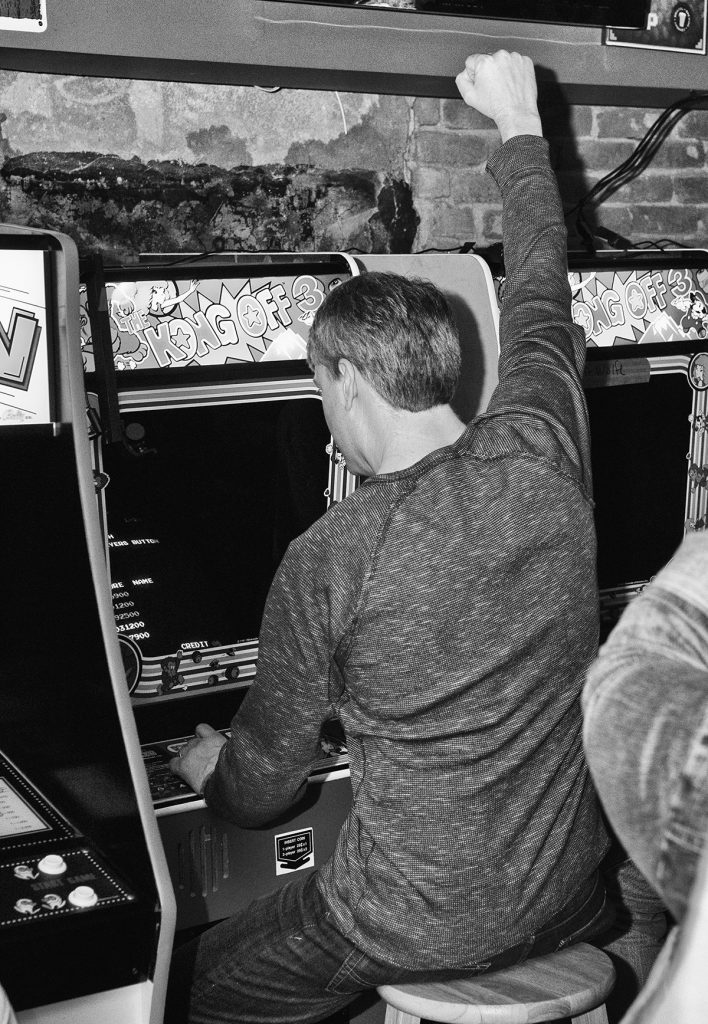
Donkey Kong’s difficulty and its fixed kill screen made it ideal for competitive play, and its record history is one of the most documented, and disputed, in gaming. It is worth being careful with dates and claims here, because records have been challenged, removed and in one case reinstated by one organization but not another.
The early record
Billy Mitchell’s score of 874,300, set on November 7, 1982, was the first widely recognized long-standing record. It stood until 2000, when Tim Sczerby reached 879,200.
The King of Kong era
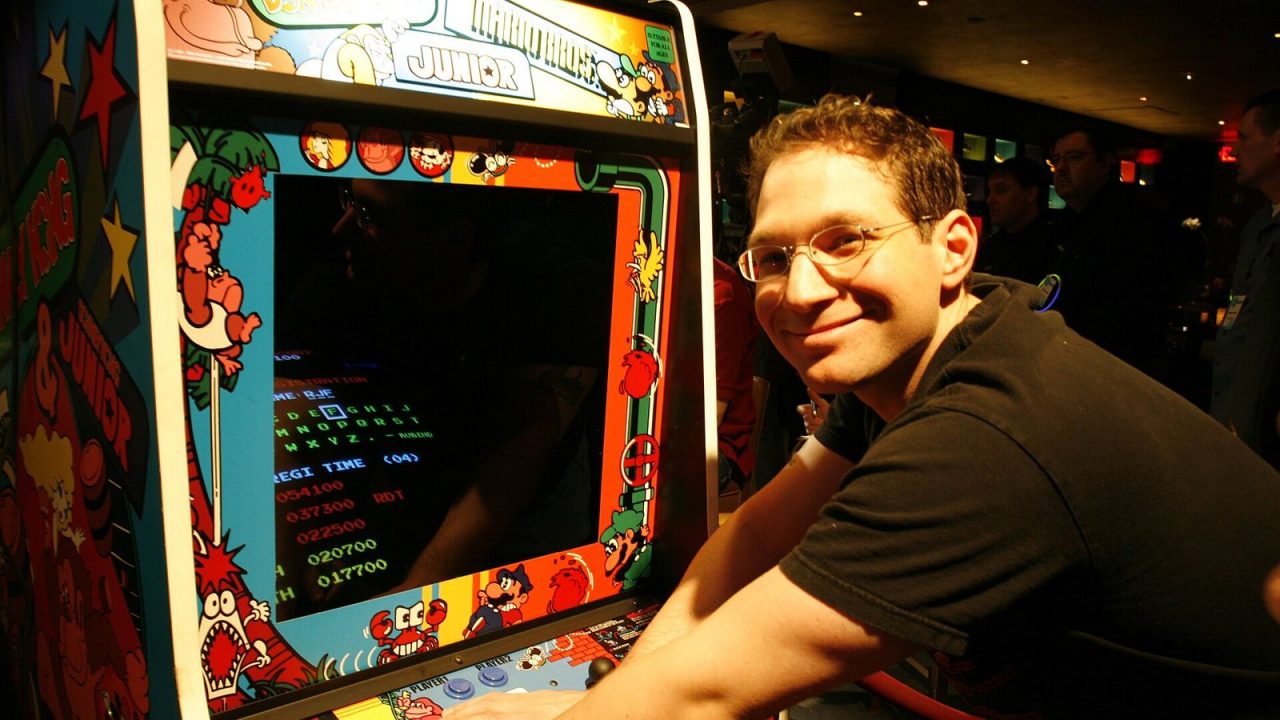
In the mid-2000s, Steve Wiebe, a teacher from Washington state, challenged the top of the leaderboard. On August 3, 2006, he became the first player recognized with a score over one million points, at 1,049,100. His rivalry with Mitchell was the subject of the 2007 documentary The King of Kong: A Fistful of Quarters, which brought classic arcade competition to a mainstream audience and inspired a new generation of players to take up the game.
After the film, the record moved repeatedly among a small group of players. Wes Copeland became the first to pass 1.2 million, scoring 1,218,000 on May 5, 2016.
The 2018 dispute
In 2018 Twin Galaxies, the long-running scorekeeping organization for classic arcade games, removed Billy Mitchell’s scores and barred him from its leaderboards after concluding that three of his million-point performances were not achieved on original, unmodified arcade hardware. Guinness World Records followed by removing his records, but in 2020 it reversed that decision and reinstated them, citing new evidence. Twin Galaxies did not reinstate the scores. The dispute remains a sensitive topic in the community, so any discussion of “the” record should name which organization’s listing it refers to.
The record as of 2026
As of a Guinness World Records article published in July 2026, the Donkey Kong arcade high score is held by Robbie Lakeman, who scored 1,272,800 points on June 8, 2021. Because the kill screen caps how far a game can go but not exactly how many points a perfect run can earn, players continue to chase small improvements through better routing, risk management and luck with the game’s random elements.
Why Donkey Kong Still Matters
It is easy to treat Donkey Kong as just the game where Mario first appeared, but its influence runs deeper than a character debut:
- It made Nintendo an American player. The money and credibility from Donkey Kong helped Nintendo of America survive and gave the parent company confidence ahead of the Famicom and NES. Our article on the NES and the Famicom picks up the story from there.
- It launched Miyamoto’s career. His character-first, story-aware approach became the foundation of Nintendo’s design culture.
- It defined a genre. Jumping between platforms, climbing ladders and dodging hazards became the vocabulary of the platform game.
- It showed that storytelling could fit in an arcade cabinet. A simple premise, cut scenes and a clear goal gave players a reason to keep going beyond the score.
- It became a competitive benchmark. Few arcade games have a scene as long-lived, documented and debated.
Common Misconceptions
“Donkey Kong was designed as a King Kong game.” Not as a licensed product. The original concept reportedly involved Popeye characters, and the final game used original characters; the court ruled that it did not infringe Universal’s rights.
“The name ‘Donkey Kong’ is a translation mistake.” This is a popular story, but it is better treated as folklore than fact. Accounts of the name’s meaning vary; in a 2001 statement Miyamoto described the idea as a “stupid ape,” and the tidy “mistranslation” version should be treated with caution.
“There is one undisputed world record.” Different organizations have taken different positions on some historic scores, so it is more accurate to cite a specific record with its date and the body that recognizes it.