Street Fighter II: How Capcom’s Fighter Revived the Arcades
How Capcom's 1991 Street Fighter II, with its eight fighters, special moves and accidental combos, brought crowds back to arcades and launched a genre.
By the start of the 1990s, the arcade business looked like it was past its prime. The golden age of arcade games had faded in the mid-1980s, and home consoles such as the NES had taught a generation to play in the living room. Then, in 1991, Capcom released Street Fighter II: The World Warrior. Players crowded around cabinets, lined up coins on the control panel to claim the next match, and learned joystick motions by watching strangers. The game did not just sell well; it changed what arcades were for.
This article covers the game’s development and hardware, what made its design different, the accidental discovery of combos, the long series of revisions, the culture of head-to-head play and the home ports that carried it into millions of homes.
From Street Fighter to Street Fighter II
The original Street Fighter (1987) introduced Ryu and Ken and the idea of special moves performed with joystick motions, but it was a limited game. Only Ryu and Ken were playable, and the special moves were difficult to perform reliably.
The sequel was a much more ambitious project. Akira Nishitani directed it, Yoshiki Okamoto produced it, and Nishitani and Akira Yasuda were key designers. Capcom built the game for its CP System arcade board, commonly called CPS-1, a hardware platform it had introduced a few years earlier. Reference sources describe Street Fighter II as the fourteenth game released on that board.
Capcom showed the game in London in January 1991 and presented it to distributors in February. It was released in Japan on March 7, 1991, and reached other markets during the same month.
What Made the Design Different
Street Fighter II combined several ideas that are now standard in fighting games but felt new together at the time.
A cast of distinct characters
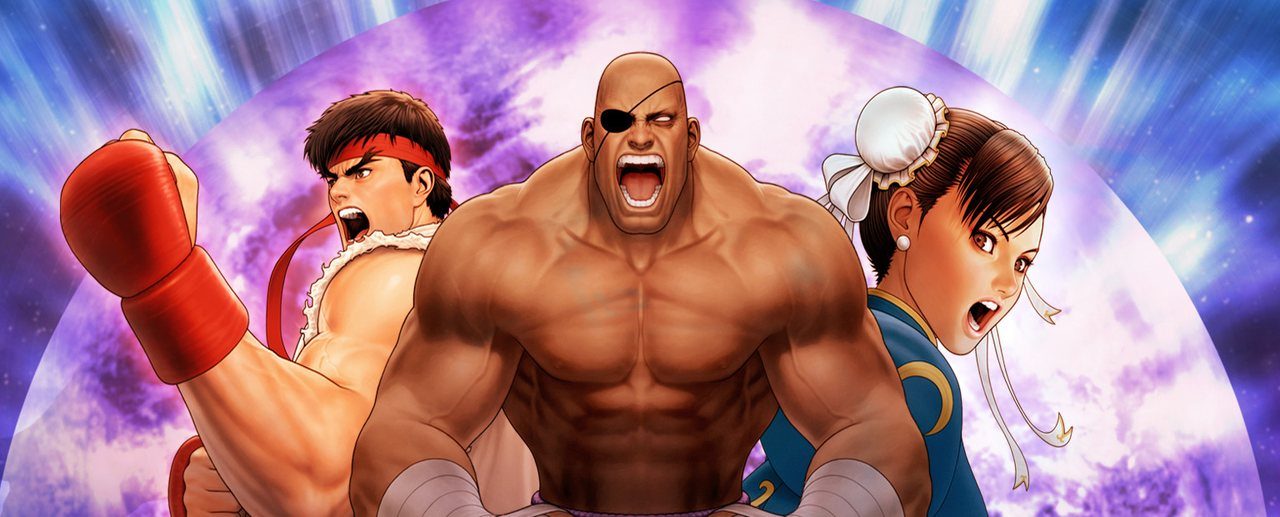
Players could choose from eight World Warriors: Ryu, Ken, E. Honda, Chun-Li, Blanka, Zangief, Guile and Dhalsim. Each had a different nationality, appearance, fighting style and set of special moves. Characters were not just cosmetic variations; Zangief played very differently from Dhalsim, and Guile’s defensive style contrasted sharply with E. Honda’s rushing attacks. Choosing a character became a statement of identity, and every player had a “main.”
After defeating the eight warriors, a single player faced four computer-controlled bosses, the Grand Masters, culminating in the tournament’s leader. These bosses were not selectable in the original version.
Six buttons and motion inputs
The control layout used an eight-way joystick and six attack buttons: light, medium and heavy punches on one row, with matching kicks below. That gave each character a large range of normal attacks before special moves were even considered.
Special moves used joystick motions combined with a button. The quarter-circle motion from down to forward plus punch produced Ryu and Ken’s fireball. Charge characters such as Guile had to hold a direction for a moment before reversing it. These inputs were never shown on screen during play, so knowledge spread by word of mouth, magazine coverage and watching other players.
Balance between characters
Because characters were very different, balancing them was a design challenge. The original game was not perfectly balanced, and Capcom’s later revisions frequently adjusted damage, speed and moves. That ongoing tuning helped establish the idea that a fighting game was a living competitive system rather than a fixed product.
Combos: The Accidental Discovery
One of Street Fighter II’s most important features was not planned. According to an account by Capcom producer Noritaka Funamizu, reported in reference sources, the team noticed during a bug check on the car-smashing bonus stage that, with the right timing, a second attack could connect before the opponent recovered from the first. In other words, a sequence of hits could be chained so that the opponent could not block or escape in between.
The team considered this too difficult to be practical for most players, so they left it in rather than removing it. Players soon discovered it and began linking normal attacks into special moves. These sequences became known as combos, and they turned out to be central to the game’s depth. Today, combos are a basic element of almost every fighting game.
The combo story is a good example of how player communities, not just designers, shape a game. Skilled players turned a timing quirk into a core technique, and Capcom later embraced it, eventually adding an on-screen combo counter and, in later revisions, dedicated systems built around combos.
The Revisions: Champion Edition, Turbo and Super
Instead of moving quickly to Street Fighter III, Capcom released a series of updated versions of Street Fighter II. Each adjusted balance and added features. The major arcade versions were:
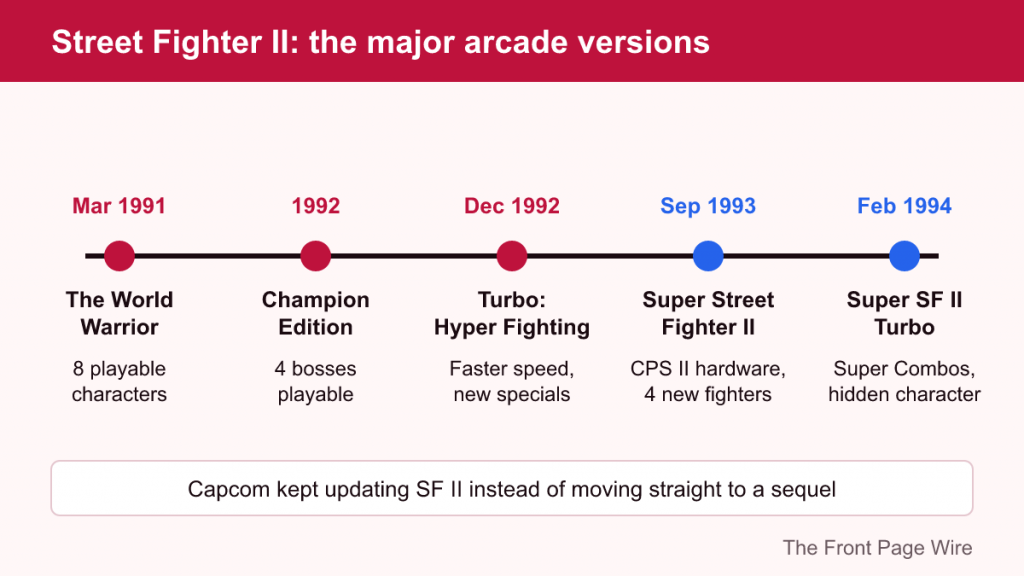
| Version | Arcade release | Key changes |
|---|---|---|
| Street Fighter II: The World Warrior | March 1991 | Eight playable characters, four CPU-only bosses |
| Street Fighter II: Champion Edition | 1992 | The four bosses became playable; same-character matches allowed; balance changes |
| Street Fighter II Turbo: Hyper Fighting | December 1992 | Faster game speed and new special moves |
| Super Street Fighter II | September 1993 | Moved to CP System II hardware; four new characters |
| Super Street Fighter II Turbo | February 1994 | Adjustable speed, Super Combos and a hidden character |
Hyper Fighting was partly a response to a problem in arcades. Unauthorized modified boards, such as the bootleg known as Rainbow Edition, altered Champion Edition to make the game faster and give characters wild new abilities. These hacks were popular in some arcades, and Capcom produced an official faster version partly to compete with them.
Super Street Fighter II Turbo introduced the Super Combo, a powerful special move that could be used after filling a meter. Meter-based super moves went on to become a staple of the genre.
The boss name swap
The four bosses have different names in Japan and in other regions. In Japan, the boxer was named M. Bison, a name that closely evoked Mike Tyson. For overseas versions, Capcom rotated three of the boss names to reduce the risk of a likeness dispute. As a result, the boxer became Balrog in Western versions, the Spanish claw fighter became Vega, and the leader became M. Bison. Fans still refer to the boss characters differently depending on region, which can cause confusion in discussions.
Head-to-Head Arcade Culture
Earlier arcade games mostly had players competing against the machine or for a high score. Street Fighter II put two people side by side on the same cabinet in direct competition. That had several effects:
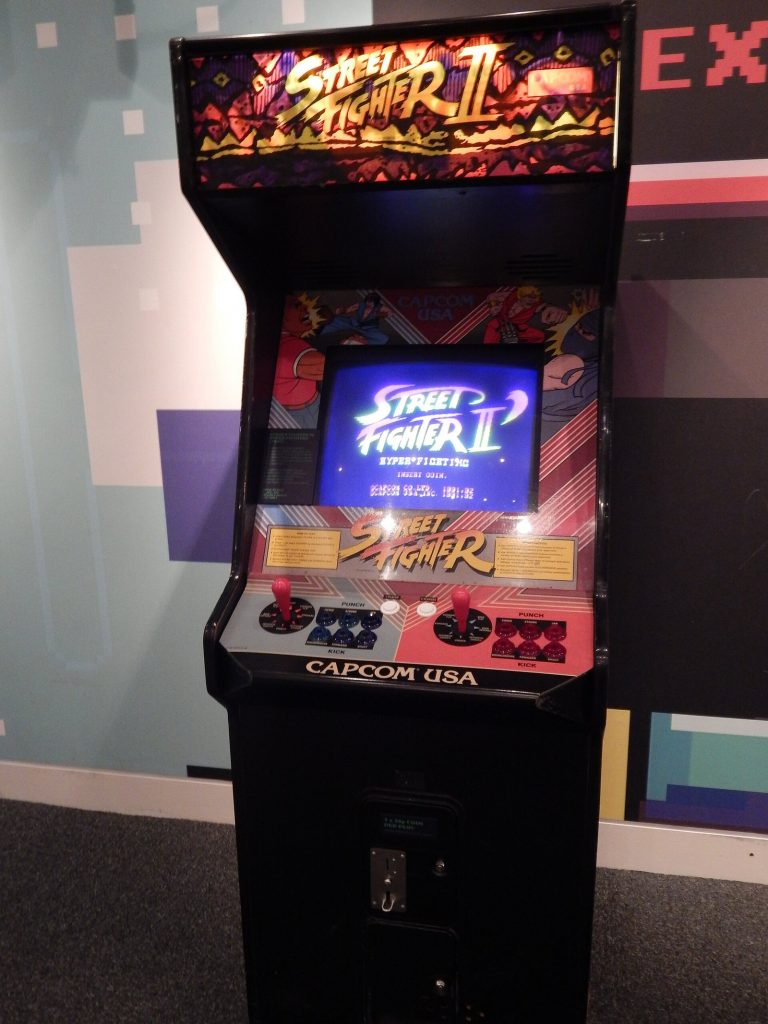
- “Winner stays on.” The winner kept playing; challengers inserted a coin to take them on. A strong player could hold a cabinet for a long time.
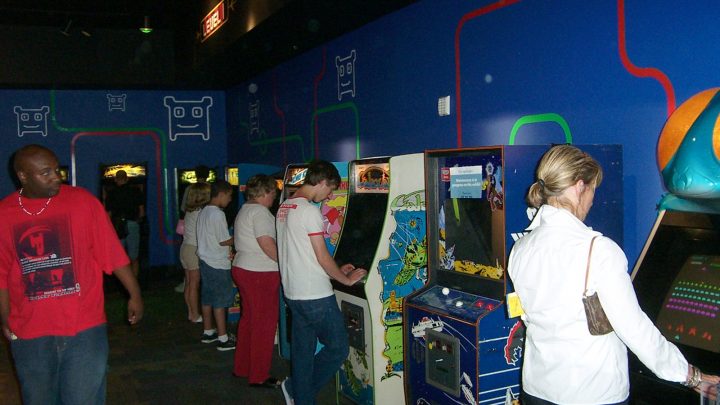
- Coins as a queue. Players often placed coins on the cabinet’s edge to reserve the next game, a familiar sight in arcades of the era.
- Spectators. Crowds gathered to watch skilled matches, learning moves and strategies by observation.
- Local reputations. Arcades developed local champions and rivalries, an early form of the community that later supported organized tournaments.
Reference sources credit the game with extending the life of the arcade business and with inspiring the grassroots competitive scene that eventually led to major fighting game tournaments such as Evo.
Commercially, the arcade game was a huge success. Capcom sold more than 60,000 original cabinets in Japan, and reference sources report more than 200,000 units across the various arcade versions worldwide. Counterfeit boards were also widespread, a measure of how much demand there was. Estimates of the game’s total revenue, combining arcades and home sales, run into the billions of dollars, though such figures are estimates rather than audited totals.
Home Ports: Bringing the Arcade Home
Home versions were essential to the game’s reach. The Super Nintendo version arrived in Japan on June 10, 1992, and in North America in the summer of 1992. According to Capcom’s own sales data, it sold 6.30 million units, making it one of the publisher’s best-selling titles.
Capcom’s official figures (as published in its Platinum Titles list, data as of June 30, 2026) include several Street Fighter II home releases:
| Title | Platform | Release | Units sold |
|---|---|---|---|
| Street Fighter II | SNES | June 1992 | 6.30 million |
| Street Fighter II Turbo | SNES | July 1993 | 4.10 million |
| Super Street Fighter II | SNES | June 1994 | 2.00 million |
| Street Fighter II’ Special Champion Edition | Mega Drive / Genesis | September 1993 | 1.65 million |
The SNES port became a major system seller for Nintendo’s console, which is discussed in our history of the Super Nintendo. The Genesis version mattered to Sega because it broke Nintendo’s exclusivity, and many Genesis owners bought a six-button controller to play it properly. Fighting games became one of the main battlegrounds of the 16-bit console war.
Home ports changed how players learned the game. Practicing combos and special-move timing at home, without spending coins, raised the skill level of players who then went back to arcades to test themselves against others.
The Fighting Game Boom
Street Fighter II’s success triggered a wave of fighting games from other companies. Some came from competitors that had their own distinct takes on the genre, such as Midway’s Mortal Kombat, with digitized graphics and graphic finishing moves, and SNK’s Fatal Fury and Art of Fighting on the Neo Geo. 3D fighters such as Sega’s Virtua Fighter followed. The genre dominated arcades through much of the 1990s.
Many conventions that later fighters took for granted can be traced back to Street Fighter II:
- A selectable roster of characters with distinct styles.
- Six-button layouts with three strengths of attack.
- Motion-based special moves such as the quarter-circle fireball and the charge input.
- Combos as a core skill.
- Super meters, introduced late in the series’ revisions.
- Best-of-three round structure in head-to-head matches.
Playing and Collecting Street Fighter II Today
Original arcade boards and cabinets are collectible but require care. CPS-1 boards were made in large numbers, and counterfeit or bootleg boards are common, so buyers should know what they are getting. Cabinets also contain CRT monitors with dangerous high voltages, so any internal repair should be left to trained technicians.
For home players, original SNES and Genesis cartridges are widely available and inexpensive compared with many retro games. Capcom has also re-released the classic arcade versions in official compilations over the years, which remain the simplest legal way to play the arcade originals on current hardware.
More than three decades after its release, Street Fighter II remains the reference point for the fighting game genre. It showed that a well-designed competitive game could bring people together in a public space, and it gave arcades one of their most memorable eras.