Neo Geo AES and MVS: SNK’s Arcade-Perfect System Explained
How SNK's Neo Geo used one platform for arcades (MVS) and homes (AES), why its cartridges cost so much, and what made it a fighting game powerhouse.
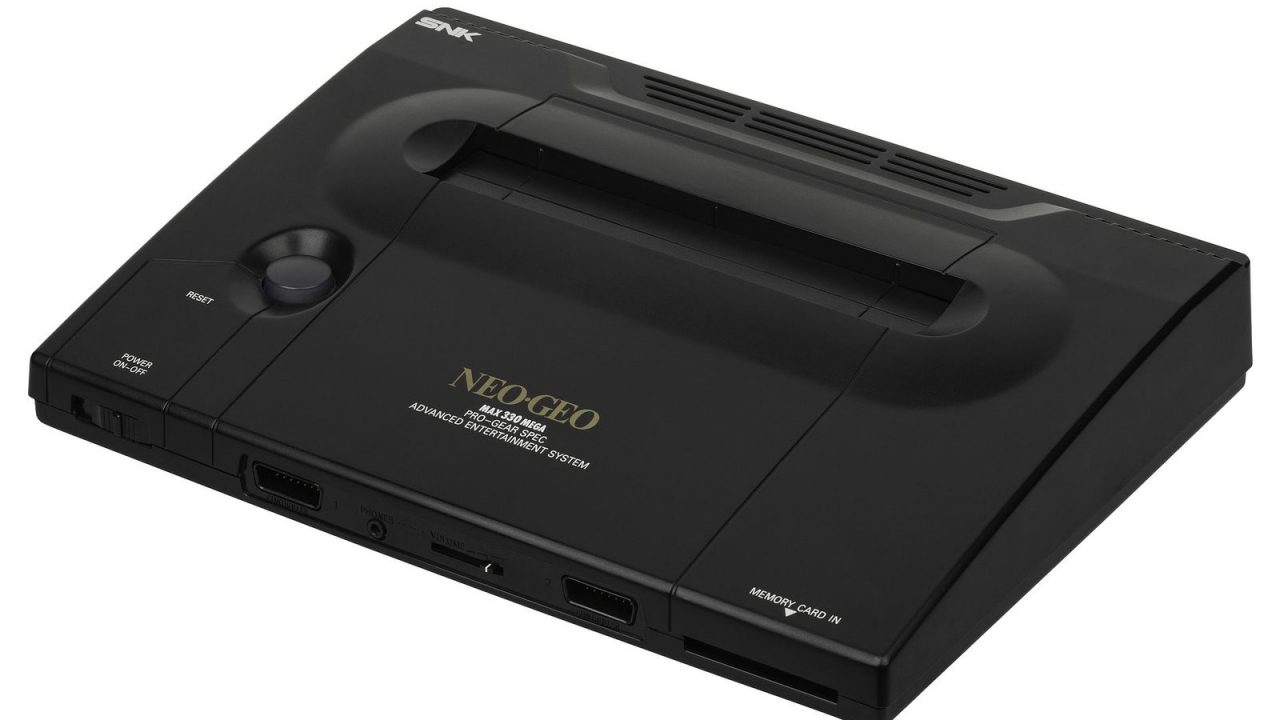
For most of video game history, there was a clear gap between the arcade and the living room. Home versions of arcade hits were usually cut down: fewer colors, smaller sprites, missing animation, simplified sound. SNK’s Neo Geo, launched in 1990, offered a different promise. The same games running on the same core hardware would be available in both arcades and homes. The catch was the price, and that combination of perfection and expense is the reason the Neo Geo still has a special place among collectors.
This article explains how the two halves of the system worked, why the home console was priced like a luxury item, the fighting games that defined its library, the CD-based follow-up, and what happened to SNK afterward.
SNK Before the Neo Geo
SNK was founded in Japan by Eikichi Kawasaki; reference sources generally date the company to 1978, under the name Shin Nihon Kikaku, which was later shortened to SNK. It made its name in arcades during the 1980s, part of the wave of Japanese companies that grew up during and after the golden age of arcade games. SNK also published games for home systems, including the Nintendo Entertainment System.
By the end of the decade, arcade operators faced a familiar problem. A dedicated cabinet built for a single game lost earning power once players moved on. The industry had already partly addressed this with the JAMMA wiring standard, which allowed operators to swap game boards in compatible cabinets. SNK’s idea went further: a single arcade system designed around interchangeable game cartridges, with multiple games available in one cabinet.
Two Versions of One System: MVS and AES
The Neo Geo came in two forms that shared the same fundamental hardware:
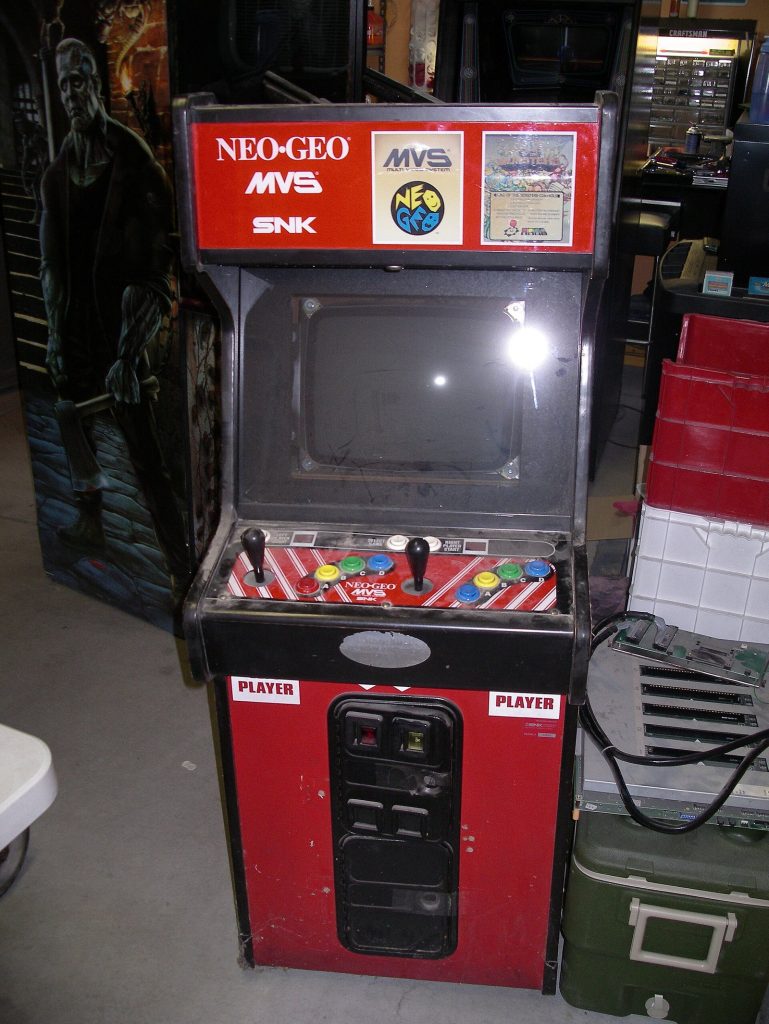
| MVS (Multi Video System) | AES (Advanced Entertainment System) | |
|---|---|---|
| Purpose | Arcade cabinets for operators | Home console |
| Japanese launch | April 16, 1990 | April 26, 1990 |
| North American launch | August 22, 1990 | 1991 (commonly given as July 1, 1991) |
| Cartridges | Arcade-format carts | Home-format carts, physically different |
| Configurations | 1-, 2-, 4- and 6-slot boards | Single cartridge slot |
The MVS was the commercial heart of the system. An arcade operator could buy a cabinet with a multi-slot board, install several games, and let players choose between them. When a game’s popularity faded, the operator could replace just that cartridge instead of an entire cabinet. Reference sources describe the MVS’s relatively low cost and multi-game flexibility as the reasons it became popular with operators.
Arcade and home cartridges carried essentially the same game content, but they were deliberately made in different physical sizes with different pin layouts. That prevented operators from buying cheaper home cartridges to use in arcades. For players, though, the experience was the point: the game in an arcade cabinet and the game on the home console were essentially the same program.
Both versions could use a Neo Geo memory card. This allowed players to save progress, and in some games a player could carry data between an arcade machine and a home console, a novel idea at the time.
The Hardware
For 1990, the Neo Geo was very powerful, especially at moving large numbers of 2D sprites. Its main specifications, as documented in reference sources, were:
- Main processor: Motorola 68000 at 12 MHz, the same CPU family used in the Sega Genesis and several arcade boards of the era.
- Sound and co-processor: Zilog Z80 at 4 MHz, with a Yamaha YM2610 sound chip.
- Resolution: 320 × 224.
- Colors: a palette of 65,536, with up to 3,840 on screen at once.
- Sprites: up to 380 on screen, with no traditional background tile layers; everything, including backgrounds, was drawn with sprites.
The startup screen famously displayed “Max 330 Mega Pro-Gear Spec,” referring to cartridge capacity in megabits. Later games used bank switching to exceed that figure and displayed “Giga Power Pro-Gear Spec.” Large cartridges allowed huge, detailed character sprites and lots of animation frames, which is exactly what fighting games needed. It also meant the cartridges were physically large and packed with memory chips, which brings us to the system’s most famous characteristic: its cost.
Why the Home Version Was So Expensive
The AES was not originally designed for ordinary retail. SNK first offered it as a rental for commercial venues in Japan, such as hotels, bars and restaurants. Customer interest led SNK to sell it directly to consumers in 1991.
In North America, the AES launched as the “Gold System” at $649.99, a price that reference sources describe as the most expensive home console released up to that point, adjusted for inflation. That was several times the price of a Super Nintendo or Sega Genesis.
The games were also costly. Neo Geo home cartridges contained the same large amounts of ROM as arcade boards, and memory chips of that capacity were expensive in the early 1990s. As a result, new AES games cost far more than typical console games. SNK essentially positioned the AES as a premium product for enthusiasts who wanted true arcade games at home and were willing to pay for it.
That pricing had lasting consequences. AES sales were small: reference sources estimate about 410,000 AES units worldwide, compared with around 1 million MVS units. Low production runs of home cartridges, especially late in the system’s life, are why some AES games are now among the most expensive items in retro game collecting. MVS cartridges of the same games are usually more available and less costly, because far more were produced for arcades.
The Fighting Game Library
The Neo Geo arrived at exactly the right time. The success of Capcom’s Street Fighter II in 1991 created enormous demand for one-on-one fighting games in arcades, and SNK’s hardware, with its large sprite capacity and big cartridges, suited the genre perfectly. SNK and partner developers built a long list of fighting series on the platform:
- Fatal Fury, which introduced Terry Bogard and features fighting on two planes.
- Art of Fighting, known for its large characters and a camera that zoomed in and out depending on the distance between fighters.
- Samurai Shodown, a weapon-based fighting game set in feudal Japan.
- The King of Fighters, a crossover series that combined characters from Fatal Fury, Art of Fighting and other SNK games into three-person teams, with new installments released regularly.
- World Heroes, a fighting series built around historical figures.
The library was not only fighting games. The Metal Slug run-and-gun series became one of the system’s most celebrated, known for its detailed, hand-drawn animation and humor. Twinkle Star Sprites, a competitive shooting game, is another frequently cited title. Sports games, puzzle games and shooters also filled out the catalog.
Official software production continued for an unusually long time. The final official Neo Geo release, Samurai Shodown V Special, arrived in 2004, about fourteen years after the system launched.
The Neo Geo CD
The expense of cartridges led SNK to try a cheaper alternative. The Neo Geo CD launched in Japan on September 9, 1994, at ¥49,800, followed by Europe in December 1994 and North America on January 15, 1996, at $399. Games on CD were much cheaper to produce than the giant cartridges.
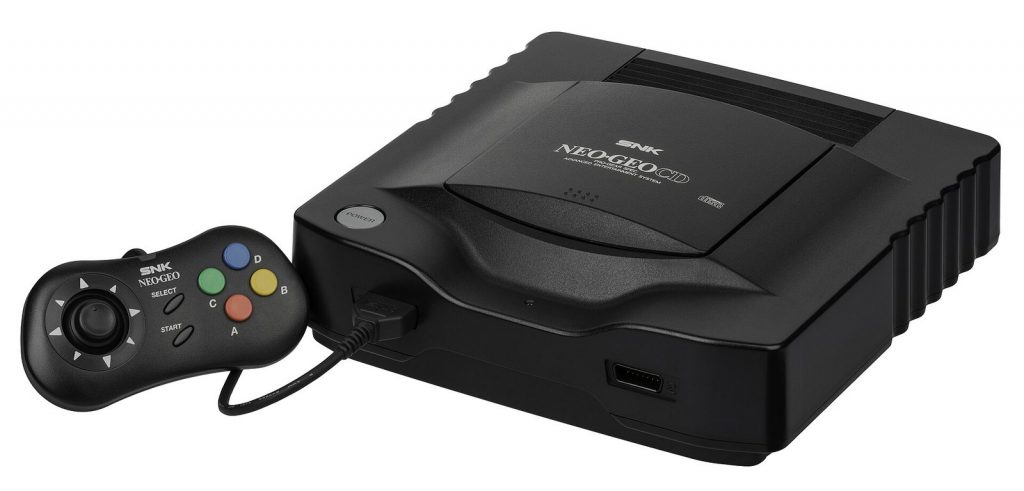
The problem was memory and loading. The original models used a single-speed CD-ROM drive, and the system had to load large amounts of sprite data into memory before play. Load times of roughly 30 to 60 seconds were widely criticized. SNK released the Neo Geo CDZ in Japan in December 1995, with a double-speed drive and improved loading, but it was not released in the West.
There were three models in total: a front-loading version made in small numbers for Japan, a top-loading version sold worldwide, and the CDZ. Reference sources report about 570,000 Neo Geo CD units sold worldwide as of September 1997.
SNK’s Collapse and Revival
SNK ended home console production in the late 1990s. It also tried the handheld market with the Neo Geo Pocket and Neo Geo Pocket Color, but the company’s finances deteriorated.
In 2000, SNK was acquired by Aruze, a maker of pachinko and slot machines. The new ownership did not save it. In 2001 SNK filed for civil rehabilitation and was declared bankrupt on October 30, 2001. Eikichi Kawasaki founded a new company, Playmore, which acquired SNK’s intellectual property. It was renamed SNK Playmore in 2003, dropped “Playmore” from its branding in 2016, and became SNK Corporation. As of 2022, a majority stake is held by a company linked to the Misk Foundation of Saudi Arabia.
The Neo Geo brand has since returned in licensed and official products, including the Neo Geo X handheld in 2012 and the Neo Geo Mini in 2018, which included 40 built-in games in its Japanese version. SNK officially ended maintenance and repair services for its home consoles and handhelds on August 31, 2007.
Collecting AES and MVS Today
The Neo Geo is a famously expensive system to collect, and collectors often make a choice between the two formats:
- AES cartridges are prized for their packaging and rarity. Late releases with small production runs are especially scarce, and complete-in-box copies of some titles are high-end collector items.
- MVS cartridges contain essentially the same games and are usually more affordable. Collectors play them in arcade cabinets, in single-slot MVS boards, or in consumer-oriented systems built around MVS hardware.
- Conversions and reproductions. Some home cartridges on the market are converted from MVS boards or are reproductions. Honestly labeled conversions are a recognized part of the hobby, but a conversion sold as an original AES cart is a problem. Our guide on spotting fake and reproduction retro games covers general warning signs.
- Condition and completeness. As with any system, boxes, manuals and label condition strongly influence value; our guide to starting a retro game collection explains the basic terms.
- Region and label variants. Japanese, US and European cartridges can differ in labels and sometimes in packaging, which affects collector interest.
Arcade hardware also carries practical considerations. MVS cabinets contain CRT monitors with dangerous high voltages, so any repair should be left to people with proper training.
The Neo Geo’s Legacy
The Neo Geo succeeded as an arcade system even as its home version stayed a niche luxury. The MVS gave arcade operators a cost-effective way to refresh their cabinets, and the platform’s fighting games helped sustain arcades through the 1990s. Many of SNK’s series, including The King of Fighters, Samurai Shodown, Fatal Fury and Metal Slug, continue today.
The AES, meanwhile, remains one of the clearest examples of a “no compromises” console: the arcade experience at home, exactly as it was, for anyone who could afford it.